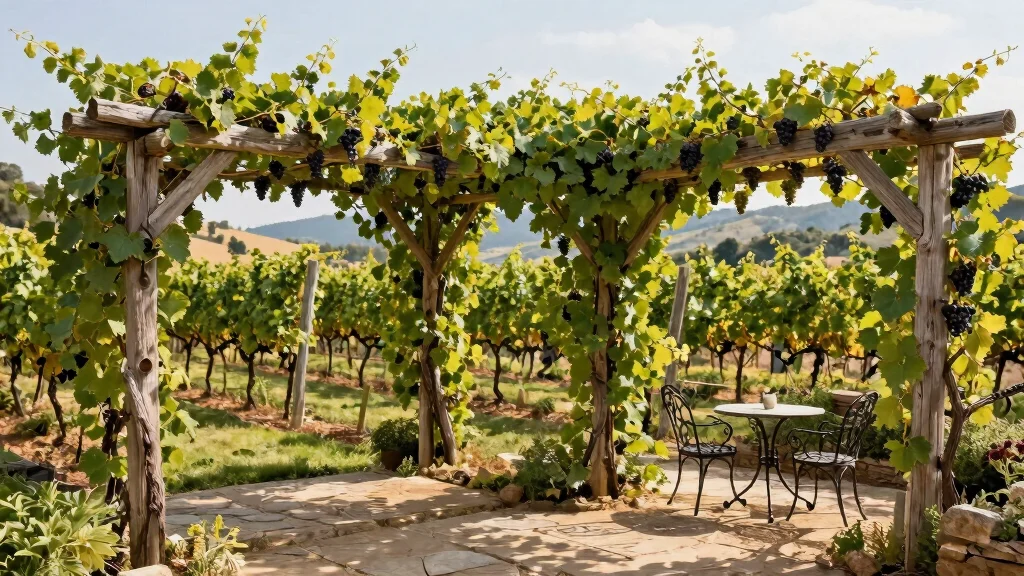
Creating a backyard vineyard has become a popular dream for many gardening enthusiasts. The thought of luscious grape vines climbing elegantly in your outdoor space not only adds charm but also provides a sense of tranquility. That’s why I put together this guide featuring 17 grape vines trellis ideas. Whether you’re looking for grape vine support solutions or unique trellis design ideas, you’ll find plenty of inspiration here that evokes those delightful vineyard vibes.
If you’re passionate about vertical gardening or simply want to make the most out of your space, this post is for you. You might be a seasoned gardener or someone who simply enjoys the beauty of climbing plants. Regardless of your experience level, you’ll discover practical tips and creative concepts to enhance your garden. From classic structures to DIY projects, these ideas will transform your yard into a stunning showcase of grapevines.
By the end of this guide, you’ll have a selection of grape vines trellis options that are not only functional but also visually appealing. Get ready to visualize your very own backyard vineyard with trellises that are stylish, sturdy, and perfect for your climbing plants. Let’s dive into these ideas and get your garden thriving!
Key Takeaways
– Explore a variety of grape vines trellis designs, from classic A-Frame structures to modern pergolas, to suit your gardening style.
– Discover how different materials, like bamboo or metal, can enhance the durability and aesthetic of your grape vine support.
– Learn the importance of vertical gardening techniques to maximize your space while making your garden visually striking.
– Find practical tips on how to build your own trellis, making gardening both fun and cost-effective.
– Get inspired by unique configurations that can turn your backyard into a serene vineyard-like retreat, perfect for relaxing or entertaining.
1. Classic A-Frame Trellis
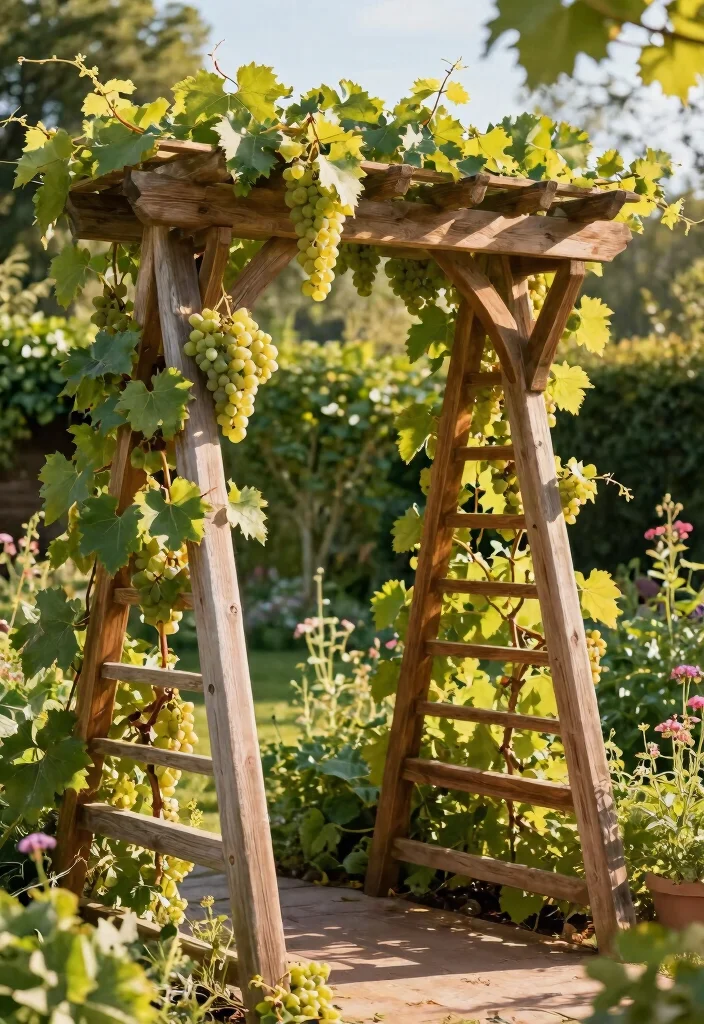
If you’re looking for a trellis that combines charm and practicality, the A-frame trellis is a perfect choice. This classic design features two upright posts connected by a diagonal beam, creating a stable structure that supports your grapevines beautifully. The open shape allows sunlight to flood in, encouraging lush growth and bountiful harvests. You’ll love how it enhances your garden’s rustic appeal while being easy to build with basic materials.
To get started, gather untreated wood for a natural feel, and ensure the posts are firmly anchored for stability, especially in windy locations. Consider planting early varieties of grapes at the base to quickly achieve a vibrant, vine-covered look in just one season!
Key steps to get started:
– Cut two posts to your desired height and angle the tops.
– Attach horizontal beams at the top and bottom for support.
– Securely anchor the frame into the ground.
– Train your vines to weave through the structure as they grow.
This trellis combines functionality with aesthetic appeal, making it a beloved option for gardeners seeking a classic touch.
2. Garden Arch Trellis
Looking to infuse a bit of romance into your garden? The garden arch trellis is your answer! This elegant structure not only supports your grapevines but also creates an inviting entrance or focal point. As your vines grow, they can gracefully cascade over the arch, forming a stunning natural tunnel that enhances your outdoor space.
When choosing your materials, opt for strong options like metal or treated wood to withstand the elements. Make sure the arch is wide enough for easy passage, allowing you and your guests to walk through your green paradise effortlessly.
Key features to consider:
– Create vertical interest and beauty with a stunning arch.
– Provide shade for relaxing moments during sunny days.
– Pair with climbing plants to craft a mixed garden display.
This design does more than support grapes; it transforms your garden into a picturesque escape.
3. Vertical Grid Trellis
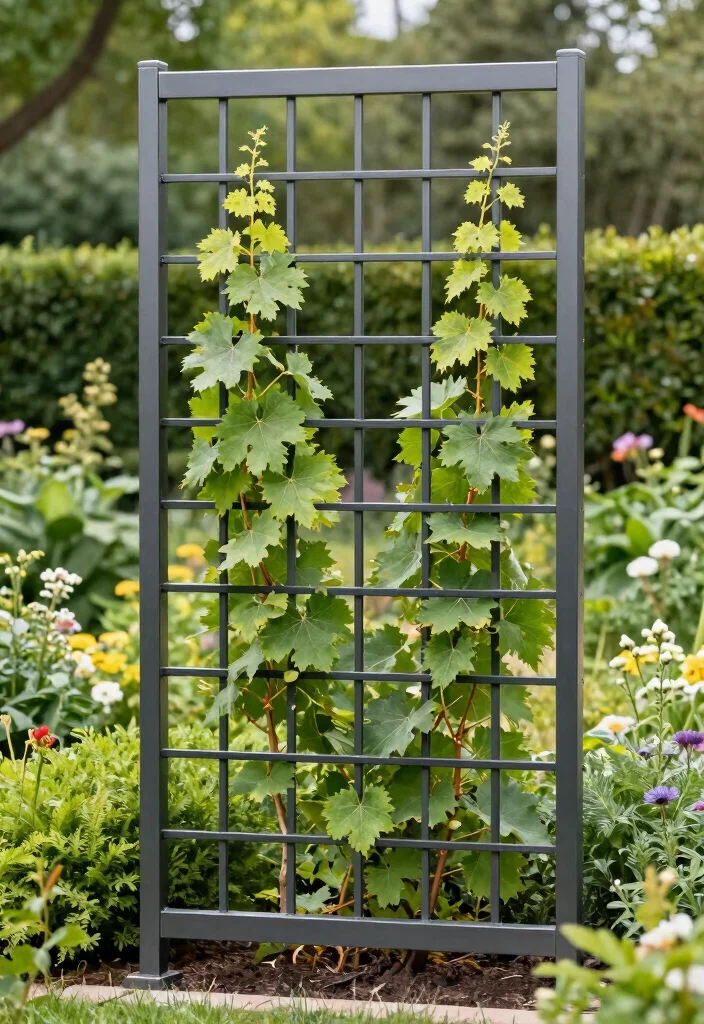
If you want to take a modern approach to your grape growing, consider a vertical grid trellis. This design features an array of horizontal and vertical slats, creating a grid that maximizes vertical gardening potential. The open structure allows for easy access and maintenance while adding a contemporary flair to your yard.
To build, ensure the grid is sturdy enough to hold the weight of your grapevines, and consider mounting it against a wall for added support. This trellis style not only assists in vine growth but can also serve as a decorative feature, especially when combined with colorful flowers.
Key steps to get started:
– Measure and cut slats to form a grid pattern.
– Securely mount the grid to a wall or fence.
– Plant your grapevines at the base and guide them through the grid.
– Add decorative hooks or features for flair.
This design encourages creativity, providing a beautiful backdrop for your flourishing vines.
4. Pergola Trellis
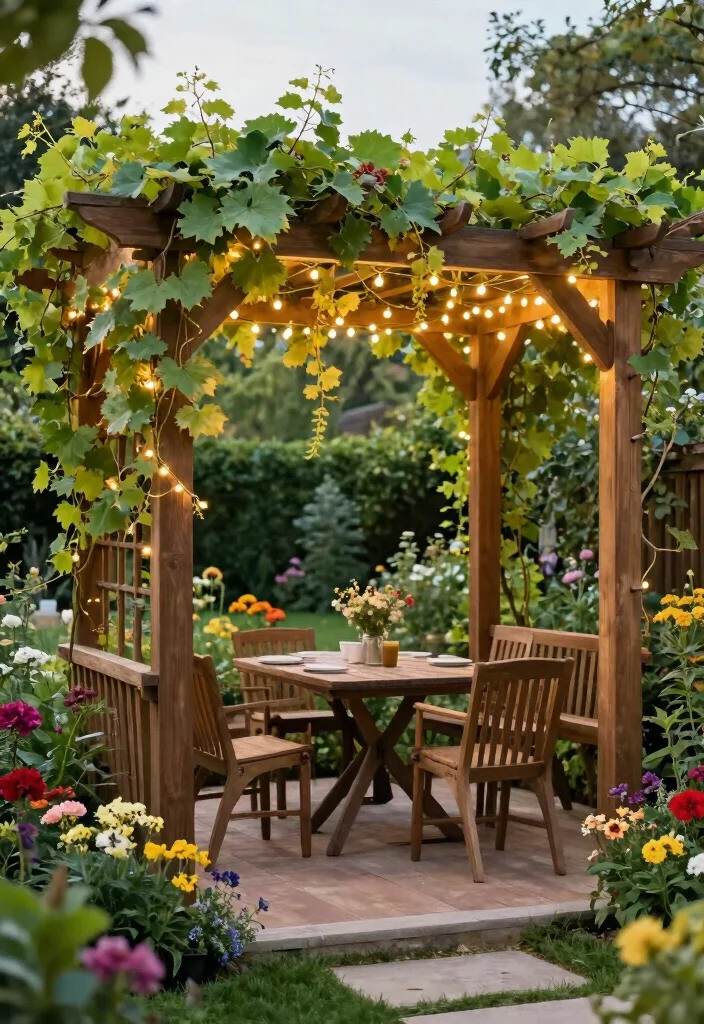
Why not combine beauty and function with a pergola trellis? This stunning structure not only supports your grapevines but creates a delightful shaded area for relaxation and gatherings. It offers an inviting space for friends and family to enjoy your outdoor sanctuary, especially on warm summer days.
For durability, use pressure-treated wood or aluminum and think about adding seating or decorative elements for a complete outdoor experience. Consider hanging lights or draping fabrics to enhance the cozy atmosphere.
Key materials to gather:
– Pressure-treated wood or aluminum beams.
– Fasteners for construction.
– Optional outdoor cushions for comfort.
Instructions:
1. Construct a frame using beams set in concrete for stability.
2. Leave space between slats for vine growth.
3. Plant your grapevines around the base and train them to climb.
4. Personalize with outdoor furniture and decor to create your perfect escape.
A pergola trellis not only supports your grapevines but also elevates the charm of your outdoor living space.
Fun fact: A pergola trellis, perfect for grape vines trellis, can cut afternoon sun by up to 60%, turning your outdoor space into a shaded retreat. Add hanging lights and fabrics to extend gatherings from sunset to starlight.
5. Cattle Panel Trellis
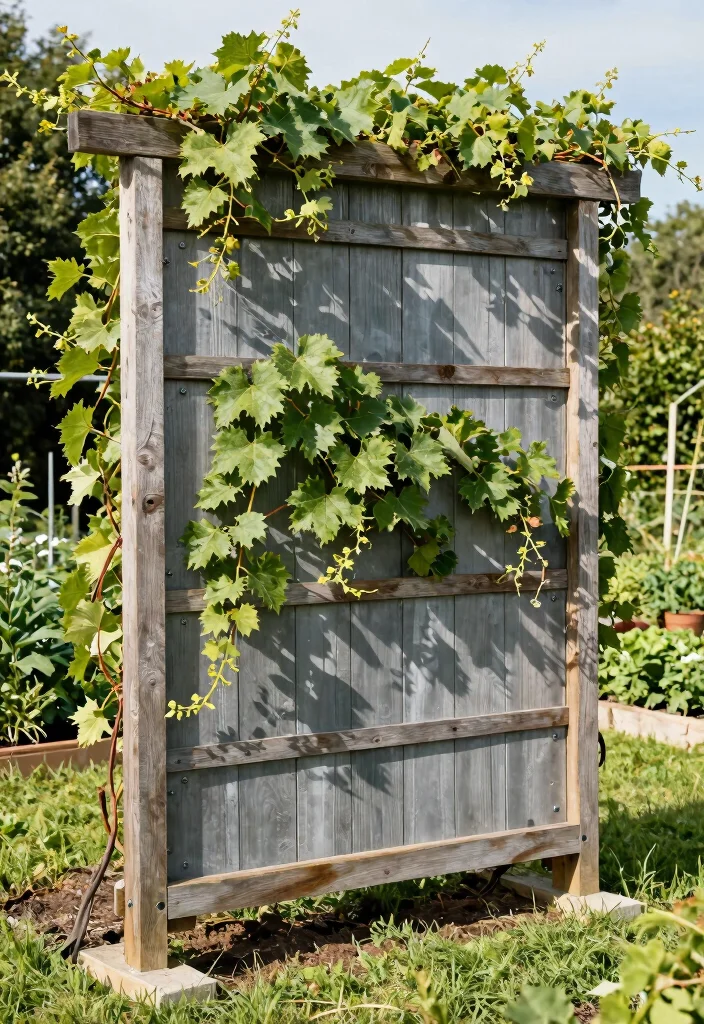
For a rugged, industrial aesthetic, consider a cattle panel trellis. These sturdy wire panels provide incredible support for your grapevines while offering a unique look that stands out in any garden. This option is great for those seeking durability combined with an unrefined charm.
To install, secure the panels to a wooden frame for added strength and guide your grapevines to climb the panels as they grow. This design not only supports your plants but also acts as a conversation starter with its distinctive style.
Key materials needed:
– Cattle panels for support.
– Wooden framing for stability.
– Fasteners for assembly.
Instructions:
1. Cut wooden posts to size and secure them into the ground.
2. Attach the cattle panel to the wooden frame.
3. Plant grapevines at the base of the panel.
4. Train the vines as they grow for a lush appearance.
This robust design enhances your garden while providing solid support for your grapes.
6. Bamboo Trellis
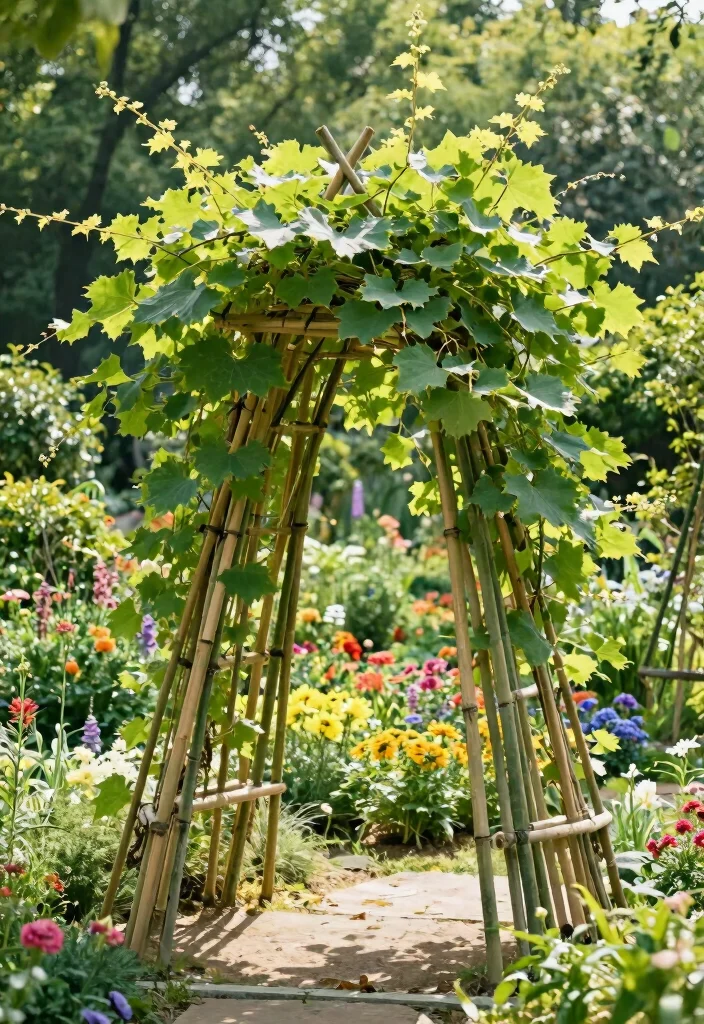
Searching for an eco-friendly and sustainable option? A bamboo trellis may be just what you need! Bamboo is lightweight yet incredibly strong, making it an excellent choice for supporting your grapevines. Its natural aesthetic adds an earthy vibe to your garden while being kind to the environment.
Ensure your bamboo is treated to withstand the elements, and use natural twine or wire to secure the vines as they grow. This trellis can be styled in various configurations, from simple vertical supports to intricate designs that draw the eye.
Key materials to gather:
– Bamboo poles for structure.
– Twine or wire for securing vines.
– Optional decorative elements like flowers.
Instructions:
1. Cut bamboo poles to your desired height and arrange them in a teepee or grid.
2. Secure the poles in the ground for stability.
3. Begin planting grapevines at the base and guide them upwards.
4. Personalize with flowers or lights for a charming touch.
A bamboo trellis is not just functional; it also brings a relaxed, tropical atmosphere to your outdoor space.
7. Simple Wire Trellis
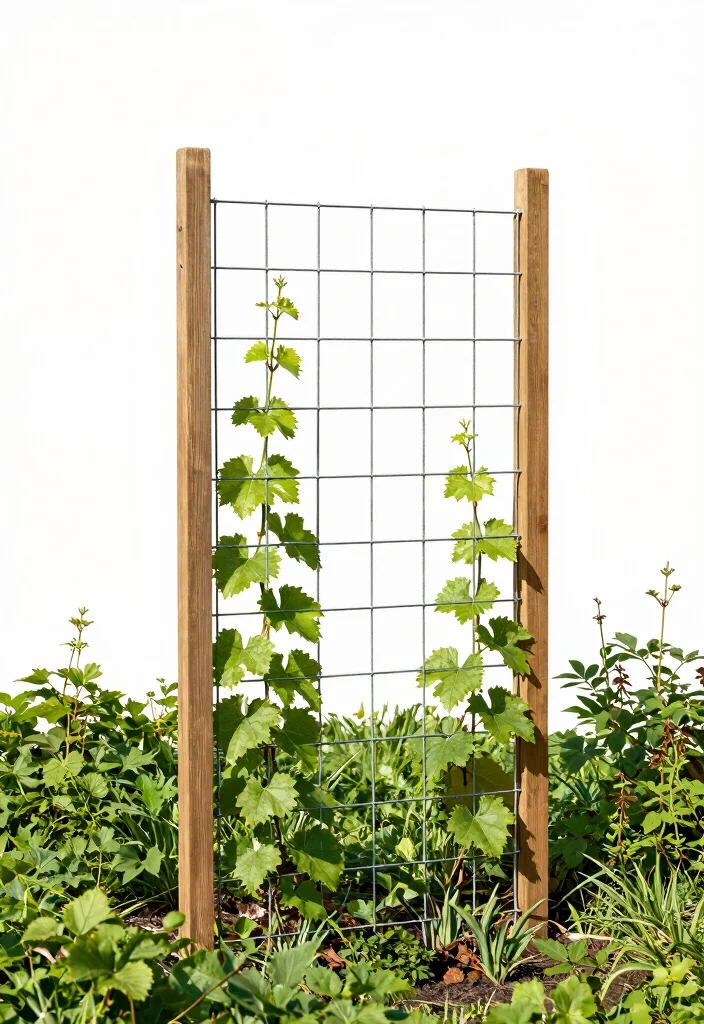
For a sleek, minimalist approach, a simple wire trellis is an excellent option. This design uses thin wires strung between two vertical supports, creating a ‘ladder’ effect that allows your grapevines to climb effortlessly. Its understated look blends seamlessly with any garden style.
Choose galvanized wire for durability against weather elements and ensure the wires are taut to support the weight of growing vines. This trellis can be adjusted to fit various heights and widths, making it versatile for any gardening space.
Key materials needed:
– Galvanized wire for strength.
– Vertical supports from wood or metal.
– Fasteners for assembly.
Instructions:
1. Securely install vertical supports in the ground.
2. String the galvanized wire between the supports at regular intervals.
3. Plant grapevines at the base and guide them along the wires.
4. Regularly check the wires and adjust as needed for optimum support.
This simple design allows your grapevines to shine while maintaining a clean and modern aesthetic.
8. Rustic Pallet Trellis
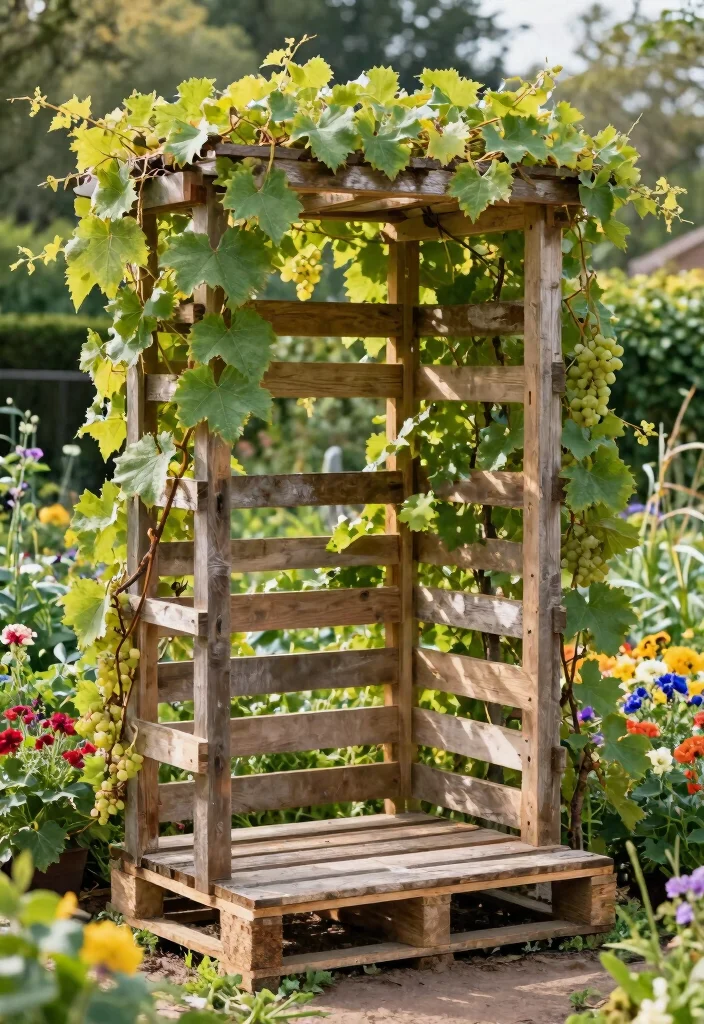
If you want a budget-friendly, rustic option, a pallet trellis is an ideal choice. Repurposing wooden pallets not only saves money but adds a unique character to your garden. This sustainable option offers plenty of support for your grapevines, all while allowing for creative expression.
Use pallets that are in good condition and secure them to a wall or fence for stability. You can attach smaller pallets vertically for a multi-tiered effect, maximizing growth space!
Key materials to gather:
– Wooden pallets for the trellis.
– Fasteners or brackets for assembly.
– Optional paint or stain for customization.
Instructions:
1. Clean and sand pallets to eliminate rough edges.
2. Secure the pallet at your desired location.
3. Plant grapevines at the base and allow them to grow upwards.
4. Customize with paint or decorations to match your garden theme.
This design not only supports your vines but also reflects your unique gardening style.
9. Metal Grid Trellis
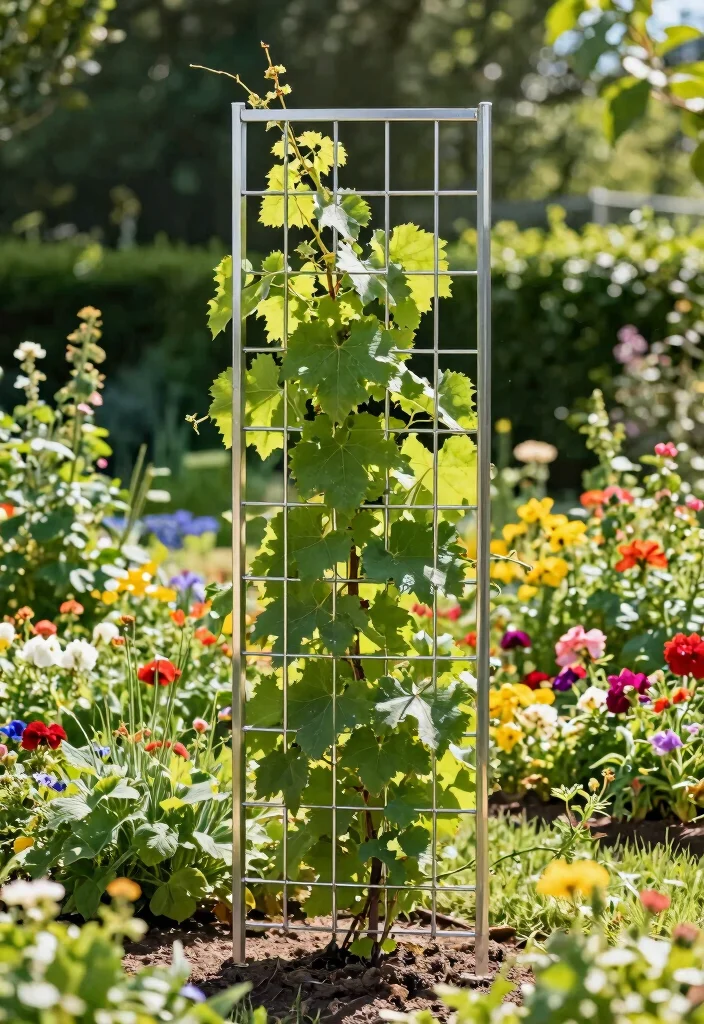
For a contemporary spin on traditional gardening, a metal grid trellis is an excellent choice. Constructed from sturdy metal bars, this design supports your grapevines while adding a striking industrial feel to your garden. It’s perfect for urban gardeners with limited space.
Select colors or finishes that complement your landscape and ensure the grid is securely anchored to support the weight of your vines. This trellis can also serve as an artistic backdrop, especially when adorned with blooming plants.
Key materials needed:
– Metal grid panels for structure.
– Mounting supports for installation.
– Fasteners for securing everything.
Instructions:
1. Install mounting supports securely in the ground.
2. Attach the metal grid panels to the supports for stability.
3. Plant grapevines around the base and guide them to the grid.
4. Experiment with colors or decorations to enhance the overall look.
This metal grid trellis not only supports your grapevines but also introduces a modern edge to your garden.
Did you know a metal grid trellis can support up to 150 pounds per panel, keeping grape vines trellis secure as they grow? Secure anchors, choose a color that blends, and watch urban grape vines flourish with clean lines and reliable support.
Difficulty Rating & Requirements
Overall Difficulty Rating: Medium
Creating a grape vines trellis varies in complexity based on the design you choose. Some trellis styles are straightforward and can be tackled by beginners, while others may require more advanced carpentry skills. If you enjoy hands-on projects and have basic tools, you might find this task enjoyable and rewarding.
Time Estimate:
⏱ Estimated time: 4-10 hours
Depending on the trellis design, you might spend:
– 1-2 hours planning and gathering materials
– 2-6 hours building the structure, depending on complexity
– 1-2 hours for painting or decorating, if desired
Skill Requirements:
– Required skills: Basic woodworking, measuring, and possibly some gardening knowledge
– Beginner-friendly: Yes
– Many designs can be completed by those with no prior experience. Skills like measuring and using basic tools can be learned during the project. Some complex designs may benefit from prior experience, but most can be adapted for newer builders.
Tools & Materials Needed:
🧰 Essential items checklist:
– Wood (treated lumber or cedar) – Required
– Nails or screws – Required
– Drill – Required
– Tape measure – Required
– Saw (hand saw or power saw) – Required
– Level – Optional (helps with alignment)
– Paint or wood stain – Optional (for aesthetics)
– Garden twine or wire – Required for vine support
Step-by-Step Overview:
1. Planning (1-2 hours): Decide on the trellis design and measure your space. Create a list of materials needed.
2. Gathering Materials (1-2 hours): Purchase your materials from a local hardware store. Don’t forget any tools you might need.
3. Building the Trellis (2-6 hours): Follow your design to assemble the trellis. Ensure it’s sturdy, especially if grown with multiple grape vines.
4. Finishing Touches (1-2 hours): If you want, paint or stain your trellis to protect it and improve appearance. This also adds to its durability against the elements.
Professional vs DIY:
Hiring a professional can range from $300 to $1,500 depending on design complexity and materials. If you choose to build the trellis yourself, you could spend around $100 to $300 on supplies. If you’re handy and enjoy DIY projects, building your own trellis can save money and give you a sense of accomplishment. If you feel overwhelmed or unsure about your skills, don’t hesitate to reach out for professional help.
10. DIY Vertical Planter Trellis
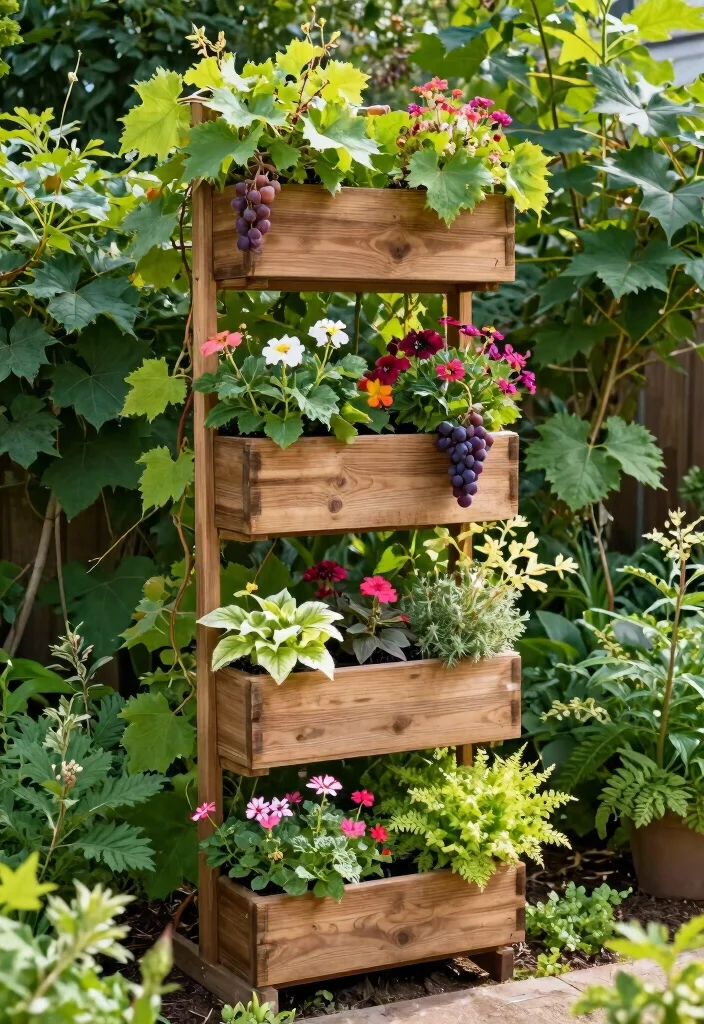
Why not get creative with a DIY vertical planter trellis? This design ingeniously combines planters and trellis into one, providing support and space for growing grapes. It’s perfect for small yards or patios where space is at a premium.
This setup maximizes vertical space while allowing for multiple plants to thrive. Its unique design can also become a focal point in your garden, making it easy to maintain since the plants are at eye level.
Key materials to gather:
– Wooden or plastic planter boxes for planting.
– Vertical support structure from wood or metal.
– Fasteners for secure assembly.
Instructions:
1. Construct a sturdy vertical support structure for the planter boxes.
2. Attach planter boxes securely at varying heights.
3. Fill the planters with soil and plant your grapevines.
4. Train the vines to climb the trellis as they grow.
This clever design not only supports your grapevines but also enhances the beauty of your outdoor space.
11. Tiered Trellis
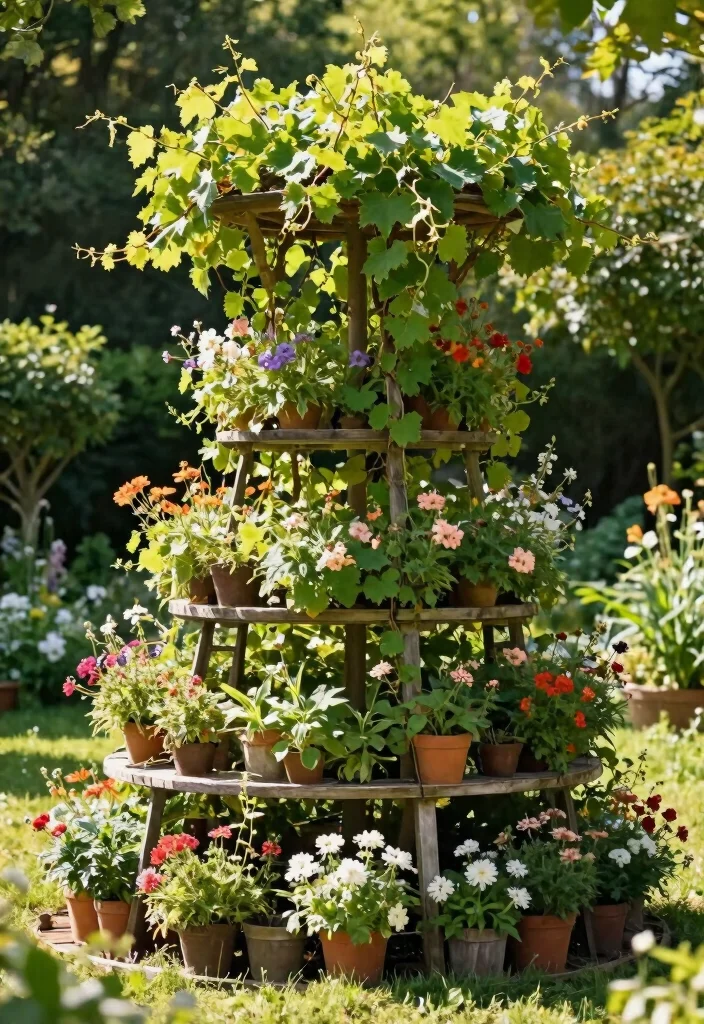
For a dramatic visual effect, consider constructing a tiered trellis. This design features multiple levels that allow grapevines to grow both upward and outward, creating a lush canopy. It’s an ideal choice for larger gardens, adding depth and dimension to your outdoor area.
To build, use sturdy materials that can support the weight of the vines and ensure that each tier is spaced properly for healthy growth. A tiered trellis can also become a stunning focal point, especially when adorned with colorful flowers or climbing plants.
Key materials needed:
– Wooden or metal beams for construction.
– Fasteners for securing levels.
– Soil and plants for each tier.
Instructions:
1. Build a solid base to support the multiple tiers.
2. Create platforms at varying heights for your grapevines.
3. Plant your vines at the base and guide them to grow up through each tier.
4. Decorate with additional plants or flowers for extra beauty.
This design not only supports your grapevines but also creates a breathtaking garden feature.
12. Archway with Lattice
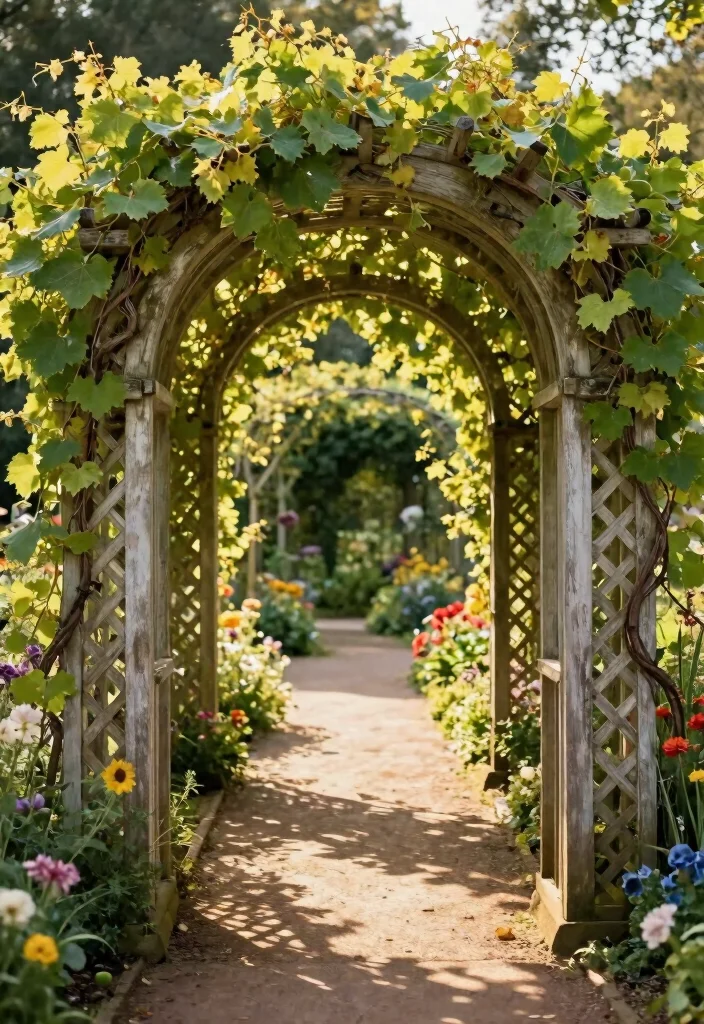
An archway with a lattice trellis introduces elegance to your garden while providing support for grapevines. The lattice design allows vines to intertwine beautifully, transforming your path into a magical walkway filled with greenery.
Choose durable materials for the arch to withstand outdoor elements, and ensure the lattice is securely attached for stability. This combination makes for a stunning focal point, especially when adorned with climbing flowers or twinkling lights.
Key materials needed:
– Wood or metal for the arch and lattice.
– Fasteners for assembly.
– Optional decorations for added charm.
Instructions:
1. Construct an arch with sturdy materials and secure it in place.
2. Attach lattice to the arch for vine support.
3. Plant grapevines at the base and train them to climb the lattice.
4. Decorate with flowers or lights for extra allure.
This beautiful structure not only supports your grapevines but also elevates the elegance of your outdoor space.
13. Hanging Basket Trellis
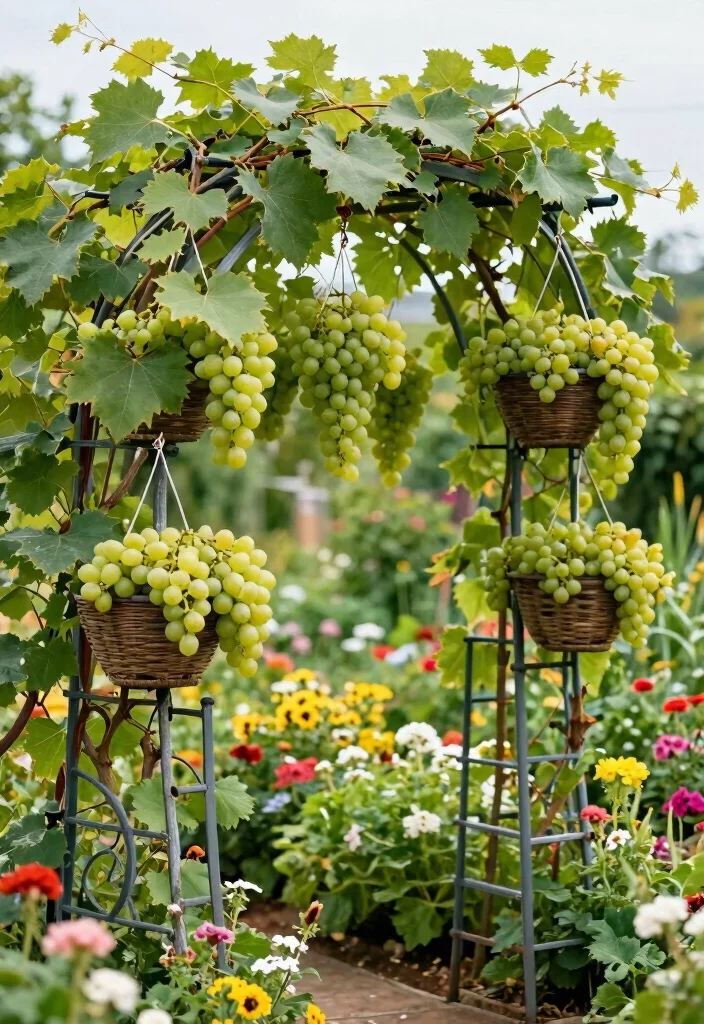
A hanging basket trellis offers a unique and creative method for displaying your grapevines while optimizing space. This design features baskets suspended from a framework, allowing the vines to grow downwards or cascade beautifully.
To ensure safety, make sure the baskets are securely hung and use lightweight materials to ease strain on the structure. Mixing in other plants can create a dynamic and colorful garden display.
Key materials needed:
– Hanging baskets for planting.
– Support structure made of wood or metal.
– Twine or ropes for securing baskets.
Instructions:
1. Build a sturdy framework to hold the hanging baskets.
2. Fill the baskets with soil and plant your grapevines.
3. Hang the baskets at varying heights for visual interest.
4. Keep an eye on moisture levels in the baskets as they grow.
This creative trellis design not only supports your grapevines but also serves as a captivating feature in your garden.
Fun fact: a hanging basket trellis can maximize small-space grape vines trellis, letting vines cascade downward and free up ground space. Hang securely with lightweight materials to protect the structure and make trimming and harvesting easier.
14. Fence Trellis Configuration
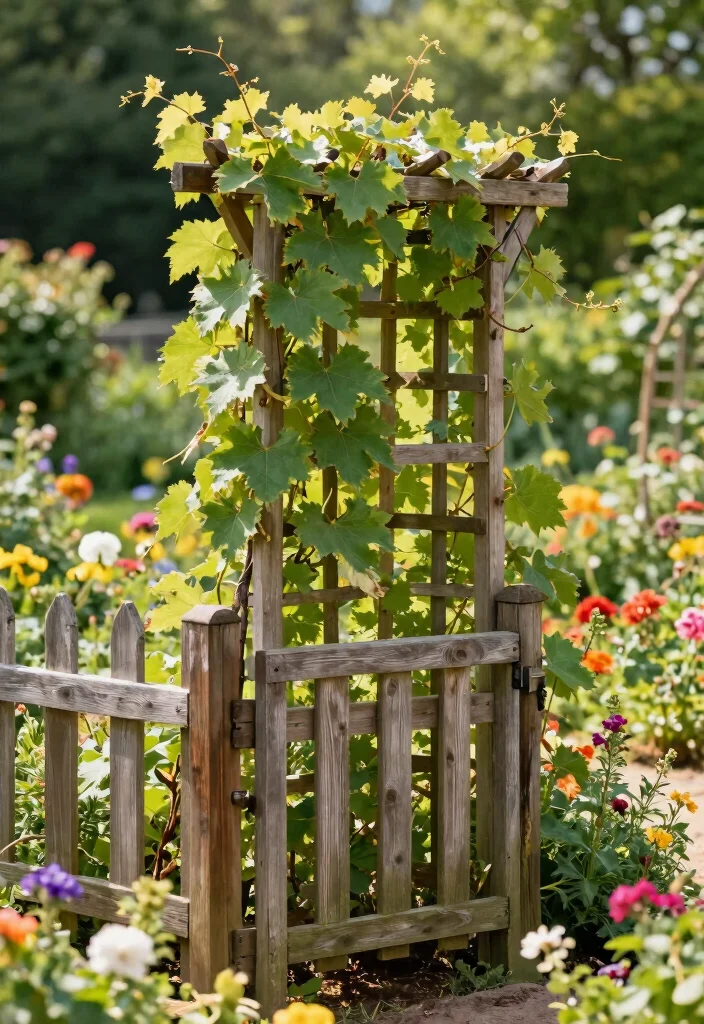
Make the most of your existing garden fence by creating a trellis configuration that supports your grapevines. This practical approach utilizes vertical growth without the need for a separate structure, perfectly integrating into your landscape design.
Ensure your fence is strong enough to support the vines, and consider adding companion plants to naturally deter pests. This configuration allows for a beautiful display of climbing vines that enhance your fence’s appeal.
Key materials needed:
– Garden fence, if not already installed.
– Twine or wire for vine support.
– Fasteners, if necessary.
Instructions:
1. Choose locations to plant your grapevines near the fence.
2. Use twine or wire to create a support system along the fence.
3. Plant grapevines at the base and guide them to grow upward.
4. Regularly check for growth and adjust support as needed.
This design makes efficient use of your space while adding lush greenery to your outdoor area.
15. Grape Cone Trellis
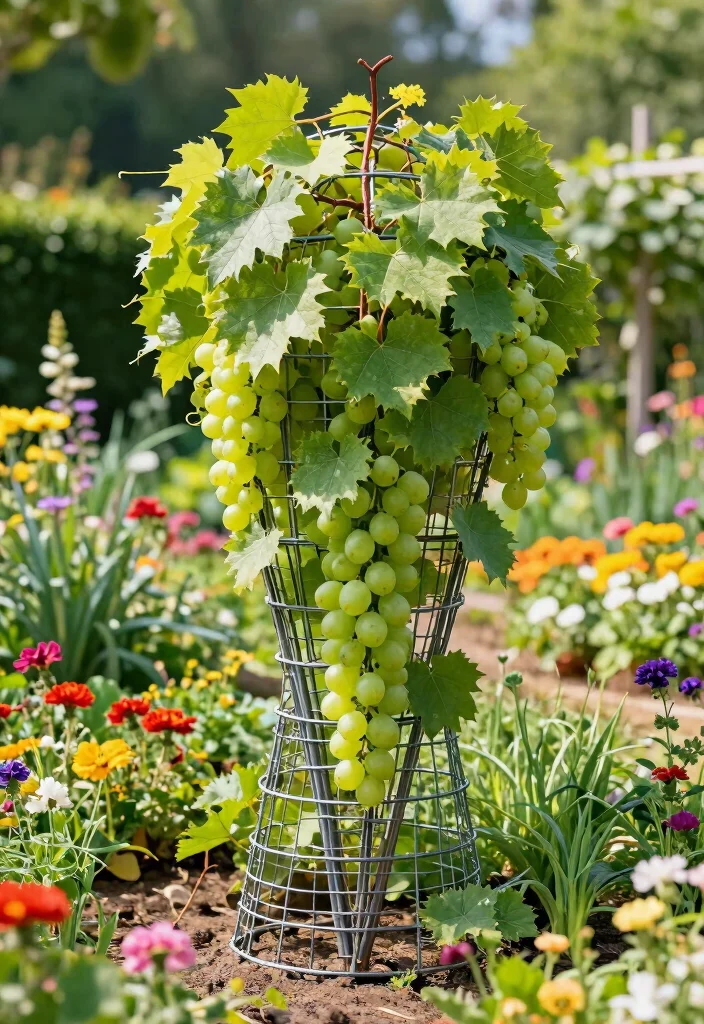
Add a whimsical flair to your garden with a grape cone trellis. This unique design, shaped like a cone, allows vines to spiral upward while providing an artistic touch to your space. It’s sure to be a conversation starter and an enjoyable project for DIY enthusiasts.
A cone shape provides excellent vertical space for growing grapes and creates a striking focal point in your garden. You can paint or decorate the cone for additional flair, making it a personalized feature.
Key materials to gather:
– Wire mesh or sturdy fencing material for structure.
– Wooden or metal base for support.
– Optional paint or decorations.
Instructions:
1. Create a cone shape using wire mesh and secure it to a base.
2. Anchor the cone securely into the ground for stability.
3. Plant grapevines at the base and train them to spiral upwards.
4. Decorate as desired to match your garden theme.
This artistic trellis design turns your grape-growing experience into a fun and creative journey.
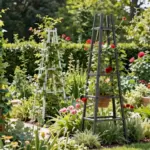
16. Garden Obelisk Trellis
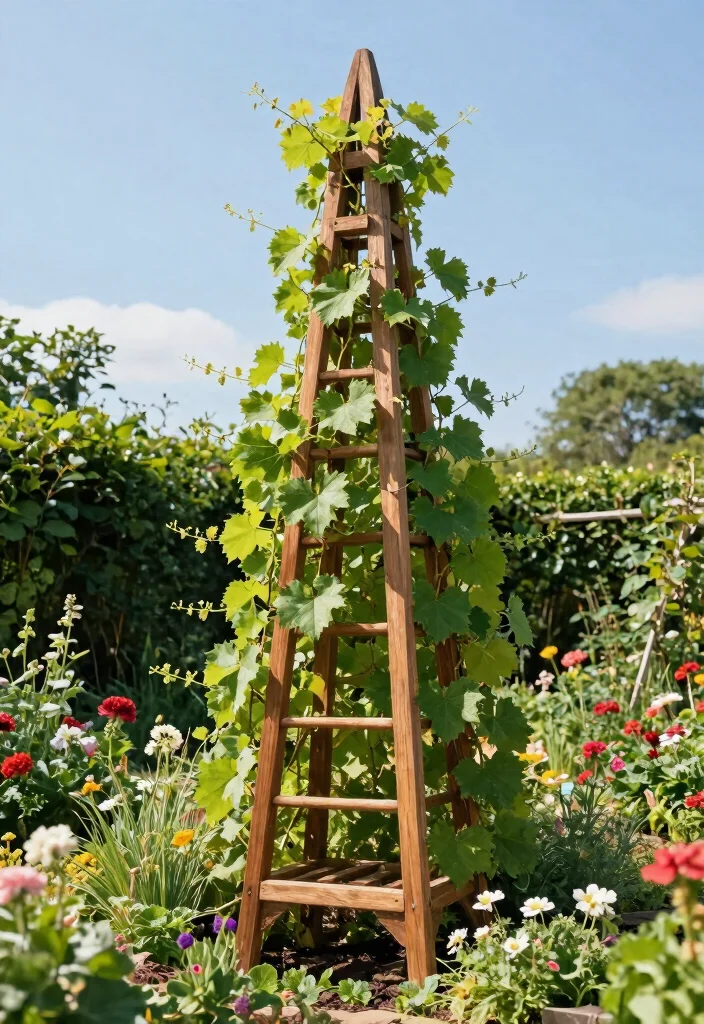
Elevate your garden’s style with a garden obelisk trellis. This vertical structure not only supports grapevines but adds an eye-catching geometric shape to your outdoor area. The tall, spire-like design draws attention upward, creating a stunning focal point for your garden.
Using durable materials ensures stability, and you can paint or stain the obelisk to harmonize with your garden’s aesthetic. This trellis can support multiple plants, making it a versatile addition to your landscape.
Key materials needed:
– Wooden or metal beams for construction.
– Fasteners for assembly.
– Optional paint or decorations for style.
Instructions:
1. Build a sturdy base to support the obelisk shape.
2. Assemble beams into an obelisk structure.
3. Secure the obelisk firmly in your garden.
4. Plant grapevines at the base and guide them to climb the structure.
This elegant design enhances not only your grapes’ growth but also the overall beauty of your outdoor space.
17. Decorated Trellis
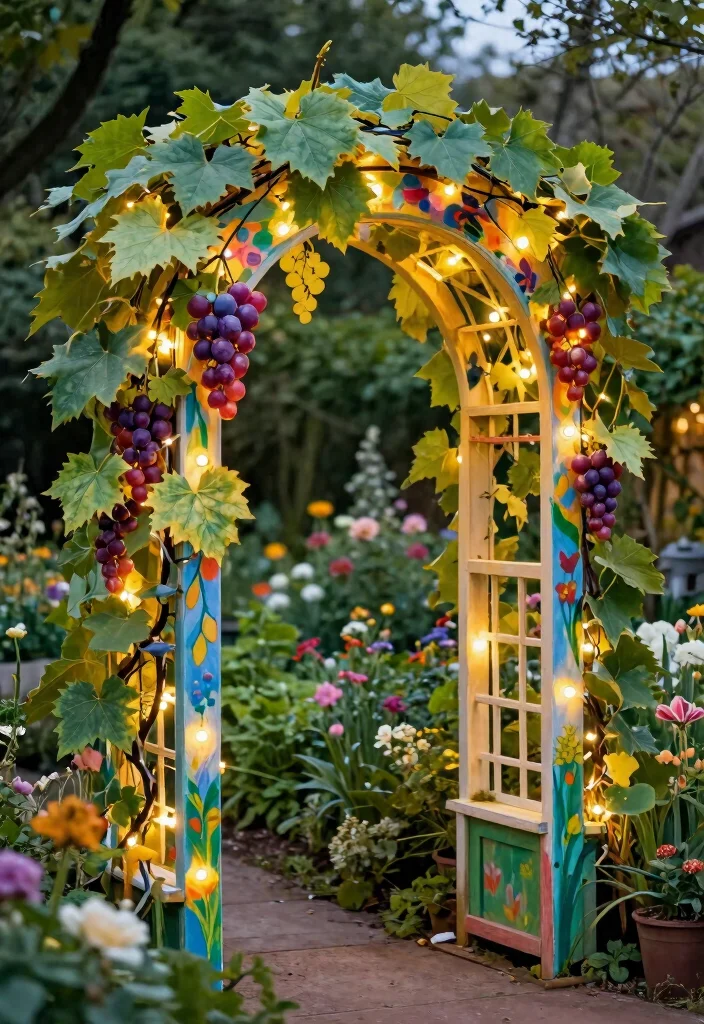
Cap off your grapevine journey with a decorated trellis that showcases your personality! This design invites you to express your creativity by adding personal touches such as painted patterns, hanging decorations, or even fairy lights. It transforms the entire structure into an art piece while providing essential support for your vines.
By incorporating seasonal decorations, you can change the look of your garden throughout the year, creating a whimsical atmosphere perfect for entertaining guests.
Key materials needed:
– Standard trellis materials (wood, metal, etc.).
– Outdoor-safe paints or decorations.
– Optional twinkling lights or hanging elements.
Instructions:
1. Build or install your chosen trellis design.
2. Add decorations using outdoor-safe materials that align with your theme.
3. Plant grapevines at the base and train them to climb.
4. Enjoy the beauty of your personalized trellis as it flourishes.
This fun and creative design will make your garden stand out, showcasing your unique style while supporting your grapevines.
Conclusion
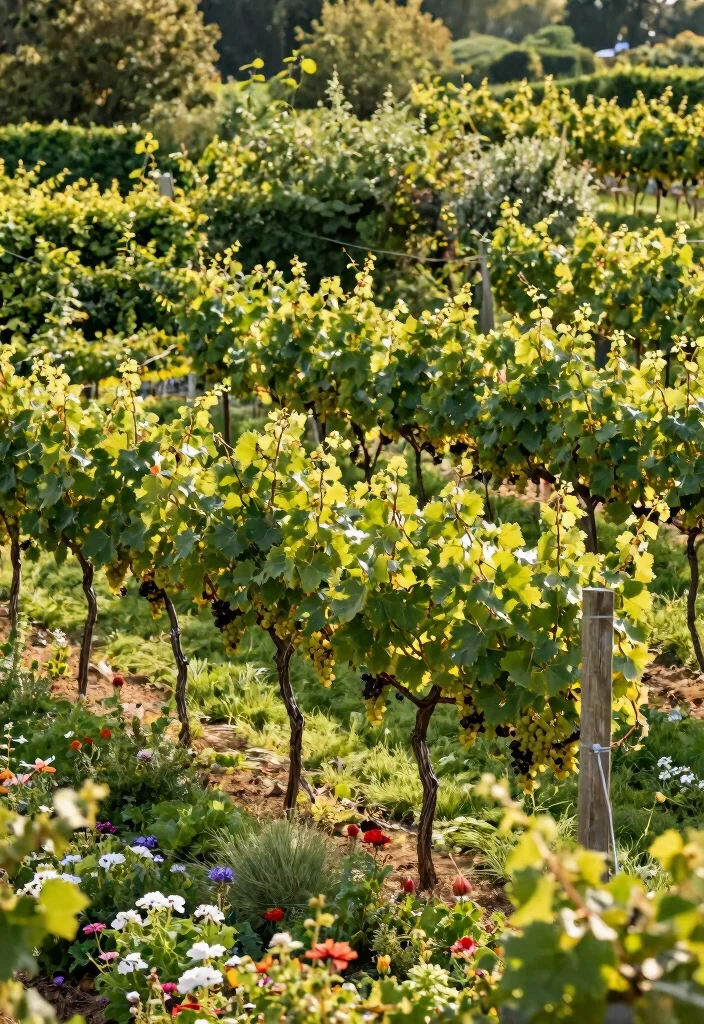
Creating a grape vines trellis is a rewarding endeavor that not only enhances your garden’s beauty but also provides a practical solution for growing these stunning plants.
Whether you opt for a classic design or something more contemporary, each trellis idea can turn your backyard into a charming vineyard space. With careful planning and creativity, your garden can flourish and provide a wonderful harvest while serving as a relaxing retreat. Start your trellis project today and enjoy the myriad benefits of vertical gardening!
Note: We aim to provide accurate product links, but some may occasionally expire or become unavailable. If this happens, please search directly on Amazon for the product or a suitable alternative.
This post contains Amazon affiliate links, meaning we may earn a small commission if you purchase through our links, at no extra cost to you.
Frequently Asked Questions
Question: What are the best grape vines trellis ideas for a backyard vineyard?
For grape vines trellis setups in a backyard vineyard, start with a sturdy post-and-wire system or try a vertical gardening approach. Classic options include a simple single or double wire trellis, or a V‑shaped arrangement to maximize sun and airflow.
Steps to get started: anchor strong posts in concrete, string two to four evenly spaced wires at 24–30 inches apart, train new growth along the wires, and prune annually to keep fruit accessible and the canopy open. For small spaces, consider a wall-mounted trellis or espalier that still delivers the vineyard vibe and solid grape vine support.
Question: How do I choose grape vine support for vertical gardening?
Choose grape vine support that can handle grape weight, weather, and your space. For vertical gardening, go with durable materials like galvanized steel, powder-coated aluminum, or pressure-treated wood. Consider post spacing, post depth, and a load-preserving wire system. Typical setup: posts 6–8 feet apart with 12–24 inch high wires. If you have wind exposure, add bracing. Regular inspection and pruning keep the grape vines trellis strong and the canopy easy to manage within a backyard vineyard.
Question: What trellis design ideas maximize sun exposure, airflow, and fruit quality for grape vines?
Here are a few trellis design ideas that boost sun and airflow: a vertical wire trellis with multiple horizontal wires, a V-shaped or Geneva Double Curtain for high fruit load, an espalier along a wall for space efficiency, and a small pergola or arbor for shade and drama in a backyard vineyard. Start with sturdy posts, level wires at 12–24 inches intervals, and train canes as they grow. Regular pruning is essential to maintain good air circulation and fruit quality.
Question: How can I install a grape vines trellis for a small space or on a slope?
Plan first, choose a design that works with your terrain, like a wall-mounted espalier or stepped post system on a slope. Install durable posts in concrete, then run wires at spaced intervals and ensure they’re level. Use brackets or braces for added stability on uneven ground. This grape vine support will keep vines climbing reliably in tight spaces, delivering the vineyard vibe in a backyard vineyard.
Question: Are there affordable materials for building a grape vines trellis that will last?
Absolutely. You can build a lasting grape vines trellis using affordable materials like pressure-treated lumber or cedar for posts, galvanized or stainless steel wires, and simple hardware. Consider recycled fence panels or pallets for cost-effective options, but make sure they’re treated for outdoor use. For durability, seal wood, choose weather-resistant hardware, and anchor posts firmly. With proper maintenance, this grape vine support setup will stand up to sun and rain while keeping your backyard vineyard vibe strong.
Related Topics
grape vines trellis
vertical gardening
vineyard vibes
climbing plants support
trellis design ideas
backyard vineyard
DIY trellis
beginner gardening
easy gardening projects
sustainable gardening
garden aesthetics
landscape design