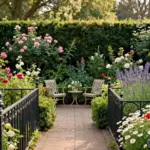
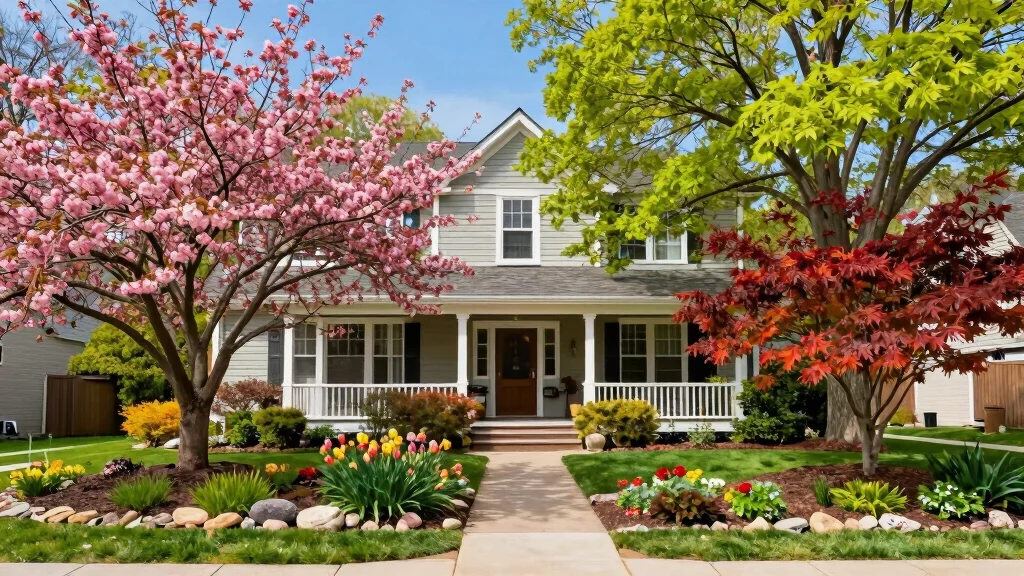
Creating a beautiful front yard can be a rewarding project, especially when you want to enhance your home’s curb appeal. I made this post because I believe the right landscape trees for your front yard can transform any space into a welcoming oasis. Trees do more than just look good; they frame your home, define your outdoor space, and offer shade and beauty for years to come.
If you’re someone who loves gardening, enjoys spending time outdoors, or simply wants to boost the look of your property, this guide is for you. Whether you have a small front yard or a more spacious area, I’ve compiled a list of 16 ornamental trees that are perfect for front yard design. These options are not only stunning but also suitable for various climates and soil types.
In this post, you’ll discover a variety of trees that offer unique shapes, colors, and seasonal interests. From the delicate tones of the Japanese Maple to the striking blooms of the Flowering Dogwood, each tree has something special to add to your home’s exterior. Plus, I’ll share essential tree planting tips to help you make the best choices for your yard. Get ready to be inspired with these landscaping ideas that will truly frame your home!
Key Takeaways
– Variety of Choices: Explore 16 different ornamental trees that can enhance your front yard’s aesthetics and provide varying seasonal colors and textures.
– Space Considerations: Each tree selection includes recommendations for small spaces, ensuring you find options that fit your yard perfectly.
– Seasonal Appeal: Discover trees that offer beautiful blooms in spring, rich foliage in summer, and stunning colors in fall, adding year-round interest to your landscape.
– Planting Tips: Learn essential tips for planting and caring for your chosen trees, helping them thrive in your specific climate and soil conditions.
– Curb Appeal Boost: Understand how the right trees can significantly improve your home’s curb appeal, making it more inviting and attractive to guests and passersby.
1. Japanese Maple
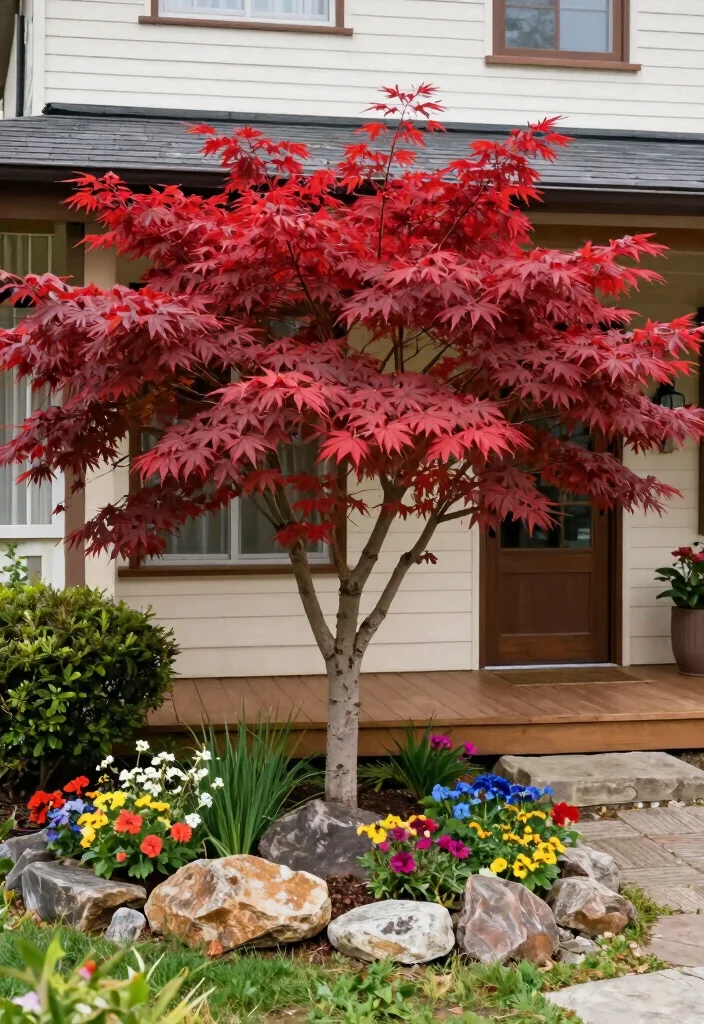
If you’re searching for a tree that brings elegance and tranquility to your front yard, look no further than the Japanese Maple. This tree captivates with its delicate, lace-like leaves that burst into a fiery red during autumn. With its compact size, it fits perfectly in smaller spaces, making it an ideal focal point. Placing a Japanese Maple near your entrance not only adds color but also creates a serene atmosphere that welcomes guests.
Choose a spot with afternoon shade to enhance its vibrant leaf color. Ensure the soil is well-draining and water it deeply yet infrequently to help establish robust roots.
Key planting tips:
– Select a shaded location for optimal leaf color
– Ensure soil drains well
– Water deeply but infrequently for root strength
This stunning tree creates a peaceful ambiance that will enhance your outdoor space year-round.
2. Flowering Dogwood
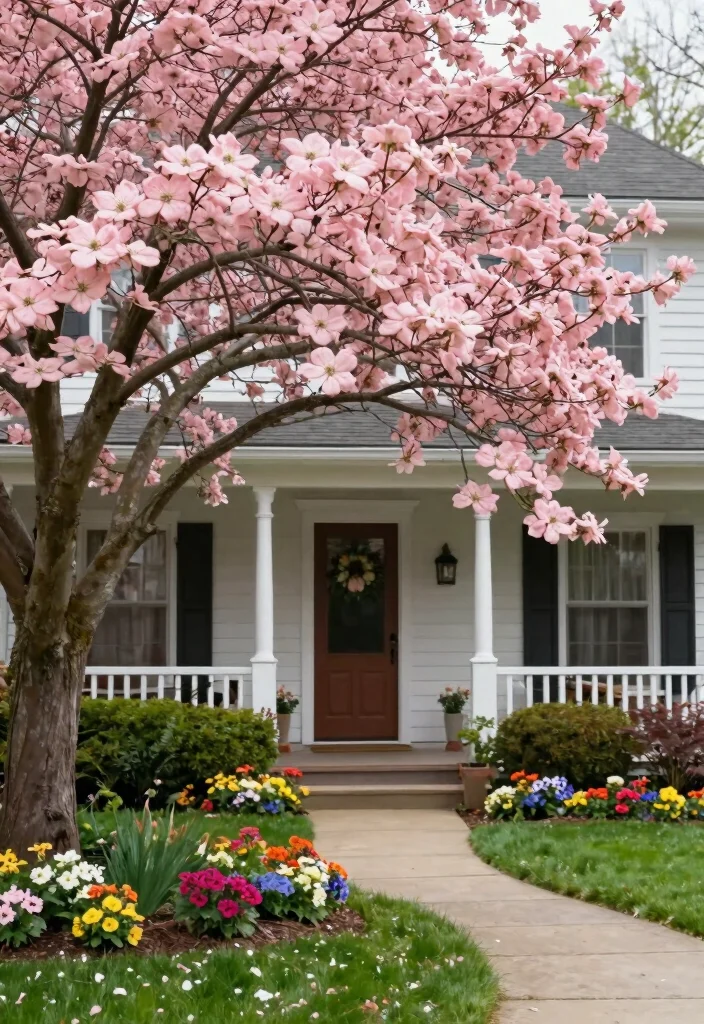
The Flowering Dogwood offers a classic charm with its stunning white or pink blossoms that light up your front yard each spring. Its layered branches and picturesque blooms create an enchanting vibe, adding a touch of romance to your landscape. This tree is ideal for smaller areas, growing to a manageable height while providing an intimate view of its beautiful features.
Planting this tree near your home enhances curb appeal, and its vibrant red foliage in fall ensures year-round beauty. Make sure it has enough space to thrive, allowing roots to develop properly.
Planting insights:
– Prefers well-drained, slightly acidic soil
– Plant in full sun to partial shade for best blooms
– Ensure sufficient space for root growth
By adding a Flowering Dogwood, you’ll enjoy seasonal beauty that elevates the charm of your home.
3. Crape Myrtle
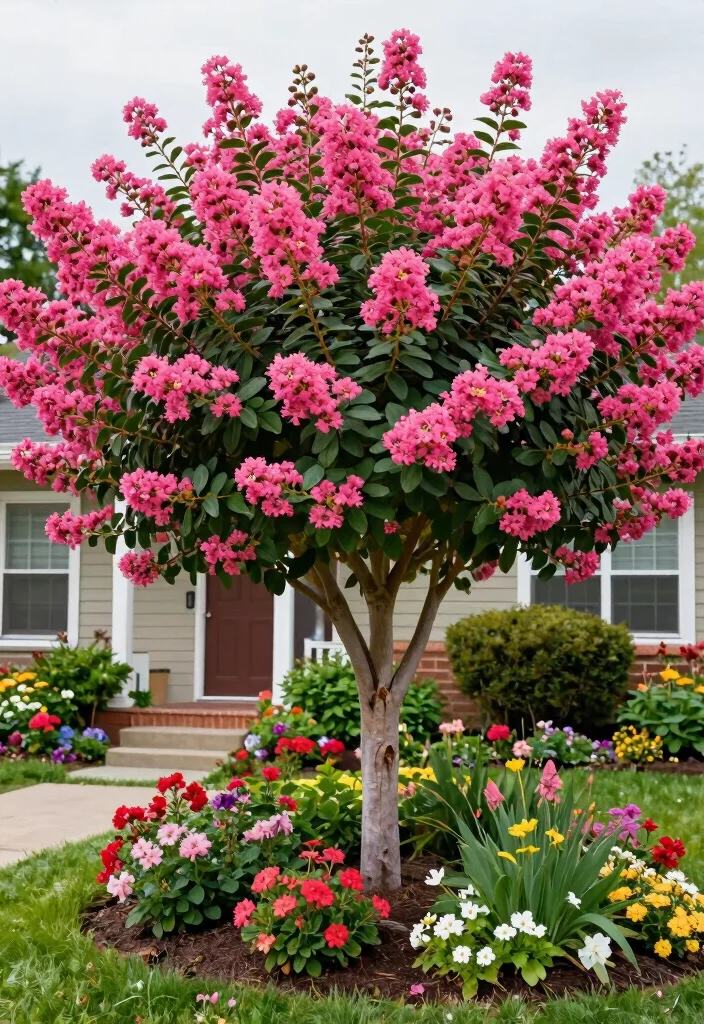
For those looking to add vibrant colors to their front yards, the Crape Myrtle is an excellent choice. Known for its stunning summer blooms, this tree can be grown as a multi-stemmed small tree, perfect for framing your home or creating a colorful border. Its flowers come in shades of pink, white, red, and lavender, beautifully complementing your house’s hues.
Additionally, its smooth, mottled bark adds year-round interest. To maximize impact, think about planting several together for a striking display.
Care tips:
– Regularly prune for abundant blooms
– Ensure full sun exposure for best flowering
– Water during dry spells to maintain health
This tree will light up your landscape with vibrant colors, making your front yard an inviting space all summer long.
4. Redbud Tree
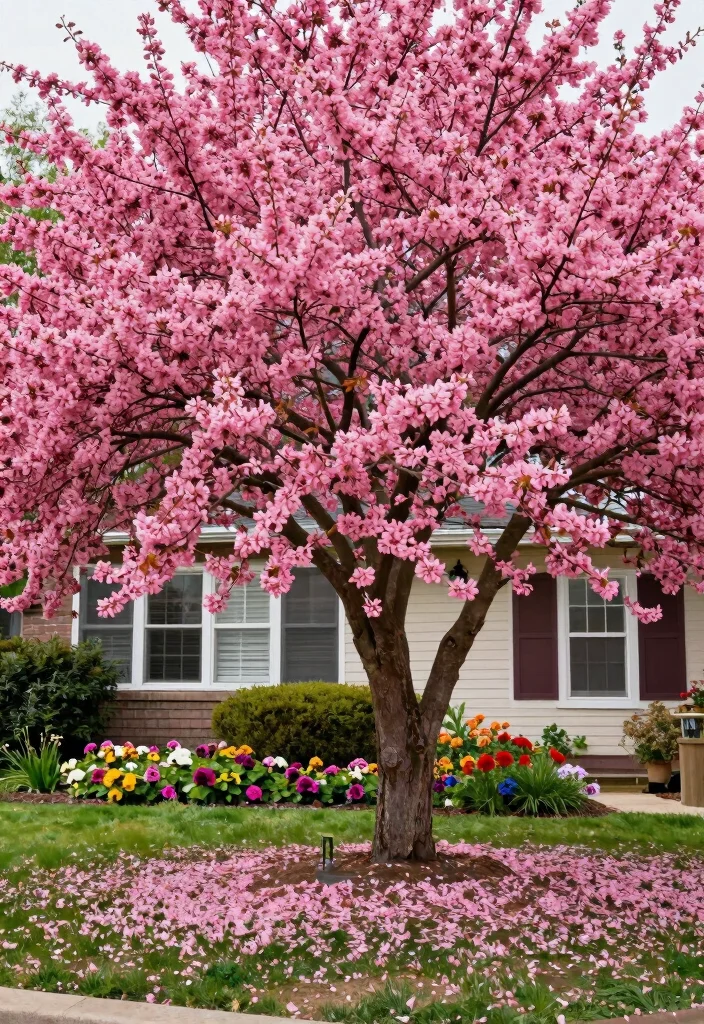
The Eastern Redbud is a delightful tree that transforms your yard in spring with clusters of stunning pink flowers. Its heart-shaped leaves and unique branching structure make it an eye-catching addition, especially in smaller spaces. As a low-stature tree, it complements taller trees or homes beautifully, providing a perfect under-story option.
In fall, expect vibrant yellow foliage, ensuring it remains a focal point throughout the seasons. Pair this beauty with low shrubs or perennials for a layered landscape effect.
Planting guidance:
– Thrives in well-drained soil and full sun to partial shade
– Maintain sufficient spacing from larger trees for proper growth
By incorporating a Redbud Tree, you’ll enhance your yard’s visual appeal while enjoying its seasonal transformations.
Top Varieties for Different Conditions
Japanese Maple
– Best conditions: Thrives in temperate climates with well-drained soil.
– Key features: This tree boasts stunning foliage that changes color beautifully with the seasons. Its graceful shape adds elegance to any front yard.
– Considerations: It prefers partial shade and may require protection from strong winds.
Flowering Dogwood
– Best conditions: Grows well in slightly acidic, well-drained soil in temperate regions.
– Key features: Known for its striking white or pink flowers in spring, the dogwood also offers vibrant fall color. Its compact size makes it perfect for small spaces.
– Considerations: Watch for diseases like dogwood anthracnose, and ensure it gets enough moisture.
Crape Myrtle
– Best conditions: Loves hot, humid climates and thrives in full sun.
– Key features: This beauty blooms all summer long, showcasing vibrant flowers in shades of red, pink, or white. It’s also quite drought-tolerant once established.
– Considerations: It may require some pruning to maintain its shape, so plan to invest some time in care.
Ornamental Pear
– Best conditions: Ideal for urban areas with a variety of soil types, doing well in full sun.
– Key features: This tree produces beautiful spring blossoms and has a rounded shape perfect for framing a house. Its glossy green leaves turn yellow in fall, adding seasonal interest.
– Considerations: It can be prone to branch breakage in storms, so choose a sturdy variety like the ‘Bradford.’
Weeping Cherry
– Best conditions: Prefers well-drained soil and full sun in temperate climates.
– Key features: This stunning tree features cascading branches covered in pink or white flowers, creating a lovely focal point in your yard.
– Considerations: Regular pruning is necessary to maintain its form and health.
Korean Lilac Tree
– Best conditions: Grows best in full sun and well-drained soil, thriving in temperate climates.
– Key features: With fragrant purple flowers in late spring, this small tree is perfect for adding charm and fragrance to your front yard.
– Considerations: It may require some pruning to promote airflow and prevent disease.
Royal Poinciana
– Best conditions: Thrives in hot, dry climates with full sun and well-drained soil.
– Key features: This tree creates a stunning display of bright red-orange flowers in summer, making it a showstopper in any yard.
– Considerations: It needs plenty of space as it can grow quite large, so ensure you have room for its expansive canopy.
Climate/Condition Guide:
You should choose trees based on your local climate. Here are some guidelines:
– Temperate climates: Most trees like the Japanese Maple and Flowering Dogwood thrive here. They can handle cold winters and warm summers.
– Continental climates: Look for hardy trees that can withstand extreme temperatures, such as the Crabapple Tree.
– Coastal areas: Trees like the Crape Myrtle do well with salt air and can handle the moisture from nearby water sources.
– Hot/dry areas: Opt for drought-resistant varieties like the Royal Poinciana. They can thrive with minimal water once established.
– Humid regions: Trees such as the Weeping Cherry flourish in the warmth and moisture of these environments.
Growing Tips:
1. Make sure to plant your tree in the right spot where it gets the right amount of sun and water.
2. Regularly check for pests and diseases to keep your trees healthy.
3. Mulch around the base to help retain moisture and regulate soil temperature.
Avoid:
1. Don’t crowd your trees! Ensure they have enough space to grow without competing for nutrients.
2. Beware of planting trees with aggressive roots too close to your home, as they can damage foundations or sidewalks.
5. Stewartia
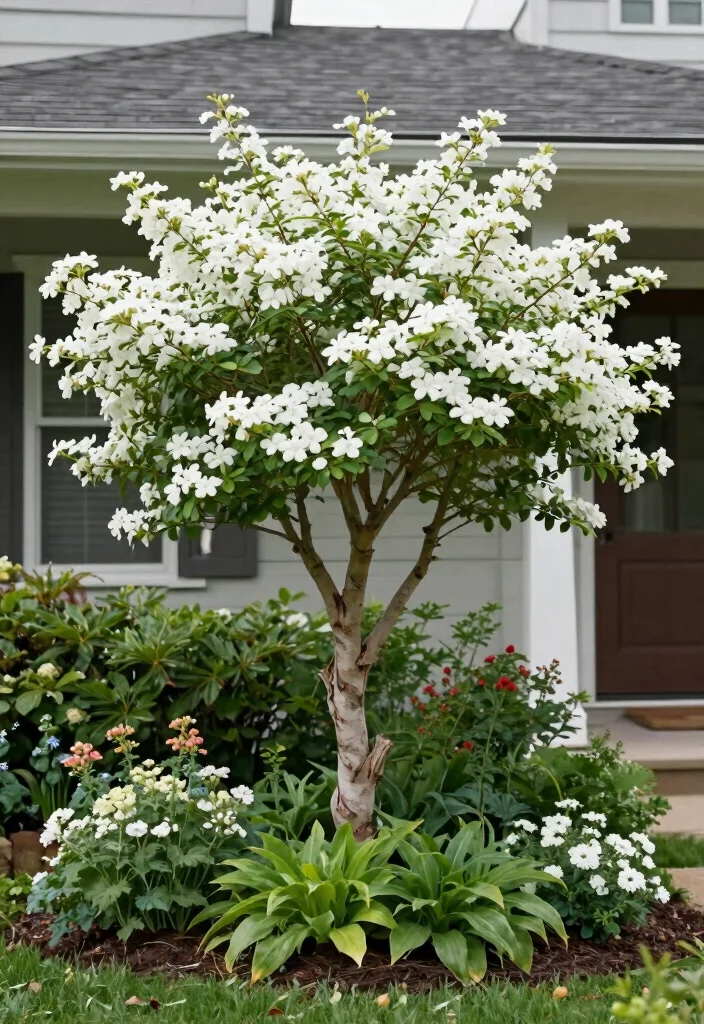
Stewartia is a hidden gem among ornamental trees, showcasing stunning white blooms that resemble camellias. Its unique bark peels in layers, revealing a smooth texture that adds character throughout the seasons. This tree grows upright, making it a fantastic option for small gardens without taking too much space.
In fall, expect breathtaking shades of orange and red, creating a beautiful display. It pairs well with perennials and can be positioned near seating areas for you to enjoy its beauty up close.
Care instructions:
– Prefers well-drained, acidic soil
– Needs adequate sunlight while enjoying some afternoon shade
Adding Stewartia to your landscape will bring a unique charm and year-round visual interest.
6. Ornamental Pear
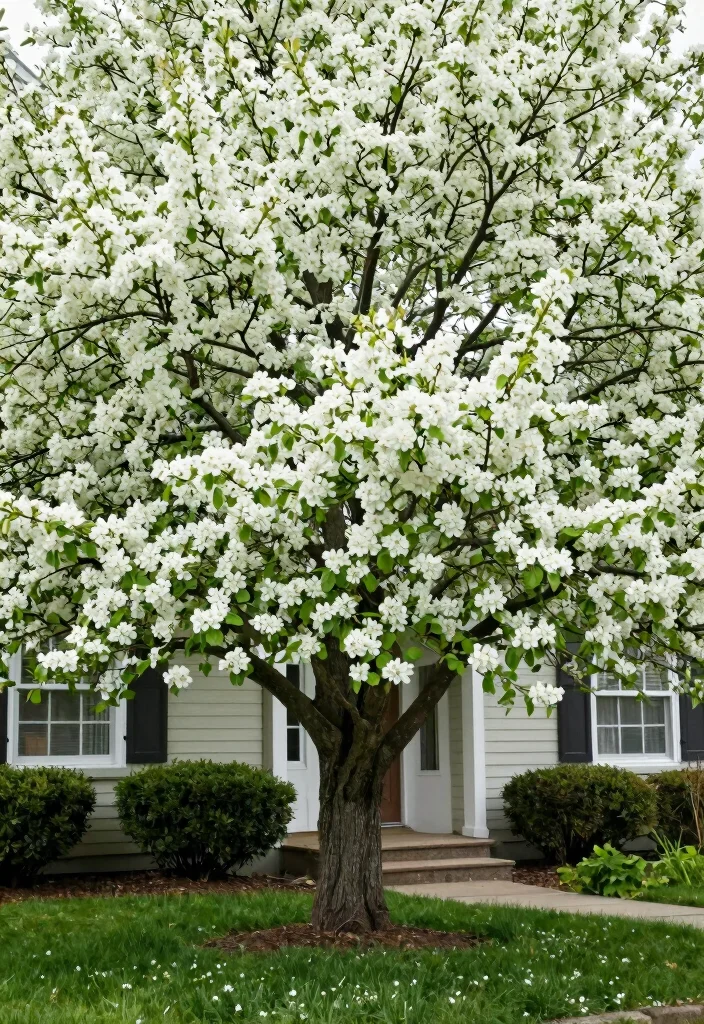
Ornamental Pear trees are favored for their rapid growth and stunning spring blossoms. In spring, enjoy a spectacular display of fragrant white flowers that transform your yard into a picturesque scene. This tree reaches heights of 20 to 30 feet, framing your home beautifully without taking up too much width.
Its glossy leaves turn a lovely purple in the fall, ensuring seasonal interest. Plus, it adapts well to various soil types, making it a perfect low-maintenance choice for busy gardeners.
Planting tips:
– Ensure adequate sun exposure for healthy blooms
– Avoid planting too close to hardscapes to prevent root damage
With an Ornamental Pear, you’ll enjoy a beautiful, trouble-free addition to your front yard that offers stunning seasonal displays.
7. Weeping Cherry
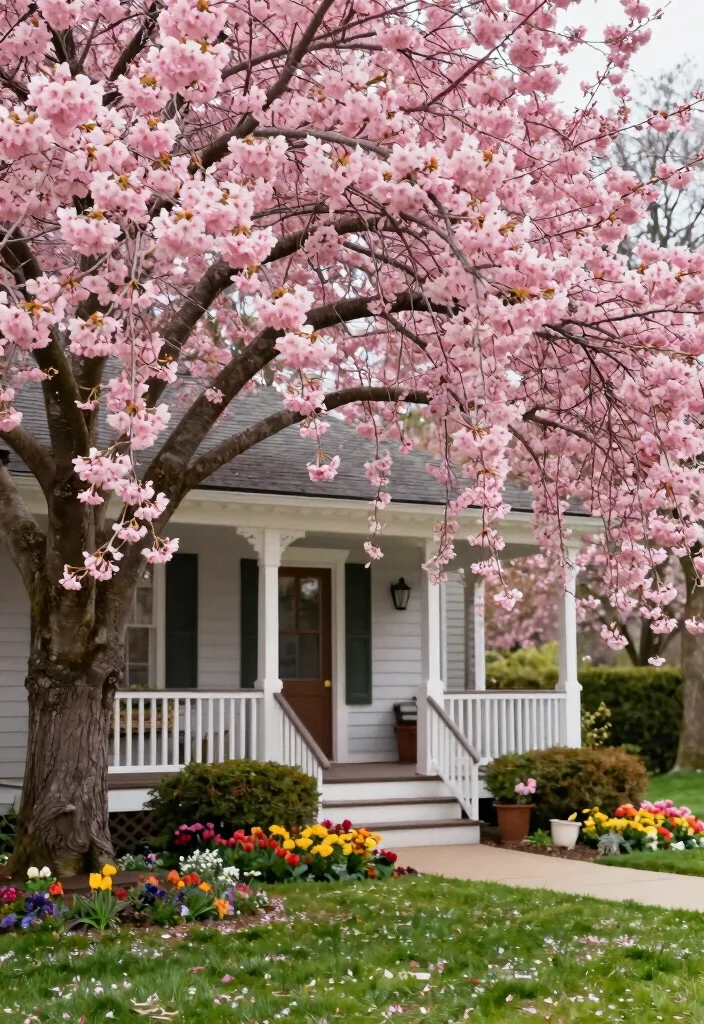
The Weeping Cherry tree exudes grace and beauty, with cascading branches draped in delicate pink or white blossoms each spring. This tree’s graceful arching growth makes it an ideal specimen to frame your entryway or garden path. In fall, its leaves transition to warm shades of yellow and orange, maintaining visual interest through the seasons.
Thriving in full sun, the Weeping Cherry showcases its elegant drooping branches beautifully. Consider placing it where its charm can be appreciated from both the street and your home.
Care suggestions:
– Require regular watering until established
– Prune to maintain desired shape and encourage blooming
By planting a Weeping Cherry, you’ll create a stunning focal point that enhances the beauty of your outdoor space.
8. Korean Lilac Tree
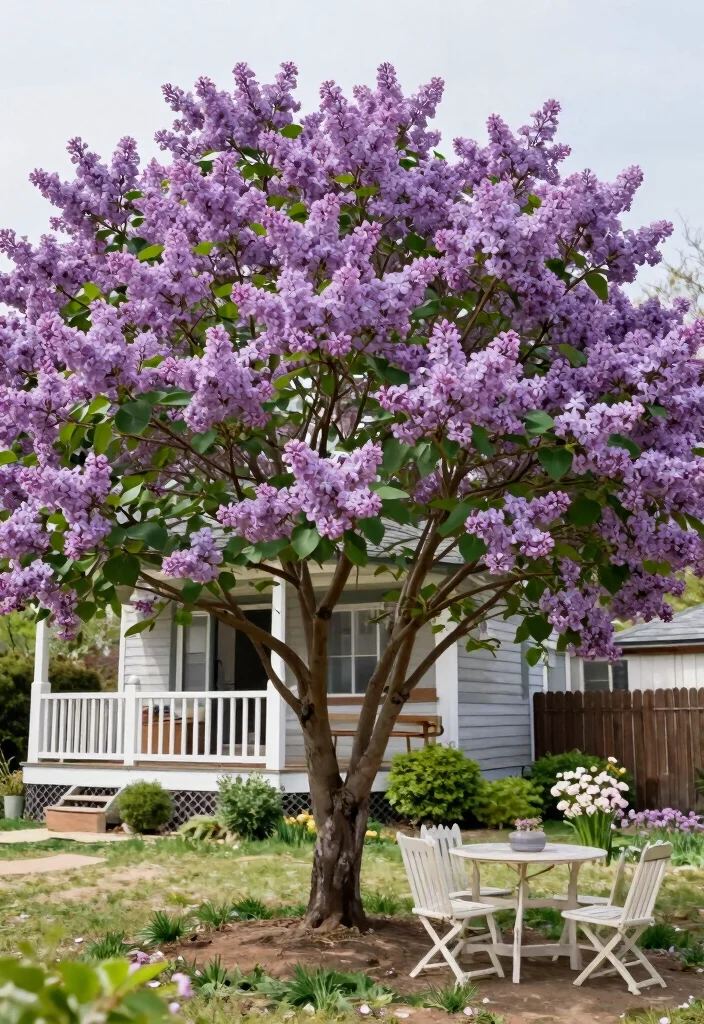
The Korean Lilac Tree presents a fragrant delight with clusters of lilac-purple blooms that appear in late spring. This small ornamental tree is perfect for compact spaces, growing to about 10-15 feet tall. Its compact size fits seamlessly into various landscape designs while providing that much-needed pop of color.
Not only does it look gorgeous, but its flowers also attract pollinators, making it a wonderful choice for eco-friendly gardens. Plant it near seating areas to enjoy its delightful fragrance and beauty closely.
Care notes:
– Ensure full sun exposure for maximum blooming
– Prune after flowering to maintain shape
With a Korean Lilac Tree, you’ll enjoy vibrant blooms and the sweet scent that invites nature into your garden.
9. Smoke Tree
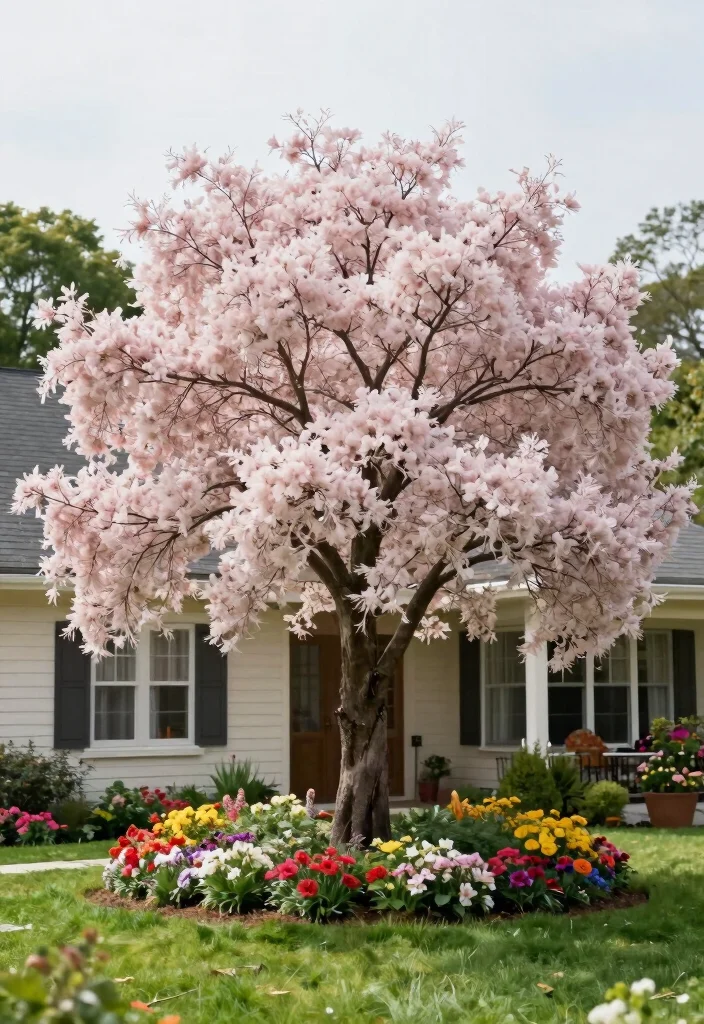
The Smoke Tree is a unique ornamental choice, featuring striking smoke-like flower clusters that emerge in late spring. This tree adds a whimsical touch to your front yard, especially with its vibrant foliage that transforms into shades of gold, orange, and red in the fall. Best suited for full sun, it can grow up to 15 feet, making it a stunning frame for your home.
Plant this tree where its unusual features can be appreciated up close, creating a beautiful contrast against your home’s backdrop.
Helpful tips:
– Thrives in well-drained soil
– Prune in late winter to promote new growth
By adding a Smoke Tree, you’ll enhance your landscape with a captivating and colorful feature that draws the eye.
Fun fact: the Smoke Tree’s smoky blossoms and up-to-15-foot height create instant drama for landscape trees front yard displays. It transforms your home into a warm, golden-orange focal point as fall fades in.
10. Magnolia Tree
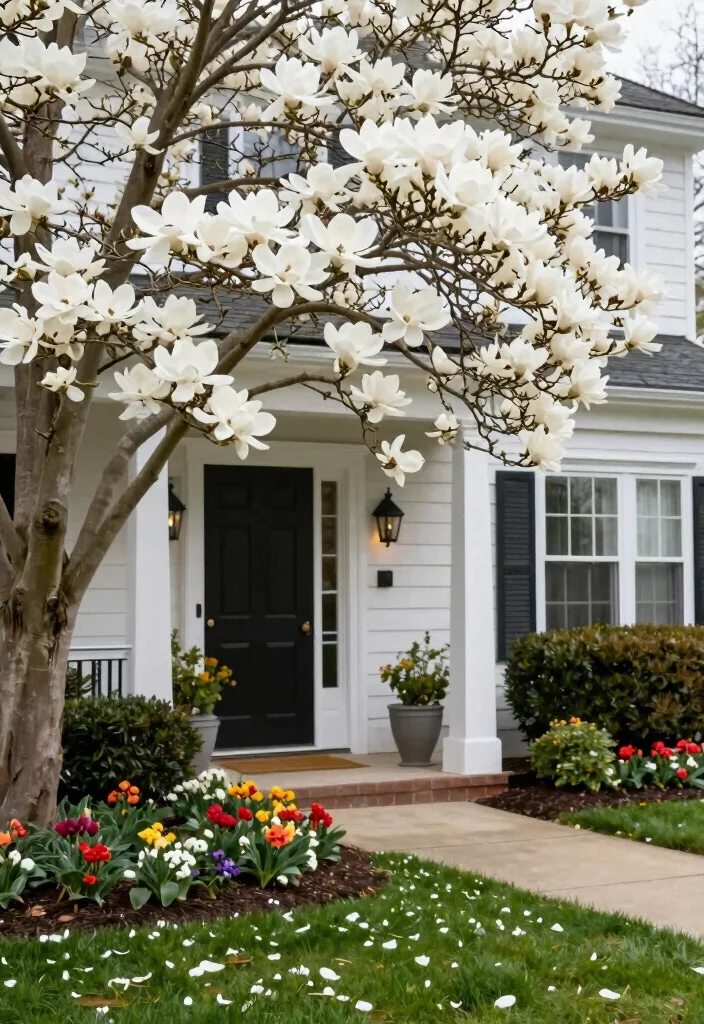
The Magnolia tree is iconic for its large, fragrant flowers that bloom in spring, adding a classic touch to any front yard. Known for its glossy leaves and impressive blooms, this tree can grow large but can also be kept smaller with careful pruning. Various Magnolia varieties offer flowers in colors ranging from creamy white to pink and purple.
Position a Magnolia tree at your yard’s entrance to make a dramatic statement that attracts attention with its stunning beauty and rich fragrance. Plant it where its beauty can be enjoyed from a distance and appreciated up close during the blooming season.
Planting insights:
– Prefers acidic, well-drained soil
– Enjoys better blooms with ample sunlight exposure
With a Magnolia tree, you’ll create a striking focal point that enhances your home’s appeal.
11. Persian Ironwood
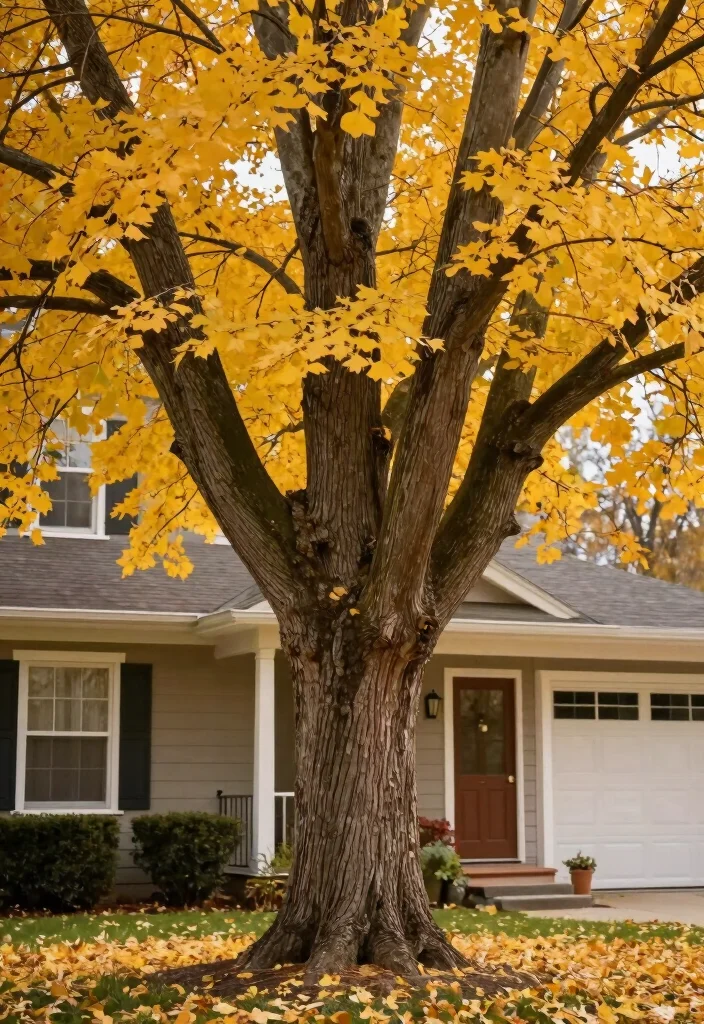
The Persian Ironwood is a captivating tree that offers year-round interest through its unique foliage and bark. With its attractive partitioning leaves, this tree provides a lush canopy without overwhelming smaller spaces. In fall, expect leaves to turn a golden-yellow, while its bark reveals a lovely texture that catches the eye.
This tree prefers well-drained soil and full sun, making it suitable for various landscape designs. Planting it near a garden path enhances the visual appeal and adds depth to your front yard.
Care tips:
– Water thoroughly during dry periods
– Prune to shape and maintain size
By incorporating a Persian Ironwood, you’ll enjoy a stunning tree that brings beauty and interest to your garden throughout the year.
12. Crabapple Tree
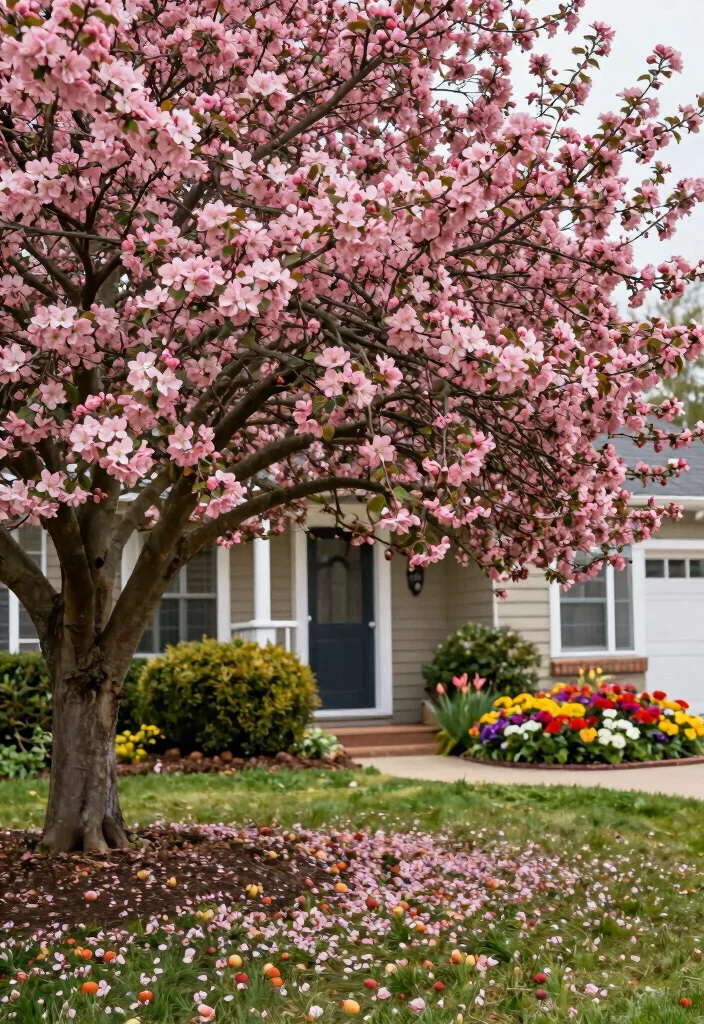
The Crabapple tree is a versatile ornamental option that brings stunning blooms in spring and interesting fruit in the fall. This tree typically reaches heights of 15-25 feet, making it a perfect fit for smaller yards. Its fragrant flowers can range from white to deep pink, creating a lovely focal point.
In addition to its beautiful blooms, the crabapples themselves attract birds to your garden. Consider choosing a variety with small fruit to avoid messy clean-up after autumn.
Planting considerations:
– Requires well-drained soil and ample sunlight
– Regular pruning enhances blooms and fruit quality
With a Crabapple tree, you’ll enjoy vibrant flowers and the lively presence of wildlife in your garden.
13. Lacebark Elm
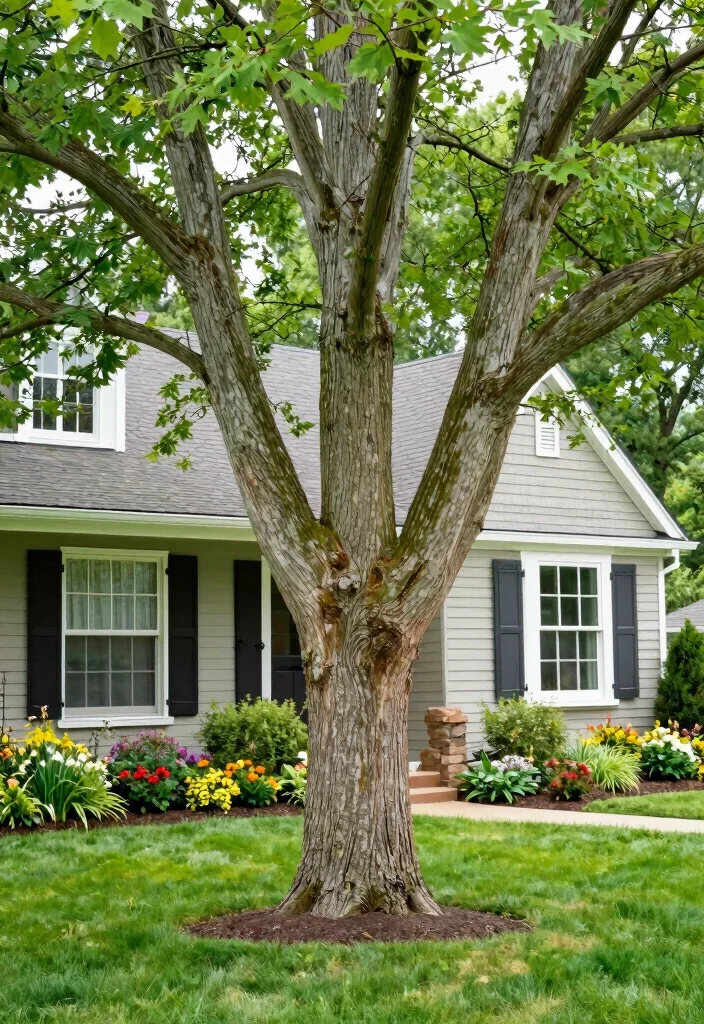
The Lacebark Elm is an excellent choice for those seeking a unique ornamental tree with a stunning bark display. Its rich green foliage provides excellent shade, while the mottled bark adds year-round interest. Highly adaptable, this tree thrives in various soil types, making it an easy choice for many gardeners.
In fall, the leaves turn a beautiful yellow, providing a striking contrast to its distinctive bark. Position this tree to provide shade to seating areas or as a backdrop for blooming plants, enhancing your front yard’s overall design.
Gardening tips:
– Requires minimal maintenance once established
– Water during dry spells for optimal growth
By adding a Lacebark Elm, you’ll create a beautiful shaded area that enhances your landscape’s character.
14. Black Locust
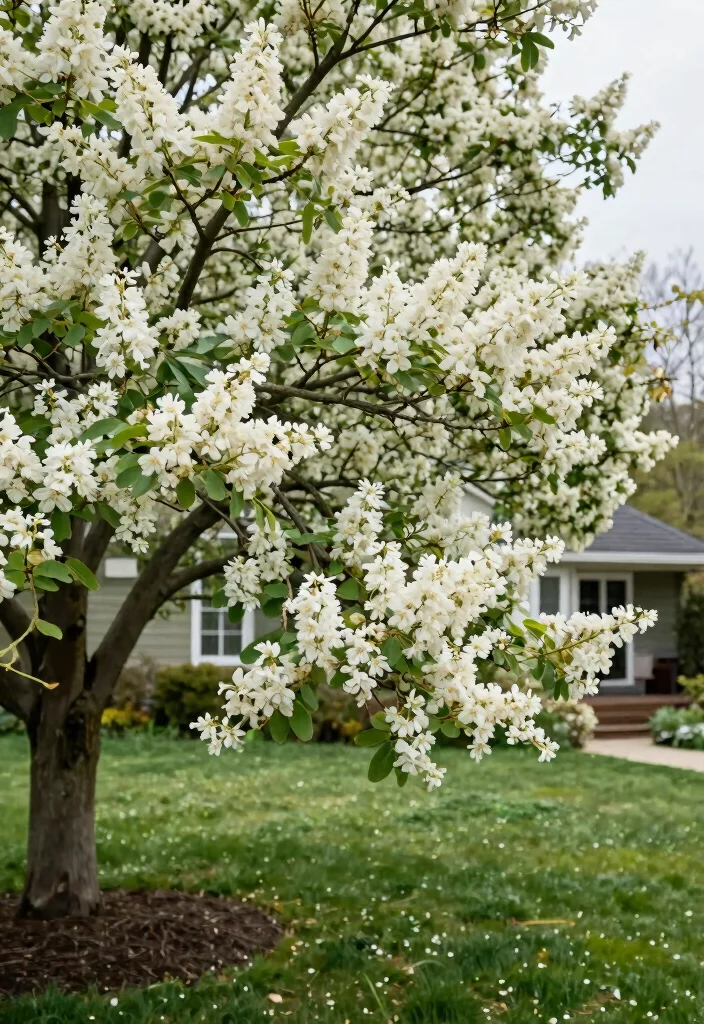
The Black Locust tree enchants with its fragrant white flowers that bloom in late spring, making it a lovely addition to any front yard. This tree can grow up to 30 feet tall, forming a rounded crown that provides ample shade. It’s appreciated for its hardiness and thrives even in poor soil conditions, making it a fantastic choice for low-maintenance gardens.
When in bloom, the sweet scent of its flowers fills the air, attracting pollinators to your garden. Plant it near outdoor seating areas to enjoy an aromatic experience throughout spring.
Planting guidance:
– Prefers full sun and well-draining soil
– Regular watering is essential during the first few years
With a Black Locust tree, you’ll add beauty and fragrance to your front yard while supporting local wildlife.
❝ Black Locust trees bring fragrance and shade to your landscape trees front yard, up to 30 feet tall with a hardy, low-maintenance vibe. In late spring, its white blooms attract pollinators and fill outdoor seating areas with sweet scent—perfect for busy gardeners. ❞
15. Royal Poinciana
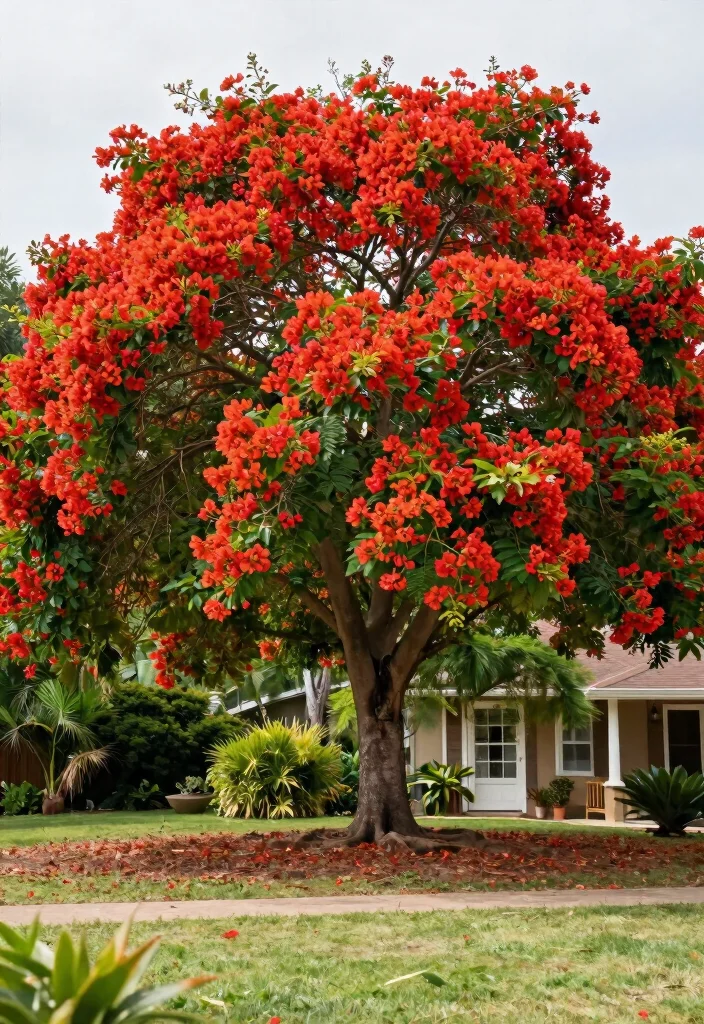
The Royal Poinciana is a truly spectacular ornamental tree, known for its vibrant red-orange flowers that bloom in summer. With its broad, umbrella-like canopy, it provides excellent shade and acts as a striking visual centerpiece. Thriving in warmer climates, this tree grows large, making it suitable for spacious front yards.
Its lush, fern-like foliage contrasts beautifully with the bright flowers. To maximize its impact, plant it in an open area where it can be enjoyed unobstructed.
Care tips:
– Requires full sun and well-drained soil
– Prune to shape and encourage branching
By incorporating a Royal Poinciana, you’ll create a stunning focal point that brightens your landscape throughout the summer.
Fun fact: Royal Poinciana trees can grow a broad umbrella canopy up to 60 feet wide, turning your front yard into a dramatic landscape feature. Plant in an open space to enjoy full shade and vibrant red-orange flowers all summer, making it a standout choice among landscape trees front yard.
16. Fringetree
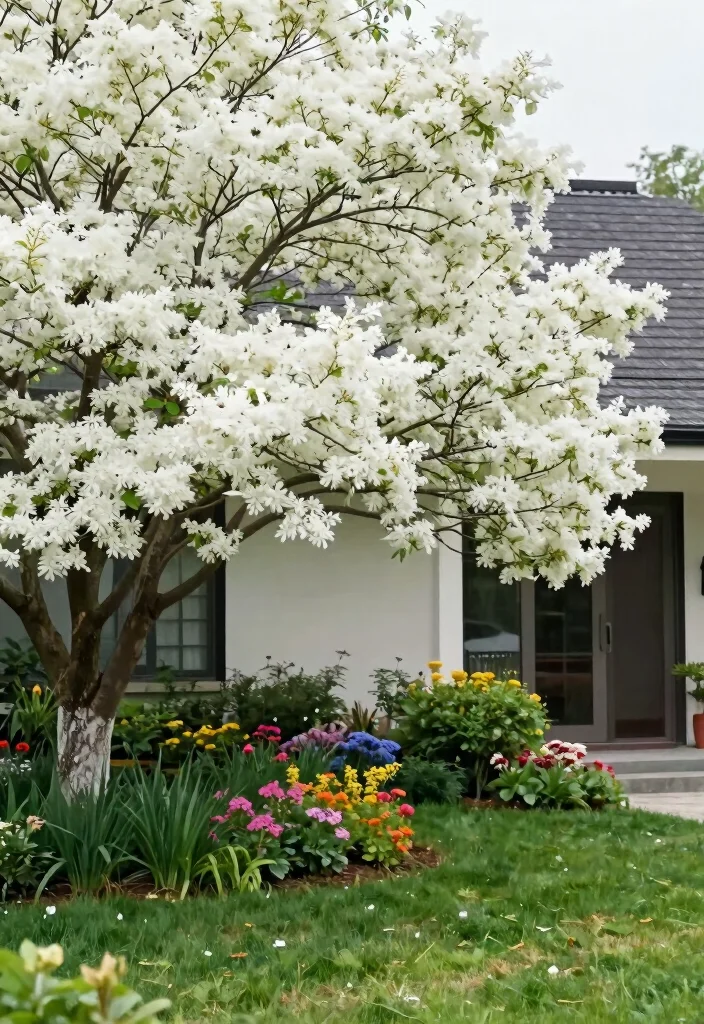
The Fringetree is a delightful ornamental choice recognized for its lovely, fragrant white flowers that appear in late spring. This small to medium-sized tree fits perfectly in compact gardens, growing between 12 to 20 feet tall. Its unique flower clusters resemble fringes, adding a whimsical touch to your landscape.
In fall, the leaves turn a vibrant yellow, bringing warmth to your yard. Pair this tree with low-growing perennials for a layered look that enhances your front yard’s beauty.
Tree planting insights:
– Prefers moist, well-drained soil
– Needs full sun to partial shade for optimal growth
By adding a Fringetree, you’ll infuse your landscape with charm and seasonal beauty.
Conclusion
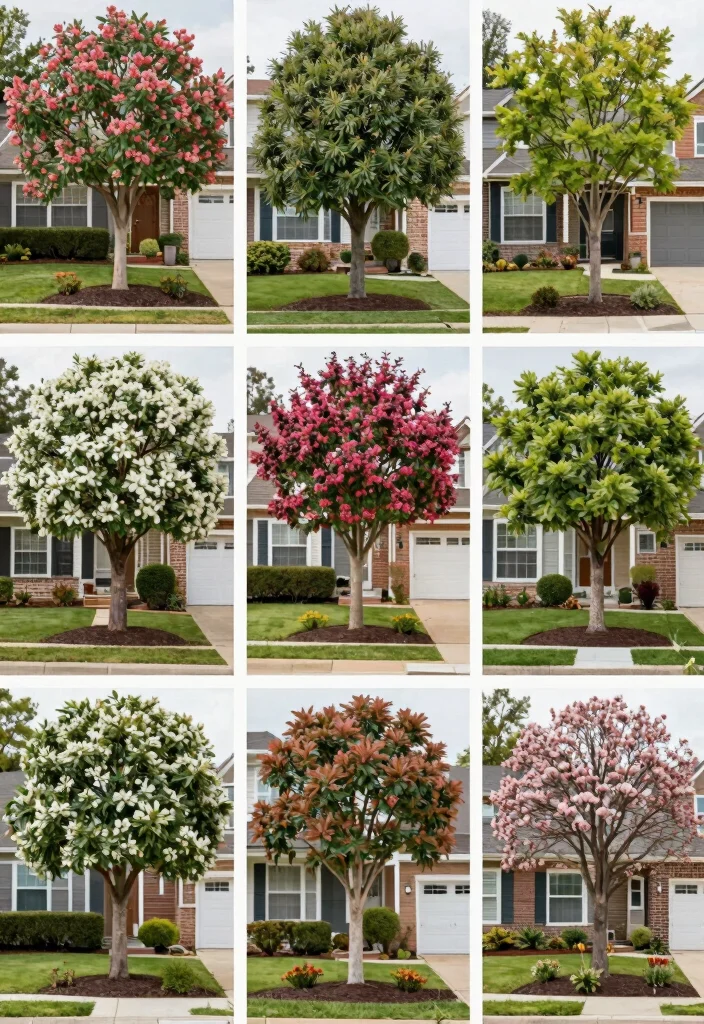
Choosing the right ornamental trees for your front yard can significantly enhance your home’s appeal and overall aesthetics.
These 16 ideas offer a diverse range of options that cater to different styles and needs.
Whether you prefer vibrant blooms, unique foliage, or stunning bark, there’s a perfect tree waiting to frame your home beautifully.
Note: We aim to provide accurate product links, but some may occasionally expire or become unavailable. If this happens, please search directly on Amazon for the product or a suitable alternative.
This post contains Amazon affiliate links, meaning we may earn a small commission if you purchase through our links, at no extra cost to you.
Frequently Asked Questions
Question: What are the best landscape trees for a front yard in a small space?
Small front yards benefit from ornamental trees with vertical impact and compact root systems. Here are five reliable options to consider: Dwarf Japanese Maple for color and delicate form; Columnar Hornbeam for a slim silhouette; Serviceberry for spring blooms and summer berries; Kousa Dogwood for reliable structure and showy flowers; Ornamental Cherry for year‑round interest.
When selecting, check mature height and root spread, place trees at roughly 1/2 to 2/3 of their mature height from your home and from any sidewalks, and ensure a full growing season of root establishment with consistent watering.
Pair these with a simple groundcover or low shrub border to keep the space feeling open, not crowded. This approach helps your front yard design stay balanced and boosts curb appeal while staying within a small footprint.
Question: How can I design a front yard that frames my home with landscape trees and boosts curb appeal?
Start by choosing 2–3 focal ornamental trees that frame the entry and anchor the corners of your house. Place a taller option behind the porch line and flank with two smaller accent trees at the corners to create a classic frame.
Mix evergreen for year‑round structure with a deciduous option for seasonal color, texture, and interest in front yard design and landscaping ideas.
Keep sightlines clear, leave space for walkways, and underplant with low shrubs and groundcovers to soften edges.
Finally, consider scale and maintenance: choose trees that will maintain proportion as they mature, which will boost curb appeal without overwhelming the space. With these steps you’ll have a cohesive, welcoming look that speaks to landscape trees front yard while staying practical for a small lot.
Question: What are essential tree planting tips for front yards?
Before you dig, test your soil and pick containers or bare-root accordingly. Dig a hole 2–3 times the root ball diameter, but not deeper than the root ball. Set the tree at grade (the root flare above soil) and backfill with native soil, tamping gently. Water deeply after planting and mulch with 2–4 inches of organic mulch, keeping it away from the trunk to prevent rot. Stake only if necessary for wind protection in the first year. Avoid heavy fertilizer at planting — wait for a soil test or signs of nutrient deficiency. Regular watering during the first growing season helps establish roots. These are practical tree planting tips for ornamental trees in a small front yard, keeping roots contained and soil healthy for your landscape ideas.
Question: How far should I plant landscape trees front yard from sidewalks, driveways, and the house to prevent conflicts?
Rule of thumb: choose a distance based on the tree’s mature size. For most small front yard ornamental trees, plant at least 6–12 feet from the house and 6–8 feet from sidewalks or driveways. If you expect a taller specimen, push back toward the 12–15 feet range. Also consider canopy spread and root intrusion; avoid placing trees directly under overhead lines, and leave space for maintenance access. Always check local guidelines and consider native options to improve landscape ideas and curb appeal while keeping roots healthy.
Question: What maintenance schedule keeps ornamental trees front yard looking great all year?
Create a simple routine: in early spring, prune dead or crossing branches and shape focal trees once they’re established; late spring to early summer, watch for pests and apply targeted treatments if needed; summer, monitor soil moisture and water deeply, especially in hot spells; fall, mulching and clean up after leaf drop to keep lines tidy; winter, protect young trees from frost and if needed, apply windbreaks. Fertilize only after a soil test shows a nutrient need. Regularly rake leaves and remove spent blooms to keep the design neat. Following this schedule helps your landscape ideas stay vibrant, and your front yard design keeps its curb appeal throughout the year.
Related Topics
landscape trees front yard
ornamental trees
front yard design
curb appeal
small yard landscaping
tree planting tips
easy landscaping
front yard decor
seasonal blooms
low-maintenance trees
garden aesthetics
beginner gardening