Metal sheds excel in providing strength and long-term reliability, capable of withstanding 90 mph winds and heavy snow for up to 20 years.
On the other hand, resin sheds are preferable for quick installations and do not rust.
I’ve experienced that warped resin walls struggle with heavy loads, while neglected steel requires regular cleaning.
Your climate, storage needs, and willingness to maintain the structure significantly influence your decision, which is why the details below outline which option suits your situation best.
Metal vs. Resin Sheds: Which Lasts Longer?
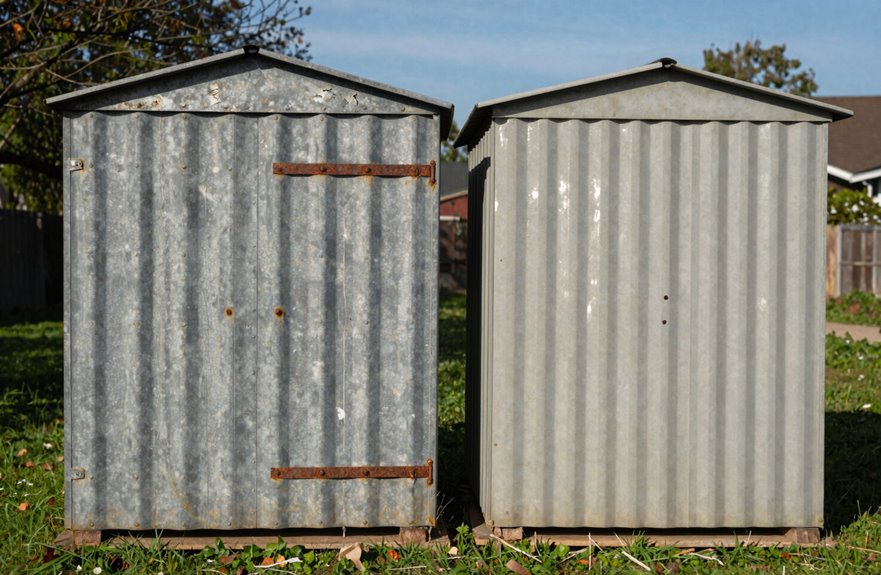
How long should you realistically expect your shed to last before needing repairs or a full replacement? I’ve learned this through experience and here’s what you need to know.
Metal Sheds: The Endurance Champion
Metal excels in longevity. A quality metal shed can last over 20 years, handling heavy loads and demanding use without sagging. I once overloaded mine with lumber, and there was no warping or issues.
A quality metal shed can last over 20 years, handling heavy loads and demanding use without sagging.
Resin Sheds: The Convenient Compromise
Resin provides 5 to 10 years of casual service. It’s rust-proof and lightweight, but if stressed too much, you might see warping. I learned that storing my riding mower on resin shelving was an unrealistic expectation.
The Bottom Line
For longevity, metal outperforms resin in harsh conditions. Resin is suitable for basic storage with minimal upkeep. Choose based on how you intend to use it, as I’ve made the wrong choice before, and replacing it is a hassle.
Which Shed Handles Extreme Weather Better?
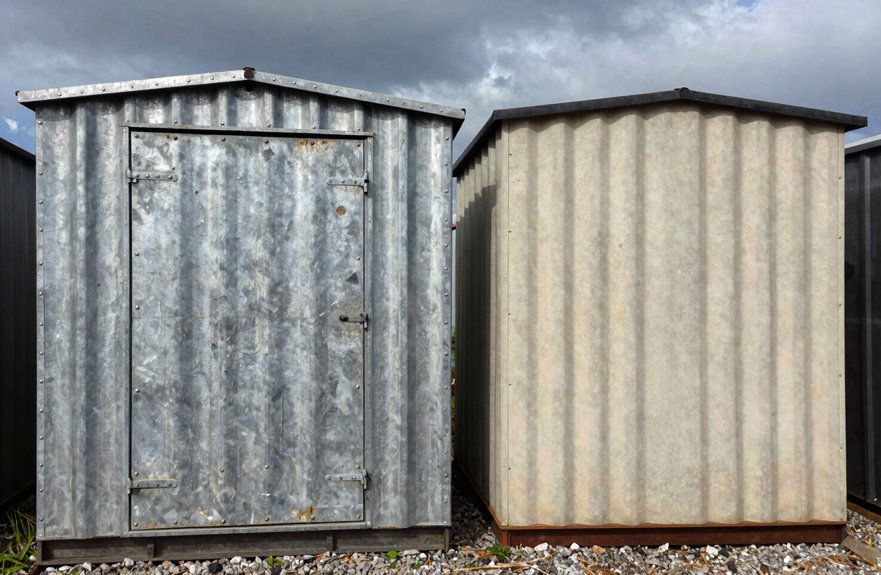
When selecting a shed for harsh weather, it’s important to understand how metal and resin withstand pounding hail, strong winds, and heavy snow loads. Metal sheds offer significant structural strength, while resin provides rust-proof protection, although it has some notable vulnerabilities. Let’s examine how each material performs when faced with severe conditions, as improper choices can lead to shed failures.
Metal Shed Weather Performance
Where do you live, and what weather challenges hit your yard every winter? I’ve seen metal sheds withstand conditions that can damage lesser structures, and their weather durability is impressive.
| Weather Challenge | Metal Shed Response |
|---|---|
| Heavy snow loads | Reinforced panels handle 20+ lbs per square foot |
| Driving rain | Sealed seams prevent moisture intrusion |
| High winds | Anchored frames resist 90+ mph gusts |
| Hail impact | Dented maybe, but never cracked or shattered |
| Temperature swings | 20-year lifespan without warping |
Metal sheds endure harsh weather. I’ve watched them withstand nor’easters with only minor scratches. The durability comes from engineered steel that maintains its shape under stress, unlike materials that fatigue and fail. This represents decades of reliable protection.
Resin Shed Weather Limits
Although resin sheds have their fans, I learned their limits the hard way after installing one in my own backyard. I thought I had found the perfect low-maintenance solution, but weather resistance isn’t resin’s strongest suit.
Here is what I discovered about resin sheds and their durability challenges:
- Wind vulnerability: My shed’s lightweight construction became obvious during a 45 mph storm when the walls flexed noticeably. I underestimated how much anchoring resin actually needs.
- Weight-bearing reality: I tried mounting heavy tools on the walls, which was a bad idea. The material’s lower density means shelves sag over time, which I learned in about 18 months.
- UV exposure: While inhibitors help, my south-facing wall showed fading after three summers.
Resin withstands moisture and pests effectively, but extreme conditions expose structural limitations that metal does not have.
Climate Durability Comparison
If you’re deciding which shed will endure your local weather, I’ve learned a lot from observing both materials in action.
Resin durability excels in wet climates; it resists rot, rust, and termites. I’ve seen resin sheds withstand coastal humidity that would damage metal. However, I underestimated the impact of a windstorm. Resin can warp under significant stress, and those lightweight panels flex when rigidity is needed.
Metal durability performs better in extreme conditions, such as hail and heavy snow. My neighbor’s anchored steel shed withstood 70 mph gusts that twisted my resin unit. The downside is that if you neglect rust prevention in humid areas, you may need to replace panels in five years.
For climate durability, choose a material based on your specific risks: moisture favors resin, while wind and impact favor metal.
Metal Shed Rust Risks and How to Prevent Them
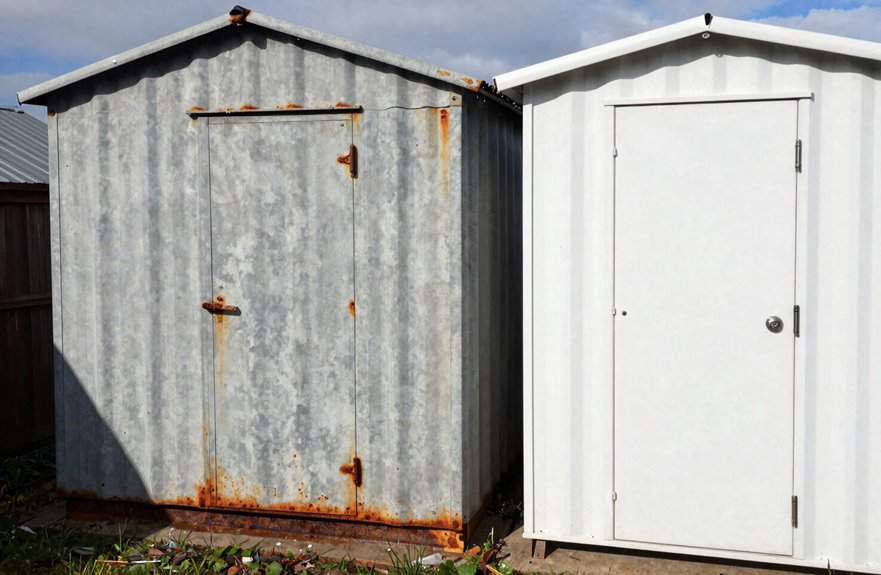
I learned the hard way that rust doesn’t just happen overnight; it’s moisture meeting bare metal, usually where paint scratches or coastal salt speeds things up. My first shed lasted three years before orange spots appeared. Prevention starts with three basics: (1) choose galvanized steel with a 20+ year warranty, (2) touch up scratches immediately with rust-inhibiting paint like Rust-Oleum, and (3) anchor properly so panels don’t flex and crack their protective coating. Keep your maintenance simple by inspecting seams twice yearly, especially after storms, to avoid the costly replacement I faced.
Rust Formation Causes
Rust doesn’t just appear out of nowhere; it’s the result of a chemical reaction between iron, oxygen, and moisture that can turn your sturdy metal shed into a crumbling liability faster than you’d think. I’ve seen it happen when condensation builds up inside, especially in damp coastal areas, or when protective coatings get scratched from impacts or improper anchoring. Here are the actual triggers of corrosion: 1) trapped humidity from temperature swings, 2) salt air in coastal zones, and 3) damaged paint exposing bare metal. Unlike resin, metal won’t warp, but it requires consistent maintenance focused on preventing rust. Neglecting regular checks invites significant problems.
Prevention Strategies
Rust prevention isn’t about luck; it’s about building habits I’ve learned from watching my shed survive fifteen years of coastal humidity. I start with moisture control. Vents on opposite walls, spaced 24 inches apart, create airflow that stops condensation from pooling. For corrosion protection, I inspect quarterly and touch up scratches with rust inhibitor within 48 hours, a lesson learned after a nasty surprise in year three.
| Strategy | My Timeline |
|---|---|
| Galvanized steel selection | Before purchase |
| Ventilation install | Month 1 |
| Rust inhibitor application | Annually |
| Scratch inspection | Quarterly |
| Drainage check | After heavy rain |
I anchor firmly as wind-driven rain can sneak through gaps when panels flex. Metal requires more rust prevention than resin, but the payoff is evident when storms hit.
Resin Shed Weaknesses: Warping, Fading, and Condensation
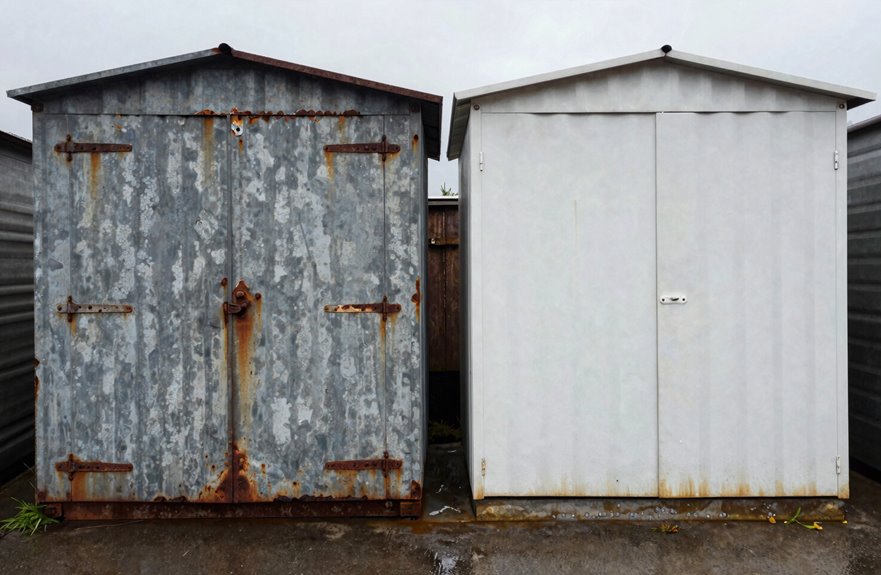
Why do so many homeowners end up disappointed with their resin sheds after just a few seasons? Friends often learn that plastic promises can fade faster than expected.
Here’s what actually goes wrong:
- Warp occurs when heavy snow piles up or strong winds twist panels out of shape.
- Fading turns that crisp beige into streaky gray, even with UV inhibitors fighting the sun.
- Condensation builds up inside, dripping on your tools and encouraging mold without proper vents.
- Lightweight panels, while convenient for moving, offer less resistance against harsh weather.
- Long-term sun exposure slowly breaks down resin molecules, regardless of what the packaging claims.
I realized this after my own shed began to show wear by year three. We all want storage that lasts; resin requires more effort to achieve that goal.
Which Shed Is Easier to Build Yourself?
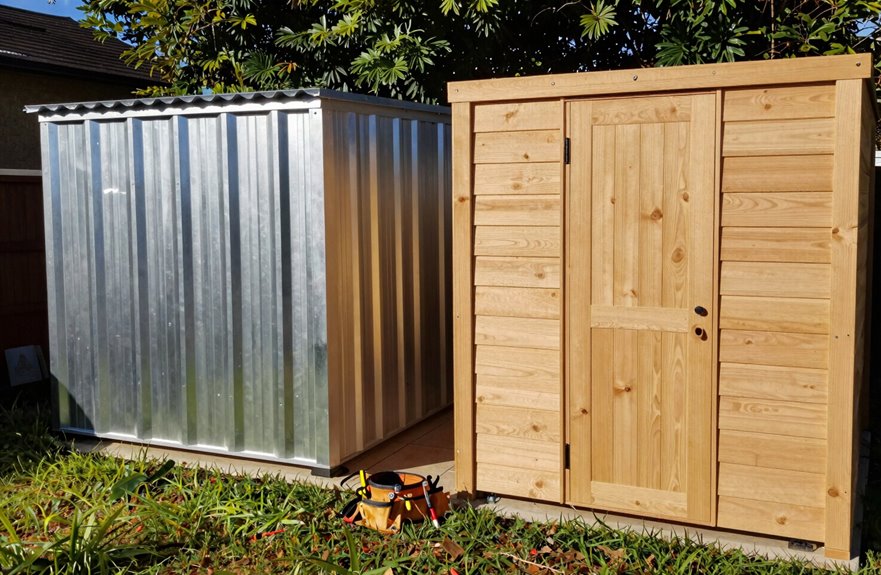
Metal presents a different challenge. Those steel panels weigh 30-50 pounds each, require precise anchoring, and often need concrete footings. Plan for a full weekend, possibly two, along with a helper.
If you aim to join the “I actually finished this” club, resin allows for quicker completion. Metal can be rewarding as well, but it demands more time and effort than just a morning’s work.
Shed Security: Which Material Protects Better?
When weighing forced entry resistance and lock integration options, material choice significantly impacts your shed’s security. Metal panels do not flex or give way like resin walls, which means a pry bar encounters solid resistance instead of a surface that can warp or pop loose. This article examines how each material performs during real break-in attempts, as well as which door configurations work effectively with quality locks compared to flimsy hasps that often fail first.
Forced Entry Resistance
How much does your shed’s material really affect security when someone is determined to get inside? Forced entry resistance is often overlooked until it becomes a pressing issue.
- Metal sheds use reinforced steel panels that require significant effort to breach.
- Resin sheds have lighter, more flexible walls that are easier to pry open than expected.
- Steel construction adds weight that keeps panels rigid and securely locked in place.
- Resin’s convenience comes at a cost; thinner walls provide less protection.
- Anchoring can help resin sheds, but metal sheds excel in terms of physical resistance.
Metal sheds offer superior forced entry resistance by design. While resin sheds can be secured with additional features, they do not inherently provide the same level of protection.
Lock Integration Options
Lock Integration Options
Where does your lock attach, and does it matter what it’s screwed into? It definitely does.
Metal Shed Lock Integration
Metal wall construction provides solid anchor points. I drill into steel framing, add a hasp with carriage bolts, and feel secure knowing thieves can’t pry it loose. The security features feel built-in and not like an afterthought.
Resin Shed Challenges
Resin panels flex. I’ve seen cheap vinyl crack around lock integration points after one season. You need backing plates and possibly aluminum reinforcement. Higher-end resin models, priced around $800 or more, handle this better.
My Take
Metal offers superior security features. Resin requires smarter installation; I add internal bracing, use longer screws, and do not rely on surface-mount hardware alone.
Real Maintenance Tasks: Metal vs. Resin Over 10 Years
- Touch up metal scratches to prevent rust from spreading.
- Rinse resin biannually; no tools are needed.
- Check coastal metal annually for corrosion.
- Redistribute heavy loads on resin shelves.
- Tighten metal screws after temperature swings.
Metal vs. Resin Shed Costs: Upfront and Lifetime
When I’m standing in the hardware store aisle staring at two sheds that look roughly the same size, the price tags tell very different stories. Metal sheds usually win on upfront cost, running $450–$1,800, while resin sits in the medium range at $800–$2,500. I learned to consider more than just the sticker price.
| Factor | Metal Shed | Resin Shed |
|---|---|---|
| Upfront Cost | $450–$1,800 | $800–$2,500 |
| Assembly Time | 4–8 hours | 2–4 hours |
| Yearly Maintenance | $20–$50 (rust prevention) | Near zero |
| 10-Year Total Cost | $650–$2,300 | $800–$2,500 |
| Best For | Tight budgets, heavy gear | Set-it-and-forget-it folks |
Over a decade, that gap shrinks. Resin’s low upkeep balances its higher initial cost, especially if you dislike weekend maintenance projects.
What You Can and Can’t Customize
Cost is important, but a shed that can’t be adapted quickly becomes a storage problem. When I drilled into my resin walls to add hooks, I cracked the panel. Here’s what I’ve learned about customization:
- Metal walls handle shelving, racks, and heavy gear without issue, while resin walls are more challenging.
- Door placement on metal sheds can be adjusted; resin is fixed in factory positions.
- Painting metal is effective; resin sheds tend to look worse when painted.
- Security upgrades, such as deadbolts and reinforced frames, attach securely to metal, not plastic.
- Layout changes in the future are easier with metal; resin retains the original design.
Metal is superior for customization. Resin is faster to assemble. Make your choice based on how your storage needs may evolve over time.
Best Climates for Metal Sheds
Because I’ve learned the hard way that not every shed thrives where you plant it, I’ve become selective about matching materials to weather.
Where Metal Sheds Shine
Metal provides real durability in dry climates, where I don’t have to contend with rust every season. I’ve seen these sheds last 20 years in arid regions without warping or cracking, unlike resin or wood that struggle with temperature swings. In areas with extreme heat or cold, metal’s stability prevails; there is no bowing or splitting when temperatures fluctuate.
Metal sheds laugh at temperature swings that warp resin and split wood—20 years of stability in arid climates, zero bowing, zero cracking.
Where You’ll Work Harder
Coastal or humid climates require more attention. Without proper treatment and anchoring, condensation and rust can develop quickly. I prioritize rust prevention in these environments to avoid replacing panels sooner than necessary.
My Bottom Line
Match your climate to your commitment level. Metal provides longevity and service in dry, stable regions.
Best Climates for Resin Sheds
I think you’ll find resin sheds handle temperature swings well, remaining stable from about -20°F to 120°F without cracking or corroding like metal sometimes does. Their moisture resistance is impressive; I have seen these structures endure damp Pacific Northwest winters and humid Gulf Coast summers without rusting, rotting, or developing mold inside. It is important to anchor your shed properly, as I learned when my first one shifted in a windstorm. This lightweight construction has its drawbacks.
Ideal Temperature Ranges
Where do resin sheds thrive? They perform best in moderate zones, roughly 40°F to 90°F, where they won’t face harsh conditions.
Here’s what I’ve learned about keeping your resin shed in good condition:
- UV resistance is crucial in desert climates, where strong sunlight can degrade surfaces without proper inhibitors.
- Temperature extremes above 100°F can cause warping, especially with heavy roof loads.
- Coastal areas are suitable, as salt air won’t corrode resin like it does metal.
- Avoid hurricane zones unless you anchor securely, since lightweight builds can catch wind.
- Northern winters are manageable, though cold below -20°F can test durability.
I once placed mine in full Arizona sun without checking UV ratings, which led to fading within two years. It’s important to know your local temperature extremes before making a commitment.
Moisture Resistance Levels
Moisture Resistance Levels
Temperature matters, but moisture is where resin sheds truly demonstrate their advantages or shortcomings. I’ve seen a metal shed rust through in coastal Florida.
Why Resin Wins in Wet Climates
- True rust-free performance; there are no orange streaks or weakened panels.
- Built-in resistance to moisture; rot and insects do not attack the material.
- UV protection; inhibitors prevent fading even in sunny, humid regions.
The Honest Caveats
Resin sheds are not without issues. I have witnessed them warp in extreme heat and shift in coastal winds without proper anchoring. They are lighter than metal, so ground anchors (typically 12-inch spiral stakes) are necessary in exposed locations.
For homeowners in damp, humid, or coastal areas, resin sheds are often the better long-term choice. Proper anchoring can help avoid the problems associated with other materials.
Best Uses for Resin Sheds
The sweet spot for resin sheds lies in that middle ground where you need storage without the hassle of constant upkeep. I’ve learned that not every project requires heavy-duty construction, and that’s where these sheds excel.
You’ll appreciate resin sheds for their low-maintenance promise—no painting, no rust, no rot. Their weather resistance handles sun and rain without complaint, though it’s advisable to anchor them firmly since they can warp under stress.
Here are some practical uses for a resin shed:
- Storing lawn mowers and basic garden tools to avoid clutter
- Housing pool chemicals and supplies due to their corrosion resistance
- Creating quick bike storage for busy families who need it done quickly
- Setting up a potting station with a wood-look DecoCoat finish
- Adding backyard storage in humid climates where metal can corrode and wood may rot
While they may not be perfect, they serve real-life storage needs effectively.
Best Uses for Metal Sheds
- Bulky machinery – Their rugged frames won’t buckle under serious weight.
- Long-term storage – With proper care, you’re looking at 20 years of durability.
- Harsh climates – Their weather-resilience shrugs off extreme heat that warps other materials.
I dented my first metal shed by backing in too fast. I learned that these units need anchoring against wind, and coastal folks, like my brother in Cornwall, must watch for rust. For pure utility at £450–£1,800, metal offers significant advantages. Quick assembly, minimal fuss, and your gear stays securely locked.
Choose Based on What You’re Storing
So what are you actually putting inside this thing? I learned the hard way that not all storage is created equal, and your belongings deserve better than a shed that sags under pressure.
Here’s what I ask myself before choosing:
- Lawn chairs and holiday decorations? Resin handles that just fine.
- Motorcycles, ATVs, or commercial equipment? Metal is the only real option.
- Power tools you access daily? Durability is crucial.
- Kayaks and bikes? Weight adds up faster than you expect.
- Anything worth stealing? Security features separate the pros from the amateurs.
Resin works for light storage with minimal hassle, but heavy gear demands metal’s load-bearing strength. I once tried mounting shelves in resin; they cracked within a month. Match your shed to your items, not your budget to wishful thinking.