

I learned the hard way that sizing a patio umbrella isn’t guesswork; it involves math and a bit of common sense. Start with the 2-foot rule: your canopy should overhang your table by about two feet on every side, so a 48-inch table needs at least an 8-foot umbrella.
Match your shape to your space, using round for tight patios, square for symmetry, and rectangular for long tables. Don’t forget base weight; my 9-footer requires 50–65 pounds minimum, or it can become a wind-powered projectile.
I have sat with two people under a 6-footer and managed to fit eight under an 11-foot rectangle, so consider headcount as well: 7.5 feet for 2–4 people, 9 feet for 4–6, and 11 feet for 6–8.
Choosing between a cantilever or center pole is your first decision, and it affects placement significantly. Get these basics right to avoid the mistakes I made; there are additional considerations if you want shade that lasts.
Cantilever or Center Pole: Choose Your Structure First
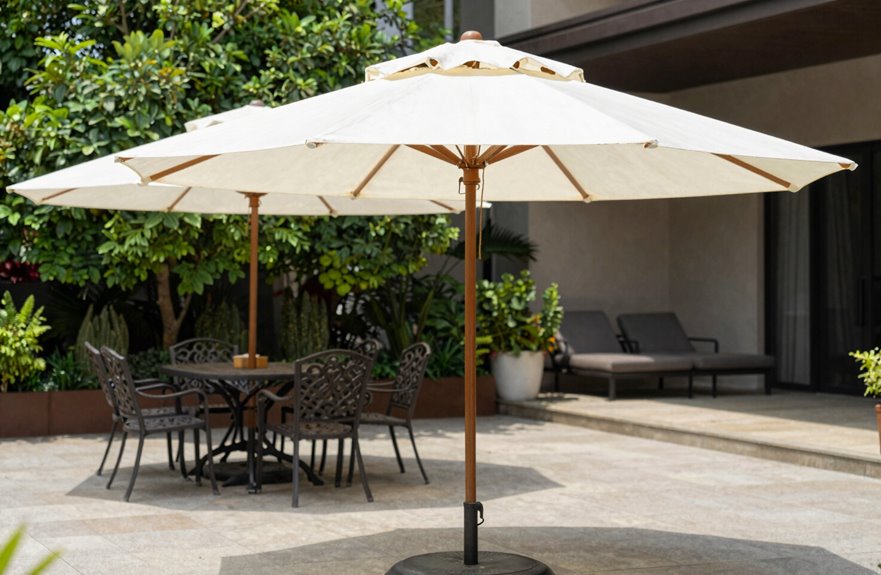
Before you start measuring your space or choosing a fabric pattern, decide whether you want a cantilever umbrella or a center-pole design. This choice significantly impacts how you will use your shade.
I learned this the hard way. I purchased a center pole first, then realized my conversation set looked odd with a pole in the middle. I switched to cantilever and found it much more suitable.
Here’s the difference that matters:
Cantilever (offset)
- Stands independently, no table needed
- Usually 9’–11′ with ~95 square feet of shade
- Bases often need 75+ pounds, sometimes sand added
- Creates flexible shade zones around seating
Center pole
- Requires table support or a heavy freestanding base
- Traditional, straightforward, budget-friendly
Your lifestyle shapes this choice. If you’re entertaining crowds, a cantilever allows for rearranging. For simple dining, a center pole works beautifully. Match the structure to how you actually live outside.
The 2-Foot Rule: Size to Your Table in Seconds
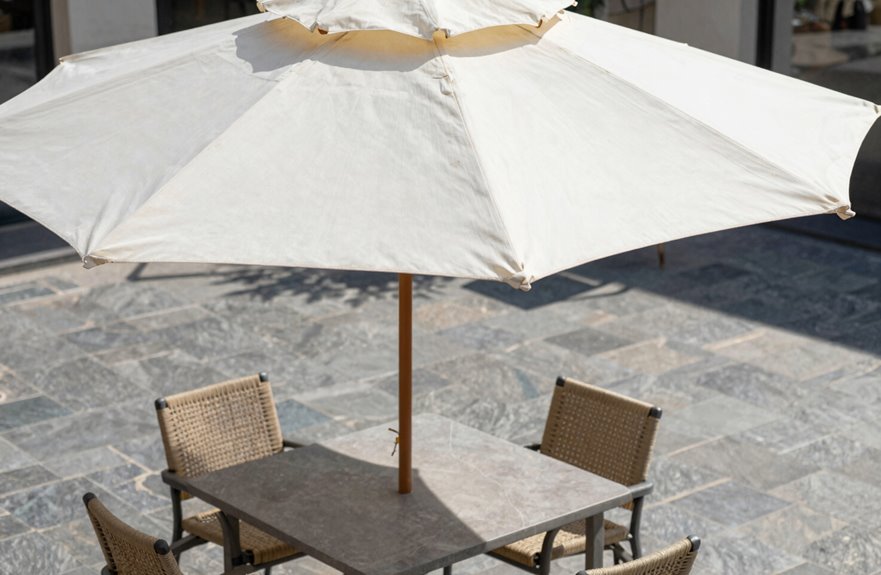
How do you choose the right umbrella size without overthinking it? Use the 2-foot rule, a method I discovered after purchasing one that left my guests squinting.
The Simple Math
Your patio umbrella size should extend roughly 2 feet beyond your table’s edge on every side. For a 4-foot round table, you need an 8-foot canopy. This overhang is essential for providing shade that follows you throughout the day.
Why 2 Feet Works
That overhang accounts for sun angles shifting as the day progresses, so you remain covered. It also keeps your setup visually balanced; a small umbrella looks skimpy, while a large one may require an upgraded base for stability.
Quick Adjustment
If you live in the Sun Belt, consider sizing up slightly. This will help ensure adequate shade during the afternoon sun.
Round, Square, or Rectangle: Match Shape to Your Space
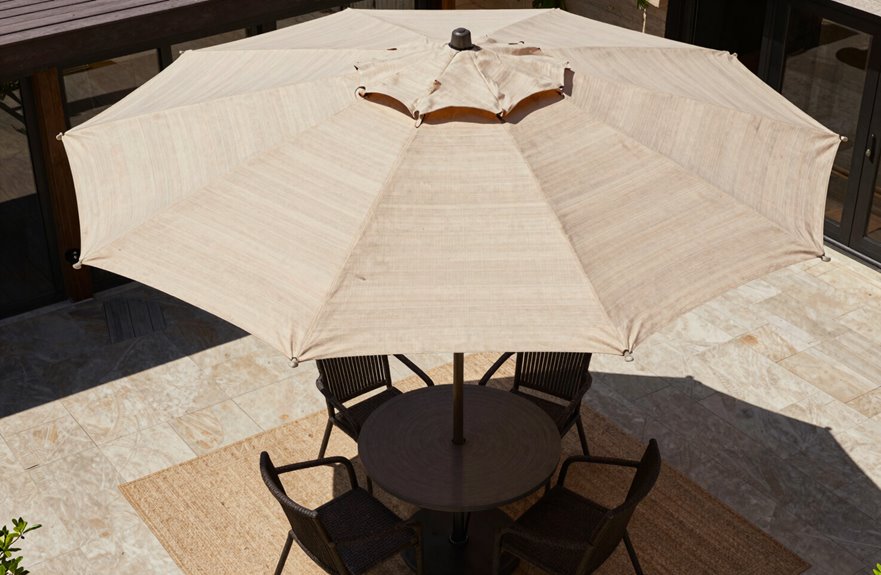
Which shape should you choose once you’ve nailed down the size? Shape is as important as span.
Round umbrellas work best for circular tables and tight patios. They shed wind better than expected, which I learned after watching my square one take flight during a barbecue. For bistro sets or compact spaces, select a 6–6.5 ft round for tables up to 30 inches, or 7.5–8 ft for tables up to 48 inches.
Round umbrellas excel for circular tables and tight patios, shedding wind better than you’d expect—trust me, I learned that the hard way.
Square umbrellas fit symmetrical patios and square tables perfectly. They actually provide more shade surface at the same width. I switched to square for my deck and noticed the difference immediately.
Rectangular umbrellas cover long or oval dining tables best, maximizing coverage along the length.
Remember the 2-foot rule applies to all shapes; keep that overhang balanced for stable shade.
Size by Headcount: 6 Ft to 11 Ft for 2 to 8 People
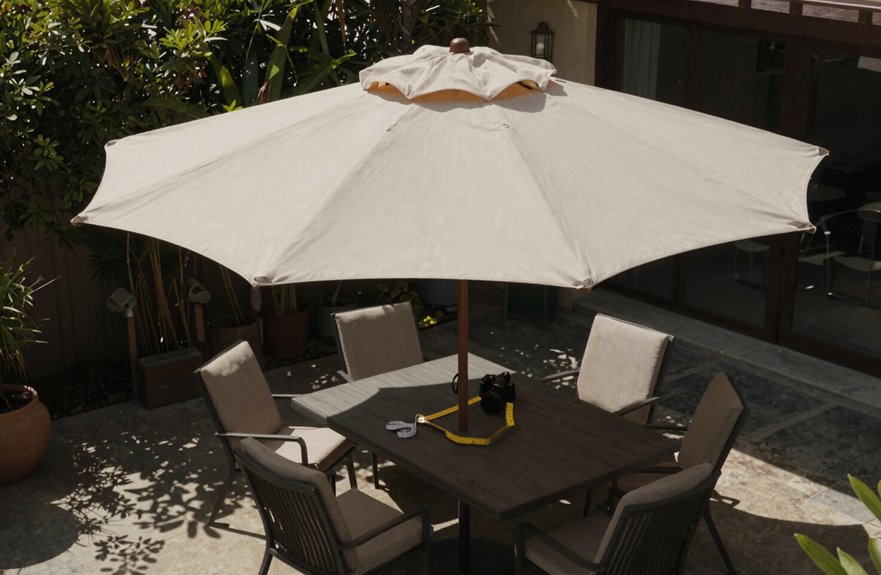
Why guess at umbrella size when I’ve made the wrong call twice? I’ve learned that matching the diameter of the umbrella to your headcount prevents everyone from squeezing into small patches of shade.
My Headcount-to-Size Cheat Sheet
- 6 ft – Ideal for you and one other person; this size fits tiny balconies under 30 square feet.
- 7.5 ft – Accommodates 2–4 people comfortably; I use mine with a 48-inch table.
- 9 ft – Suitable for 4–6 people, covering standard patios around 60 square feet.
- 11 ft – Works for 6–8 people; opt for the rectangular version for long tables or sectionals.
I measure my space in square feet, count my regular guests, and size up once to avoid any issues with shade.
Base Weight: 40 to 100+ Pounds by Umbrella Size
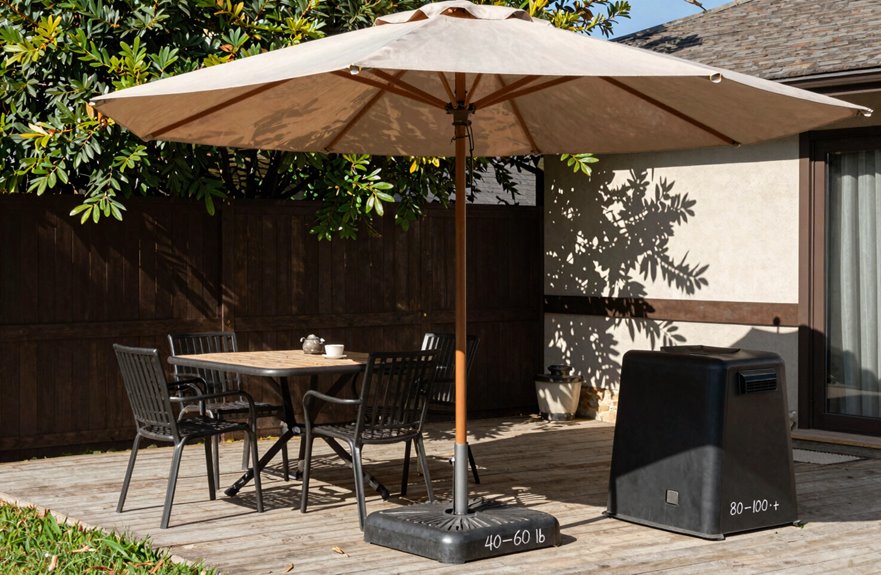
Where does a 9-foot umbrella go when the wind kicks up? It often ends up in your neighbor’s yard. I have learned that base weight is essential for patio umbrellas; it prevents your setup from becoming a projectile.
Through trial, error, and one embarrassing retrieval mission, I have figured out some key points:
| Umbrella Size | Base Weight |
|---|---|
| 6–6.5 ft | 40 lbs |
| 7–8 ft | 40–60 lbs |
| 9 ft | 50–65 lbs |
| 10 ft | 65–75 lbs |
| 11 ft | 75–100+ lbs |
Heavier does not always mean better. It’s crucial to match your base weight to your canopy size and the specific conditions. A 9-footer covering 38–56 square feet requires a 50–65 pound anchor, especially when paired with a table up to 54 inches. For larger patio umbrellas, you will need 100 pounds or a bolt-down option for stability. Your neighbors will appreciate this.