
I learned the hard way that a cheap brush and leftover house paint will ruin an outdoor umbrella faster than a summer thunderstorm.
To achieve the best results, clean your canopy with mild soap and a garden hose.
Disassemble it by removing the top cap, then mask your edges with tape.
I use Rust-Oleum Green Apple or Krylon Blue Ocean Breeze with an exterior primer.
Spray two thin coats about an hour apart, keeping the fabric taut.
After three years, mine still looks fresh with just spring touch-ups.
There are additional tips to extend its lifespan.
Choose Spray or Brush Paint for Your Umbrella
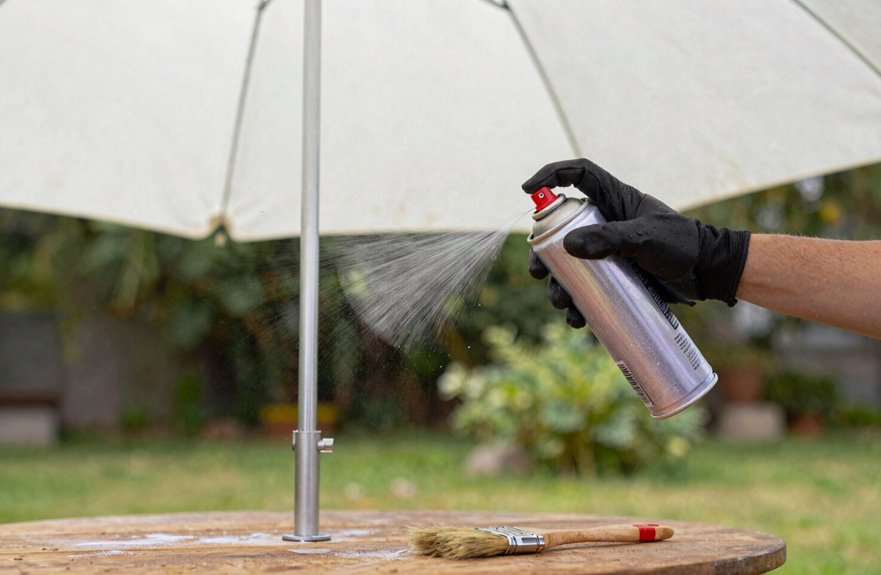
So, how do you decide between spray paint and a brush for reviving that faded outdoor umbrella? I’ve tried both, and spray paint consistently provides even coverage on an umbrella canopy.
Why Spray Paint Works Better
Brush painting often leaves streaks, and dyeing can be a messy process. With spray paint, I achieve smooth, consistent color without battling the fabric texture.
My Go-To Setup
I used Rust-Oleum Green Apple, that bright, cheerful green, and here’s what worked:
- Apply two thin coats, not one thick one.
- Wait one hour between coats—patience is essential.
- Manage edge details by lifting fabric edges while spraying, ensuring no spots are missed or drips created.
You could paint both sides or use a paint sprayer for extra uniformity, but one-sided spray painting made my canopy look fresh and like new.
Gather Supplies Based on Your Painting Method
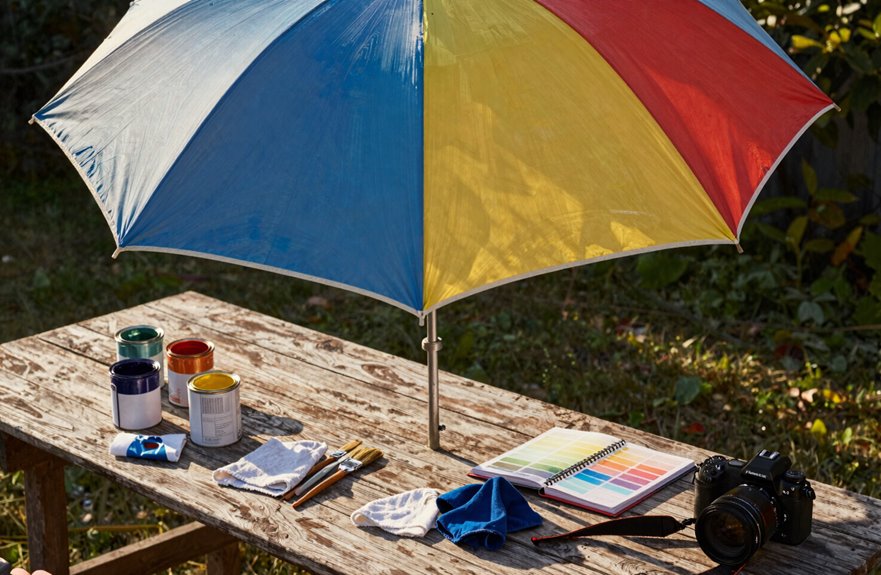
Once I’ve settled on spray paint, I need the right gear on hand before I start, or I’ll end up making a mid-project run to the store. I grab Rust-oleum Green Apple or Krylon Blue Ocean Breeze spray paint, plus primer that’s made for outdoor surfaces. The fabric on my umbrella needs something that will stick, so I consider fabric medium. Masking tape helps prevent messy edges, and I always wear gloves and a mask; I’ve learned this from experience. Foam brushes assist with touch-ups, and sandpaper smooths rough spots. Most importantly, I check the can for cure time; rain can ruin fresh paint if I rush the process.
Clean and Disassemble the Umbrella Canopy
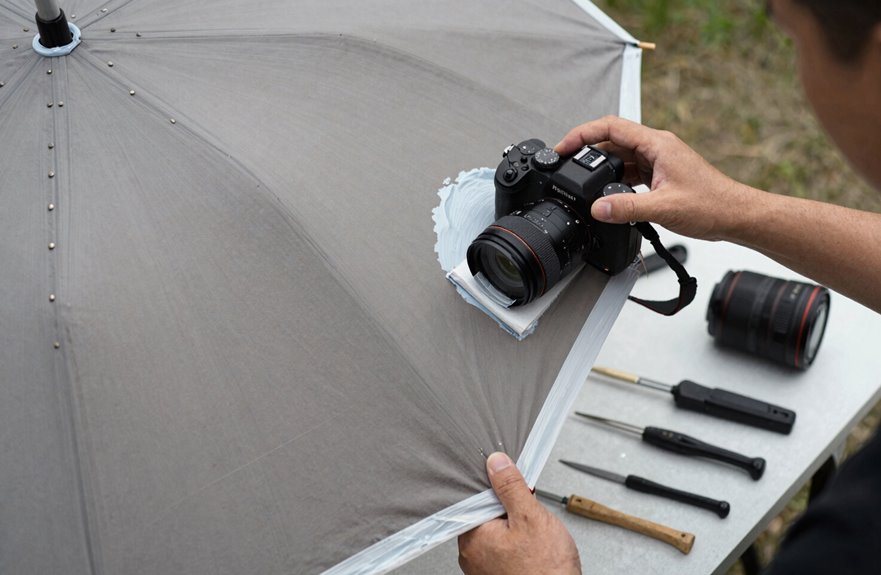
Before I start painting, I need to strip down and clean the umbrella. Applying paint over dirt can lead to issues with adhesion and durability.
Clean surfaces are non-negotiable: paint over dirt, and you’ll compromise adhesion and durability every time.
Prep Your Space
I lay down drop cloths and mask everything I don’t want to catch overspray. Skipping this step means a lengthy cleanup on the deck.
Wash the Canopy
I leave the fabric on the frame for efficiency, and it dries taut. I use a garden hose, mild soap, and a soft brush. For smaller canopies, I sometimes use the washing machine—always check the care tag.
Disassemble for Access
I remove the top cap before painting. This allows me to work with the canopy taut or remove it for better access.
Edge Check
When spraying, I lift the fabric edges to ensure I cover all areas underneath.
Apply Two Thin Coats With Proper Dry Time
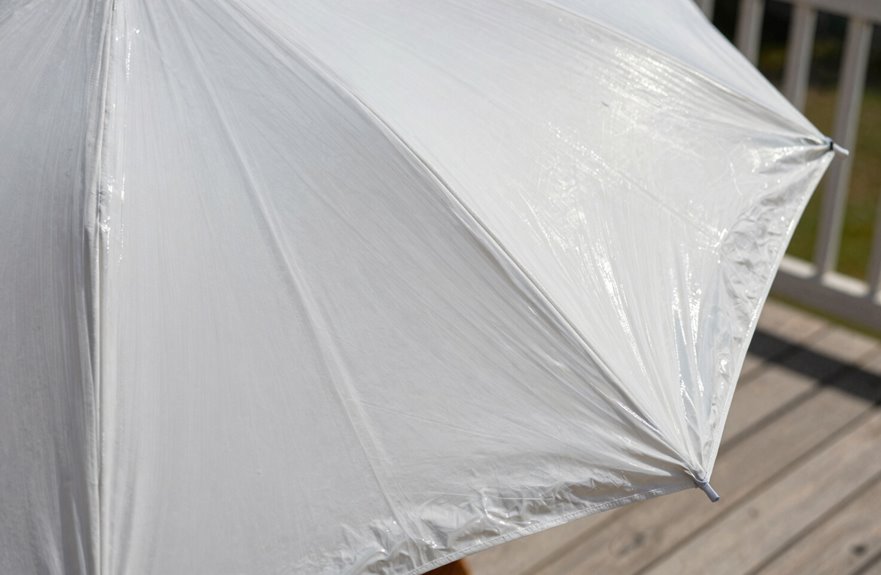
Because I’ve learned that one thick coat cracks and peels, I apply two thin coats of exterior spray paint instead, waiting about an hour between them so the first layer can set properly.
Prep Work
I start with a thin coat of primer, which is optional but beneficial. I let it dry completely before the real work begins. This helps the fabric paint adhere better, especially on older umbrellas.
The Spraying Process
- I keep the fabric taut on the frame, moving in smooth, sweeping motions to avoid unsightly spray lines.
- I lift edges slightly to catch hidden spots where pooling occurs.
- Light, even bursts are crucial; heavy application can cause issues.
After two coats, I check for missed patches and touch up. Then I wait for the full cure time before my umbrella is exposed to the weather again.
Reassemble and Check for Even Coverage
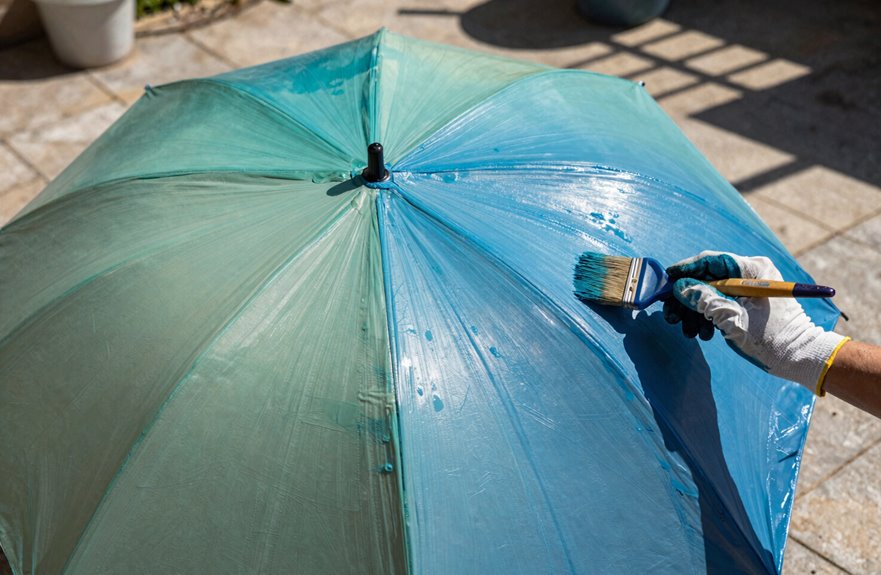
With the paint fully cured, I am ready to put my umbrella back together and see how it turned out.
Reassemble the Frame
- Lift the canopy fabric carefully onto the frame, spreading it evenly so it sits flat without bunching.
- Check that all ribs slide into their pockets smoothly. If they are sticky, paint may have gotten where it shouldn’t.
Inspect for Even Coverage
I walk around my umbrella slowly, tilting it to catch the light. Those two coats of spray paint should provide solid color, though I may spot some faint lines underneath, which is normal. If any areas look patchy, I will mist on thin touch-ups after another hour of dry time. Ensure that moving parts spin freely to avoid issues later.
How Long Your Painted Umbrella Will Last
A painted umbrella typically lasts about three years outdoors, although this can vary based on weather conditions and maintenance practices. It’s important to watch for fading or peeling, as this indicates the need for a recoat to prevent further damage. The spray paint method I used—two coats plus a protective sealant—added some stiffness and weight to the fabric, which helped the canopy endure longer. However, the visible spray marks from underneath were not ideal.
Expected Lifespan
How long can you realistically expect a painted umbrella to last before it starts looking rough?
Spray paint on outdoor umbrella fabric typically holds up about three years before showing significant wear. This duration is reasonable for a DIY refresh.
The paint bonds well when you layer primer and protective clear coat, giving the canopy a stiff, renewed feel that extends its usable life beyond its faded original state. My umbrella has remained vibrant through two full seasons so far.
Eventually, some fading or peeling will occur, which is normal. The key is that proper maintenance can prolong its appearance. It’s important to have realistic expectations: a painted umbrella can remain functional and visually refreshed for years if you stay on top of touch-ups. That three-year mark serves as a realistic baseline, not a strict limit.
Care Considerations
So, how do you keep a painted umbrella looking decent after all that effort?
Good paint preparation is essential, but maintenance is crucial too. My exterior spray paint job has held up for two years, though I check for fading each season.
Fabric Durability Reality Check
Three years is the typical lifespan I’ve heard from people in our DIY circle. Maybe four with good care, but don’t expect miracles.
Simple Maintenance Steps:
- Scan for peeling every spring (I missed a spot once—avoid that).
- Touch up with matching paint when needed.
- Store properly: keep it dry, covered, and never soggy.
Storage Hacks
Avoid damp corners of your garage. I use a deck box with ventilation holes. This keeps your painted umbrella cleaner for longer, reducing future regrets.