
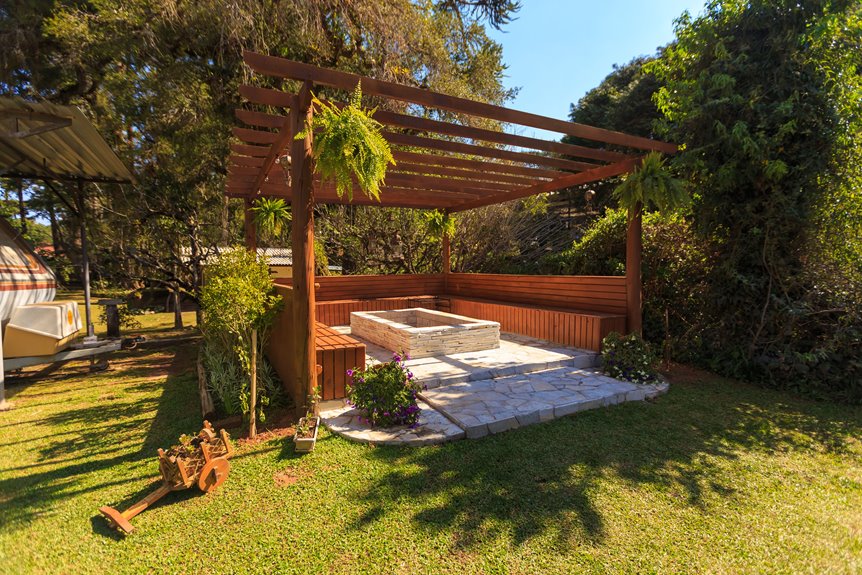
I’ve spent fifteen years installing both shade sails and pergolas. Here are the key differences:
1) Shade sails cost less and install in a day or two, while pergolas are more expensive and take 1–3 weeks with permits.
2) Sails provide a modern, sculptural look; pergolas have a traditional and permanent feel.
3) HDPE sails block 90% of UV rays but won’t stop rain; pergolas can be fitted with roofing for year-round cover.
4) Sails last 5–10 years with seasonal cleaning; pergolas can last over 20 years but require staining and repairs.
5) Sails can flex to fit odd spaces; pergolas require level ground and footings.
Matching your structure to your weather and patience is essential, and there are additional factors to consider if you explore further.
Shade Sail or Pergola: Which Structure Fits Your Space?
How do you choose between these two options when you’re in your backyard, measuring tape in hand, and your spouse is wondering about dinner? I’ve experienced that moment of indecision while burgers started to burn.
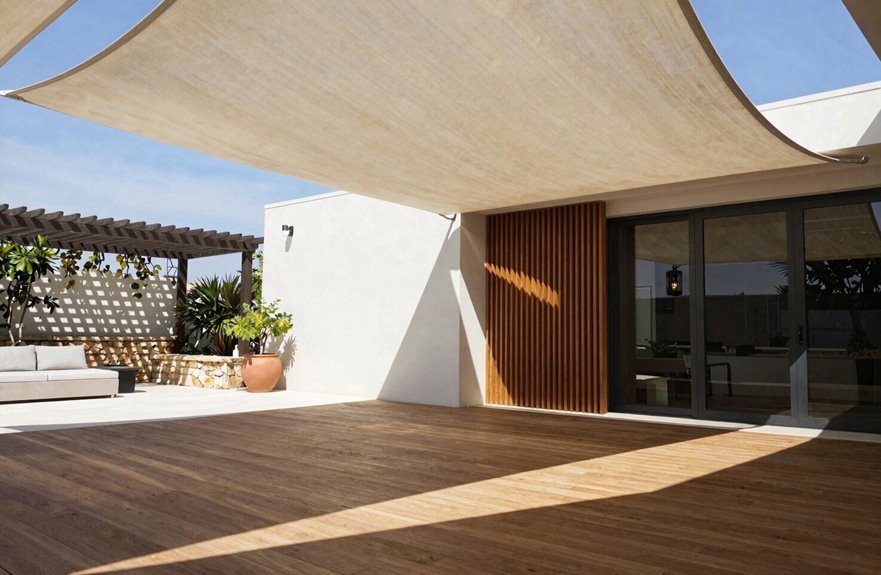
Start with space planning. Shade sails offer installation flexibility. You can anchor three or four points—walls, posts, or trees—and tension the fabric in an afternoon. I managed to install a triangular sail over my irregular patio where a pergola wouldn’t fit. Pergolas require more commitment; they are permanent structures that need footings, level ground, and often permits.
Consider your aesthetic style. Sails present a contemporary, sculptural, and nautical look. Pergolas, on the other hand, feel traditional and grounded, creating outdoor rooms with structural integrity. I learned this when my modern sail clashed with my craftsman house, prompting me to make a change.
Materials matter. HDPE sails block over 90% of UV rays while allowing air circulation. Pergolas use materials like wood (cedar, pressure-treated), aluminum, or steel, providing solid weather protection that allows you to walk under them during light rain.
My recommendation? A hybrid approach: use a pergola for structure and a sail for adjustable outdoor shade. This combination has proven to be a worthwhile investment.
Sun, Rain, and Wind: Real-Weather Performance Compared
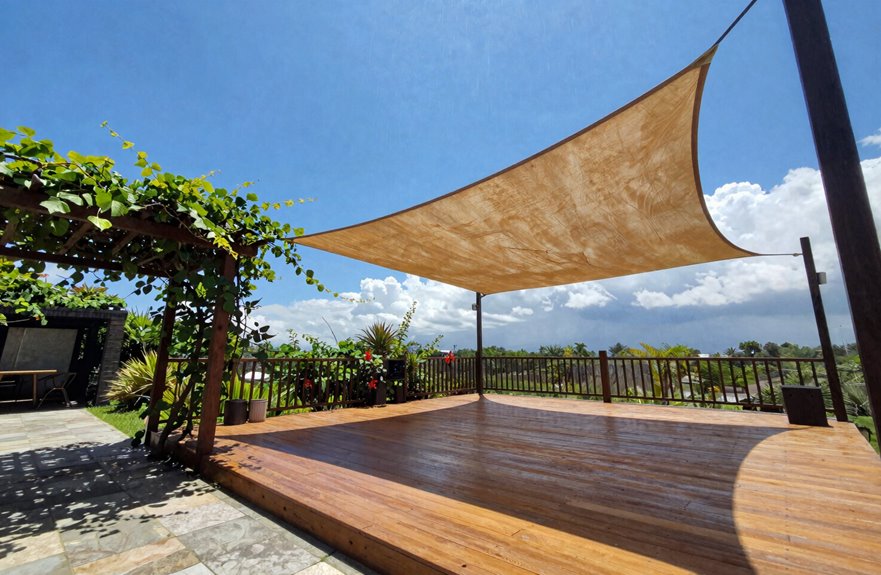
Why does weather performance matter? I’ve seen too many outdoor shade solutions fail during storms, leaving friends scrambling for cover.
Outdoor shade solutions fail when storms hit, leaving everyone scrambling for cover.
Here’s what I’ve learned by comparing these options:
- UV protection: Shade sails effectively block harsh sun exposure while allowing breezes to flow through. Pergolas provide partial shade unless you add fabric or roofing.
- Rain protection: Neither option is perfect. Standard shade sails are not waterproof, and pergolas require upgrades for adequate coverage. I’ve gotten wet under both.
- Wind resistance: Shade sails require proper tension and sturdy footings; otherwise, the hardware can snap. Pergolas offer better structural stability with solid posts anchored deeply.
- Overall value: For sun and airflow, I prefer shade sails. For year-round resilience with modifications, pergolas are the better choice.
Your local weather patterns should guide this decision.
Budget and Timeline: What Each Costs to Install
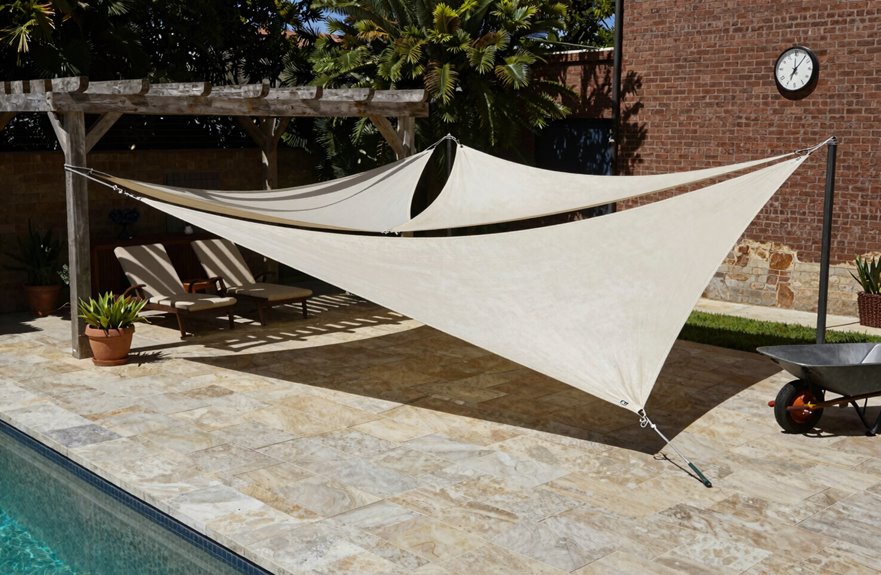
Once you’ve determined which structure can withstand your local weather, the next question involves costs and timelines. I learned this through experience after exceeding my budget on a seemingly simple backyard project that turned out to be quite complex.
Here’s a straightforward cost comparison:
| Factor | Shade Sails | Pergolas |
|---|---|---|
| Shade sails cost | $300–$3,000 | N/A |
| Pergolas cost | N/A | $3,000–$15,000+ |
| Installation timeline | 1–2 days | 1–3 weeks |
| Upfront costs | Lower | Higher |
| Installation speed | Fast | Slow |
Shade sails provide budget-friendly options and modular coverage that can be expanded in the future. Pergolas require professional installation as a permanent structure. I combined both by adding a slim pergola for my patio and a sail for dining shade, achieving the right balance.
Modern or Classic: Design and Style Differences
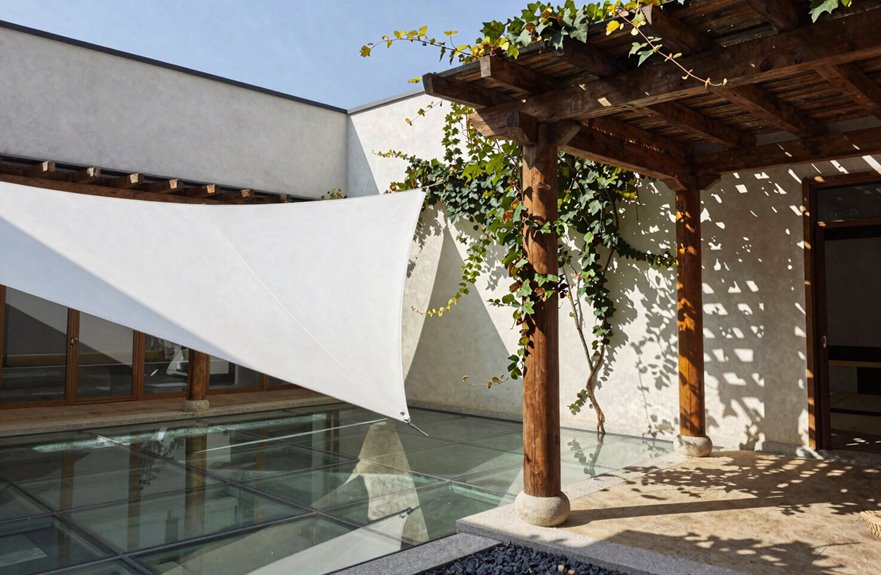
Here’s how they differ:
- Shade sails bring modern, contemporary energy with curved lines, bold colors, and a minimalist style.
- Pergolas anchor your space with classic, traditional architecture; think timber posts and living vines.
- Aesthetic flexibility exists; sails can be reconfigured seasonally, while pergolas become permanent backyard rooms.
- Integration is important; match your garden’s personality, rather than just following current trends.
I once placed a sail in a cottage garden. It looked and felt out of place. Pay attention to your space’s existing language.
Maintenance Reality: Upkeep and Lifespan Compared
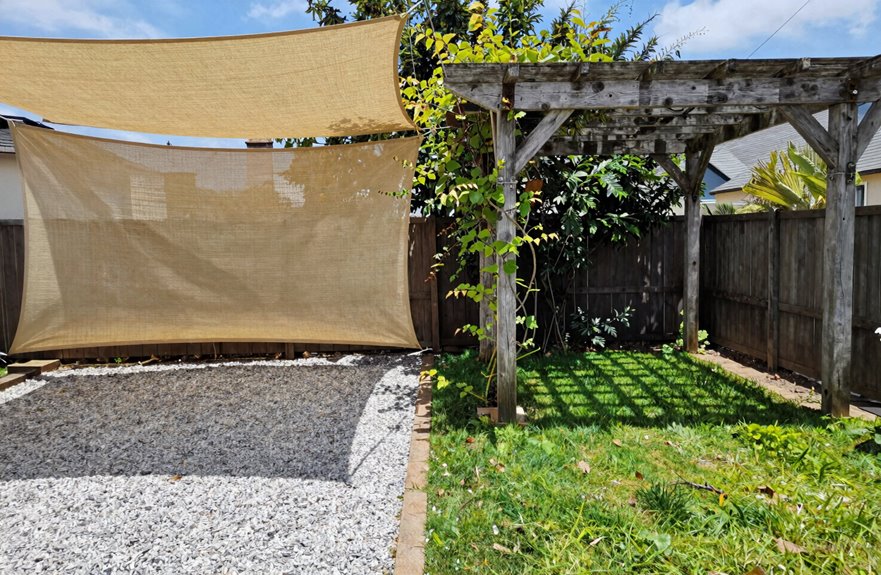
Although both options promise relief from the sun, their maintenance demands are quite different.
The Lifespan Reality
Shade sails have a lifespan of 5–10+ years with decent fabric maintenance; this includes washing with mild detergent twice yearly. Pergolas can last 20+ years, but their wood or metal upkeep requires sanding, staining, and replacing warped rafters. I neglected to seal my cedar once, and termites moved in within two seasons.
What You’re Really Signing Up For
Maintaining shade sails involves seasonal cleaning and tension checks. For pergolas, you need annual inspections of footings and structure, plus finish work. The durability comparison shows that pergolas win in longevity, while shade sails offer more flexibility.
The Bottom Line
Installation costs favor sails since they don’t require concrete footings. However, the weather resistance differs significantly. I remove my sail before storms, while my neighbor’s aluminum pergola remains unaffected by the wind.