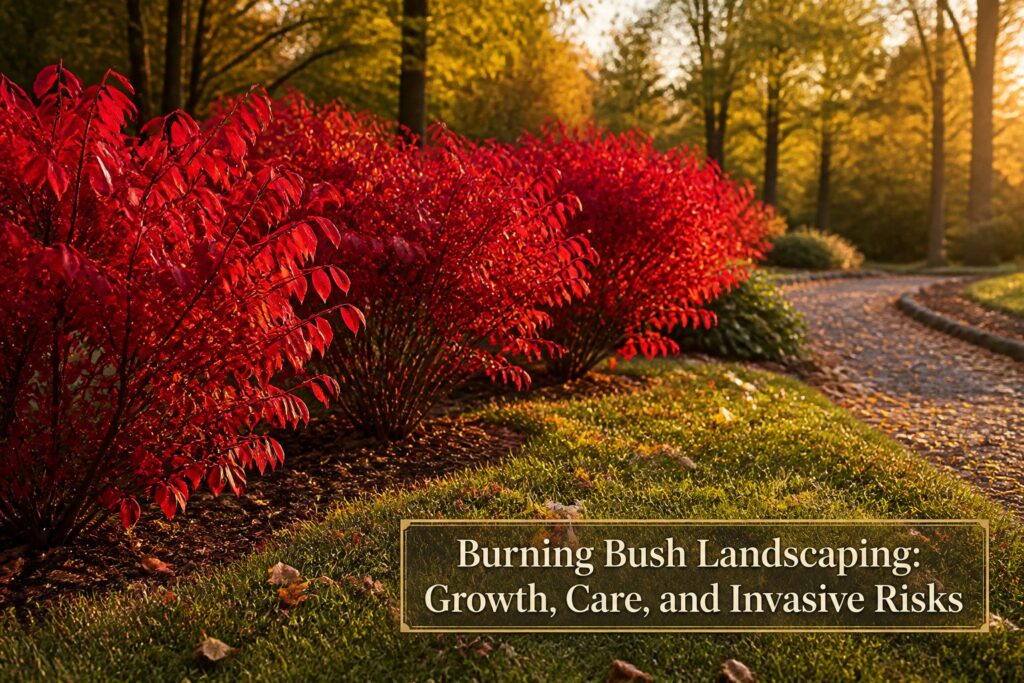
Burning bush is a deciduous shrub grown for its electric-red fall foliage, but its use in landscaping comes with a catch that has already led to outright bans in New Hampshire, Maine, and Massachusetts.
A single specimen can scatter seeds across dozens of square miles through birds that eat its berries, which is why over twenty states now classify it as invasive. ‘Rudy Haag’ and ‘Pipsqueak’ stay compact at 3 to 5 feet, yet even dwarf cultivars still carry the same ecological risk.
Invasive Nature

Burning bush is considered invasive in over twenty states, with outright bans on sale and planting in New Hampshire, Maine, and Massachusetts.
The shrub outcompetes native species and disrupts local ecosystems once it escapes cultivation, which happens easily because birds eat the berries and scatter seeds across wide areas.
A single plant in your yard can become the source of hundreds more spread over dozens of square miles, even if you never see seedlings nearby.
If you are considering burning bush for your landscaping today, I would skip it entirely. The fall color is dramatic, but the ecological cost is settled enough that several states have made it illegal, and many others strongly discourage planting.
For renters and first-home owners working on a real budget, this is not a shrub worth the risk of fines, removal costs, or the guilt of watching it colonize a neighbor’s woodlot.
The alternatives deliver similar color without the proliferation problem, and they are getting easier to find at garden centers that have dropped Euonymus alatus from their stock.

Includes 5 Dwarf Burning Bush bare root plants, 6-12 inches tall
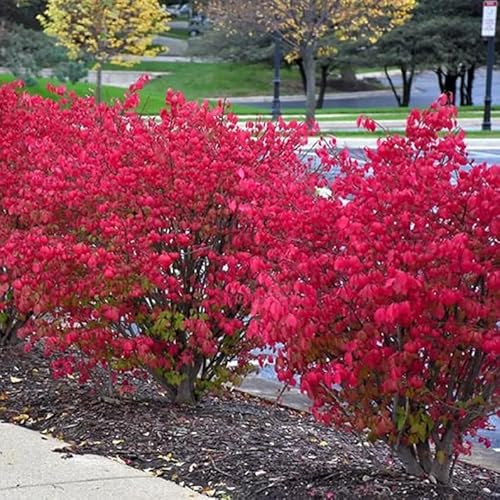
For sale is a dwarf burning bush that is approximately 6-12" tall and shipped in a 2.5" pot

Includes a Dwarf Burning Bush plants, 12-18 inches tall
Growth Characteristics
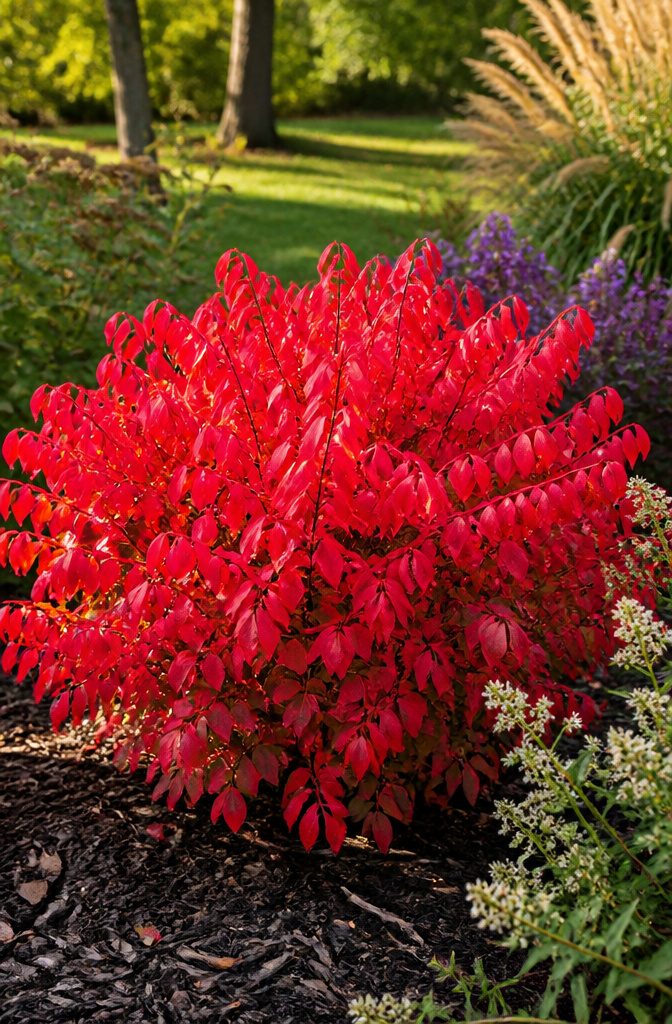
Burning bush tops out at 25 feet, though most plantings stay smaller once you factor in variety and site conditions.
The draw is the fall color, a red that reads almost neon against late-season gardens, and that color is reliable enough that people still plant it despite the baggage.
For smaller yards, the cultivar choice matters more than soil prep. ‘Rudy Haag’ stays between 3 and 5 feet, a true dwarf that won’t outpace a foundation bed in three years. ‘Pipsqueak’ runs similarly compact and carries the same bright red fall tone without the eventual pruning headache.
Compare that to ‘Compactus’ at 9 to 10 feet, or ‘Monstrosus’ stretching to 15 to 20 feet, and the wrong selection turns a border shrub into a tree-removal invoice. ‘Apterus’ splits the difference around 6 feet and loses the ridged stems if the winged look bothers you.
Most varieties hit mature size within 3 to 5 years, so the space you give them at planting is the space they will fill fast.
I would skip the generic nursery label of "burning bush" and ask for the specific cultivar. If the tag just says Euonymus alatus, you are gambling on a 20-foot gamble.

Includes 2 Dwarf Burning Bush plants, 6-12 inches tall

Includes 5 Dwarf Burning Bush bare root plants, 6-12 inches tall

These are ready to plant and should be put in the ground according to the included instructions upon arrival. All pictures are of fully grown plants. Sizes shipped are in the title and description. Deciduous plants do not have leaves in the winter.
Soil and Sun Requirements
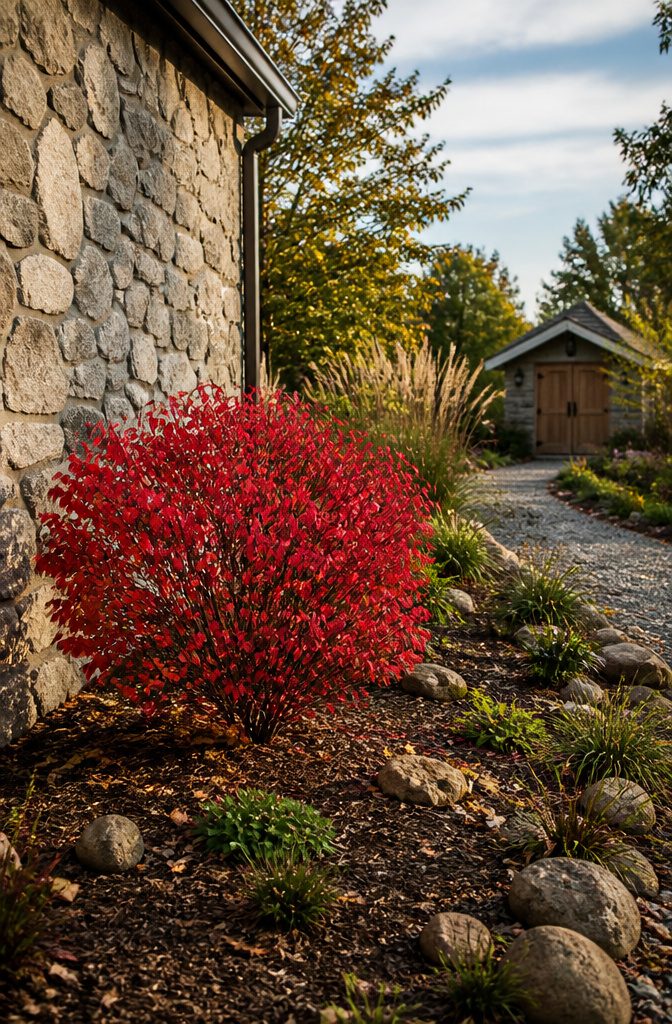
Burning bush grows in almost anything, from dry sand to heavy clay, but the soil still matters if you want the show it is famous for.
Well-drained ground with a pH between 6.0 and 7.5 gives the healthiest plant and the most reliable color. Heavy clay will work if you amend it with organic matter to speed drainage; otherwise the roots sit wet and the foliage suffers.
Full sun is not optional for the fall display. Shade gives you pale pink or washed-out yellow instead of the scarlet that makes people plant this shrub in the first place.
Semi-shade is a compromise that only makes sense if your site forces it, and even then I would look for another plant rather than accept second-rate color on a species chosen specifically for that color.
During the first year or two, keep the soil consistently moist to build the root system.
A layer of mulch helps, and in full sun you will need to check more often in peak summer; the ground dries fast where the light is strongest.
If you want the boldest fall colors, the plant needs full sun.
That single requirement, sun above all else, is what determines whether your burning bush landscaping earns its place or becomes a green lump you regret.

🌿 [INFO1] - Known for their brilliant red fall foliage. It's the deep dark red leaves of this flowering shrub that makes home gardeners want to plant this flowering shrub as foundation plants or as hedges. Though tolerant of shade, require full sun to produce their vibrant red fall foliage & spectacular fall colors. This easy to grow shrub transplants easily and may be sheared to a more compact size of around 4 feet.

Plant: Dwarf Burning Bush (Euonymus alatus)

Common name: Dwarf Burning Bush
Maintenance Needs
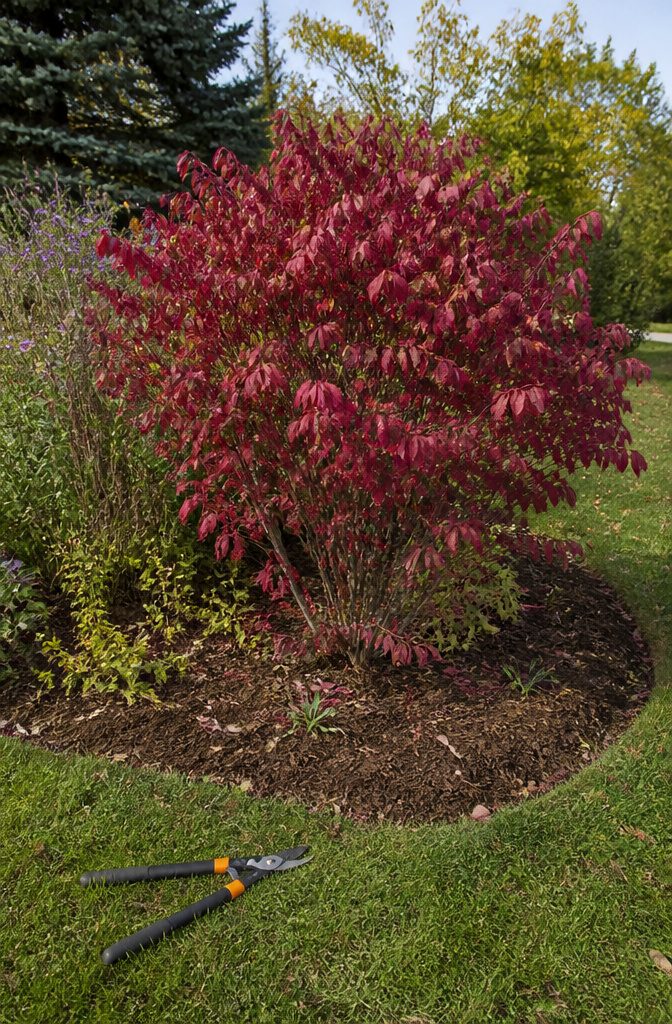
Burning bush asks almost nothing of you at first. Water it through the first season, then let rainfall handle the rest.
Prune in early spring if the shape wanders, cutting back old twigs and dead branches to keep it tidy. That minimal care is what makes it popular.
But easy maintenance upfront does not mean low maintenance forever.
The same root system that survives drought also anchors a plant that reseeds aggressively. You will pull seedlings and sprouts by hand, season after season, and birds will carry berries into natural areas where the shrub grows beyond your reach.
Pruning shapes the plant; it does not slow the spread. Once established, burning bush becomes a management problem dressed in fall color, and the weekend you spent planting it is not the weekend you will spend controlling it.

One of the Most Colorful Shrubs Ever Developed Why Burning Bushes? The fiery autumn foliage of the Burning Bush makes it an excellent landscape plant,,,and it really draws attention when planted in rows

EASY GROWING: Kochia Trichophylla, also known as Burning Bush or Summer Cypress, is a low-maintenance ornamental plant that thrives in various conditions

BLOOM TIME: Spring
Native Alternatives
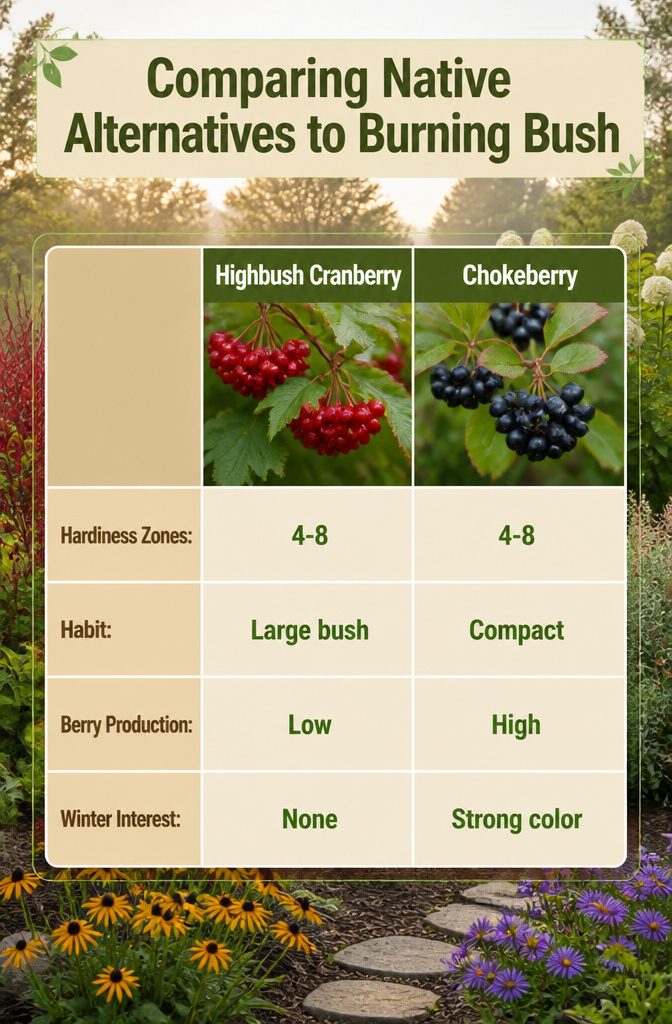
Highbush cranberry and chokeberry are the two native alternatives most worth knowing by name.
If I were replanting a border this weekend, I would pick black chokeberry, Aronia melanocarpa, for the same compact habit and the berry production that feeds birds without crowding out the understory.
It handles the same hardiness zones 4 through 8, so the swap is mechanical: dig out the Euonymus, drop in the Aronia, done in an afternoon.
Red twig dogwood is the other plant I would actually drive to a nursery for, specifically Cornus sericea if you want winter stem color that performs the same visual job burning bush did in October.
Silky dogwood works too, though I think the red stems read cleaner against snow. Various sources also list highbush blueberry, fragrant sumac, witch-alder, oak-leaf hydrangea, and arrow-wood viburnum, and any of them beat an invasive.
But for a straight replacement of that rounded 6-foot shrub mass with fall impact, chokeberry or dogwood is where my money goes.

A value priced mix that attracts a wide variety of backyard birds

Spicy Hot Bird Seed: Made only for birds and infused with spicy chili pepper oil

FORMULATED BY BIRD ENTHUSIASTS, this bird food is made to attract a variety of colorful songbirds like Cardinals, Woodpeckers, Blue Jays and Finches to your backyard
Toxicity to Humans and Pets
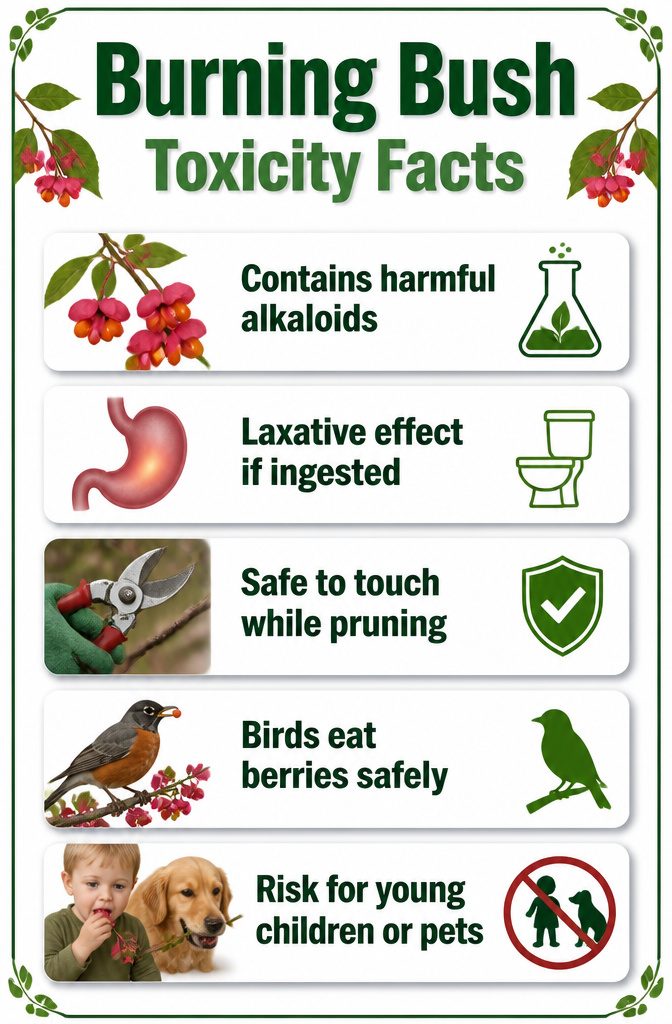
Every part of burning bush contains alkaloids that act as a strong laxative if swallowed, causing gastrointestinal distress.
The plant is harmful only when ingested; touching stems during pruning poses no risk, and it will not trigger the skin reactions poison ivy does.
Birds and small rodents eat the berries without issue.
That tolerance matters because it is exactly how the seeds travel. A bird drops the seed in a hedgerow half a mile away, or a chipmunk buries one and forgets it, and a new bush takes hold outside your yard.
The toxicity to mammals keeps deer and rabbits from grazing it back, which partly explains why the plant persists so aggressively once it escapes.
If you have young children who put leaves or berries in their mouths, or a dog that chews branches, this is a plant I would skip regardless of its fall color.
The risk is narrow but real, and the same birds that spread it will not warn you where the next generation sprouts.

Plant: Dwarf Burning Bush (Euonymus alatus)
🌿 [INFO1] - Known for their brilliant red fall foliage. It's the deep dark red leaves of this flowering shrub that makes home gardeners want to plant this flowering shrub as foundation plants or as hedges. Though tolerant of shade, require full sun to produce their vibrant red fall foliage & spectacular fall colors. This easy to grow shrub transplants easily and may be sheared to a more compact size of around 4 feet.

For sale are 5 dwarf buring bushes that are approximately 6-12" tall and shipped bareroot
Pruning and Control Methods
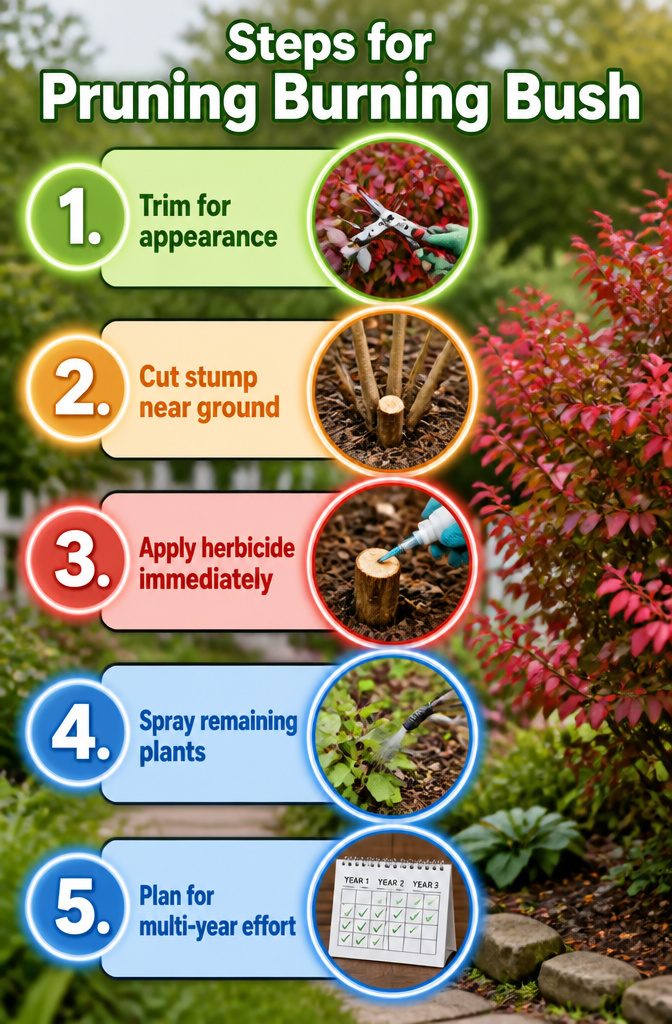
Occasional trimming keeps a burning bush looking tidy, but it does nothing to stop the plant from spreading.
I prune mine in early spring before bloom if the shape has gotten away from me, yet I know I am only managing appearance, not behavior.
For anyone already stuck with one, cut stump control is the only reliable way to kill it. Cut the stem within a few inches of the ground and treat the fresh stump immediately with herbicide.
Burning bush resprouts aggressively from stumps and forms dense thickets, so timing matters: the cut surface should be treated right away to halt regrowth.
The remaining smaller plants can then be sprayed. Plan on a multi-year effort; seeds stop germinating after one or two years, which is shorter than some invasives, but the resprouting keeps the problem alive if you skip the stump treatment.

Includes a Dwarf Burning Bush plants, 6-12 inches tall

WHAT YOU WILL RECEIVE: 2 Dwarf Burning Bush live shrubs bare root, ready for planting in your yard, garden beds, or landscape areas
Wildlife Impact
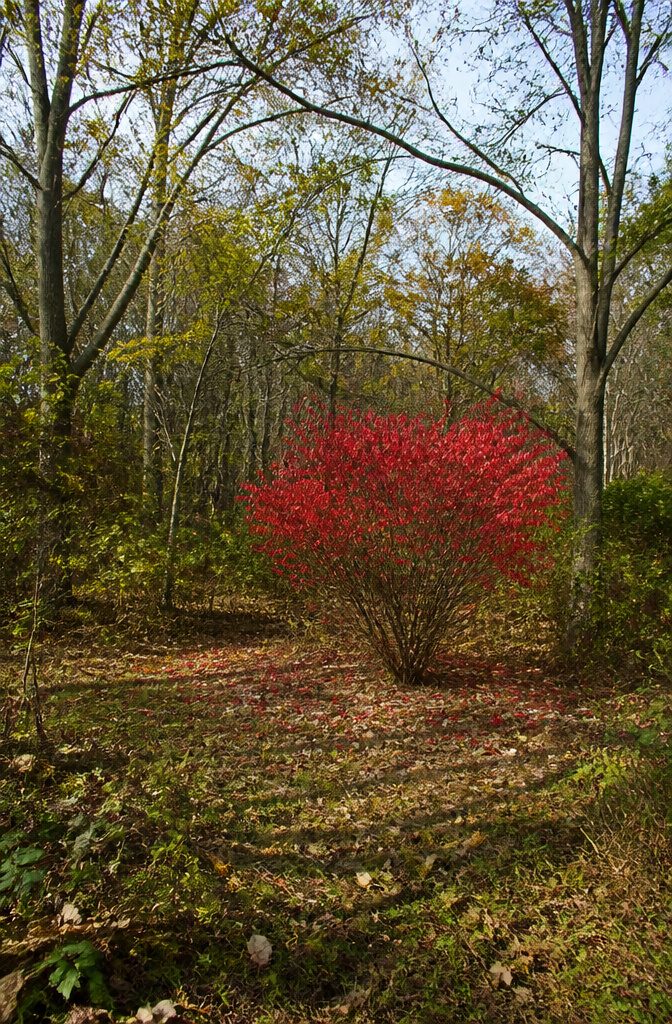
Birds eat the berries and carry seeds well beyond your property line, which is how Euonymus alatus escapes into woodlands and roadside thickets.
A single shrub can seed dozens of square miles over time. The dense groves that result choke out native understory plants, and those natives are the ones local insects and birds actually need for food and shelter.
The fall color is striking, I will not argue otherwise, but the ecological cost is paid for decades after the red leaves drop.
Native wildlife gets nothing nutritional from the berries, so birds eat and disperse them without gaining real sustenance, while the plants they replace supported entire food webs.
Massachusetts and New Hampshire have banned burning bush sales for this reason, and Connecticut lists it as invasive. The color lasts a few weeks; the damage persists and spreads without intervention.

Foliage turns a vivid red each autumn

BRILLIANT FALL COLOR: Burning Bush shrub transforms into a spectacular display of brilliant red foliage during autumn months, creating stunning landscape focal points.
Frequently Asked Questions
Is burning bush invasive?
Yes. Burning bush is considered invasive in over twenty states, and New Hampshire, Maine, and Massachusetts have banned its sale and planting entirely.
Birds eat the berries and scatter seeds across wide areas, so a single plant can become the source of hundreds more spread over dozens of square miles.
How tall do burning bushes grow?
Standard burning bush reaches 25 feet, though most stay smaller depending on variety and site conditions. Cultivars range from ‘Rudy Haag’ at 3–5 feet up to ‘Monstrosus’ at 15–20 feet, so checking the specific tag matters more than soil prep for small yards.
What are some alternatives to burning bush?
Black chokeberry and red twig dogwood are the two best replacements for similar size and seasonal impact.
Chokeberry matches the compact, rounded habit with berry production that feeds birds without invading, while red twig dogwood offers bright winter stem color instead of fall foliage.
How do you control burning bush?
Cut stump control is the only reliable method: cut the stem within a few inches of the ground and treat the fresh stump immediately with herbicide to prevent aggressive resprouting.
Plan on a multi-year effort, since seeds keep germinating for one to two years and any missed resprouting extends the problem.