
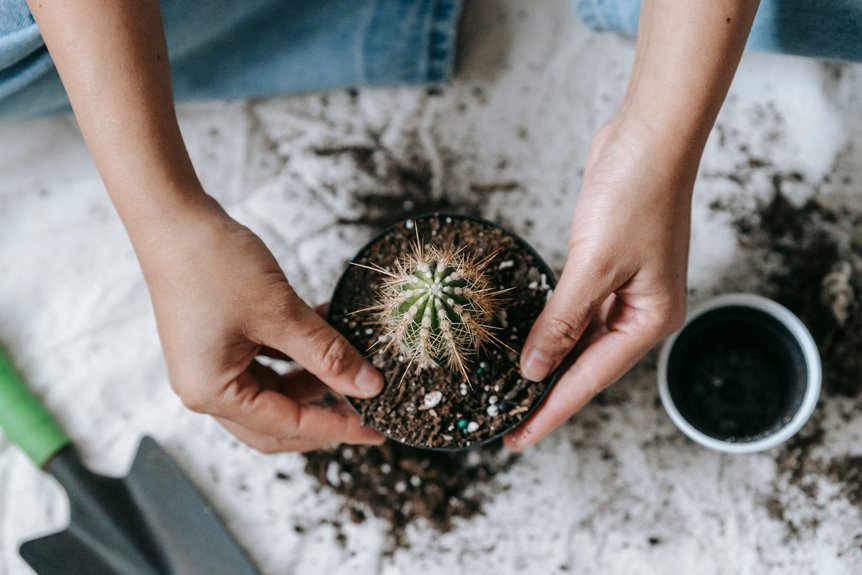
I’ve lost more Christmas cacti with regular potting soil than I can count. Regular potting soil retains water excessively, which keeps roots submerged and lacking oxygen. The dense texture obstructs drainage and airflow, creating pockets of standing water that can harm these tropical epiphytes. Fine particles compact around roots, and added fertilizers can disrupt blooming cycles. Even when the top inch feels dry, deeper soil can remain wet, providing a false sense of security while rot develops. The solution is to switch to airy, fast-draining mixes that include orchid bark and perlite. Here’s how to identify issues and create the right blend before your plant deteriorates.
Why Regular Potting Soil Kills Christmas Cactus Roots
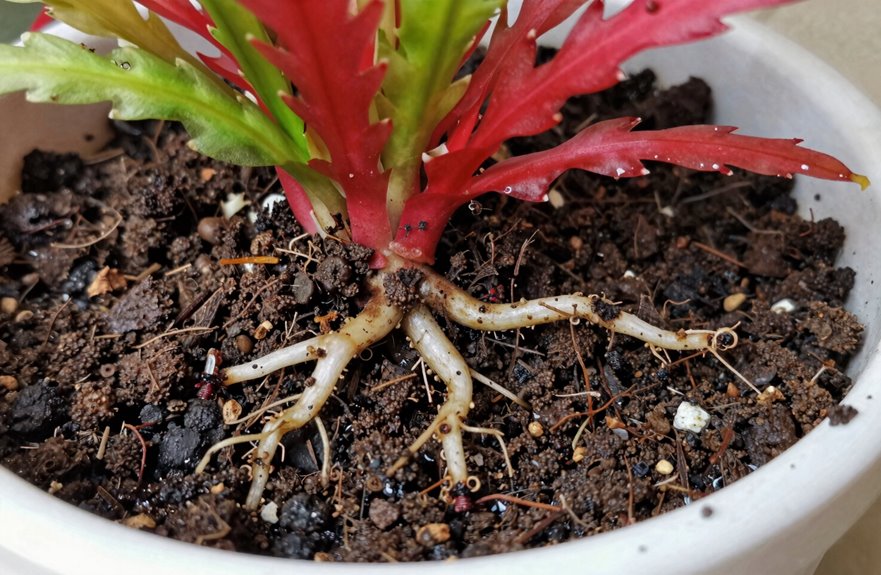
Although I learned this the hard way, regular potting soil can be detrimental to Christmas cactus roots for several reasons.
The Moisture Trap
Regular potting soil retains water for too long, which is harmful to these tropical epiphytes. I once used a standard mix, and my plant’s roots rotted within three weeks. These roots require air, not excessive moisture.
Standard potting soil drowned my Christmas cactus roots in three weeks—these epiphytes need air, not soggy dirt.
Three Deadly Problems
- Dense texture blocks drainage and airflow.
- Extended moisture deprives roots of oxygen.
- Added fertilizers stress blooming cycles.
What Actually Happens
Fine particles compact around roots, creating pockets of standing water. Fungal infections can develop rapidly; I have seen blackened stems appear overnight. Meanwhile, synthetic fertilizers promote leafy growth when your cactus is focused on flowering.
Avoid regular potting soil. Your Christmas cactus thrives in a coarse, chunky mix that resembles tree bark, not typical garden dirt.
How Christmas Cactus Needs Tropical Soil, Not Desert Mix
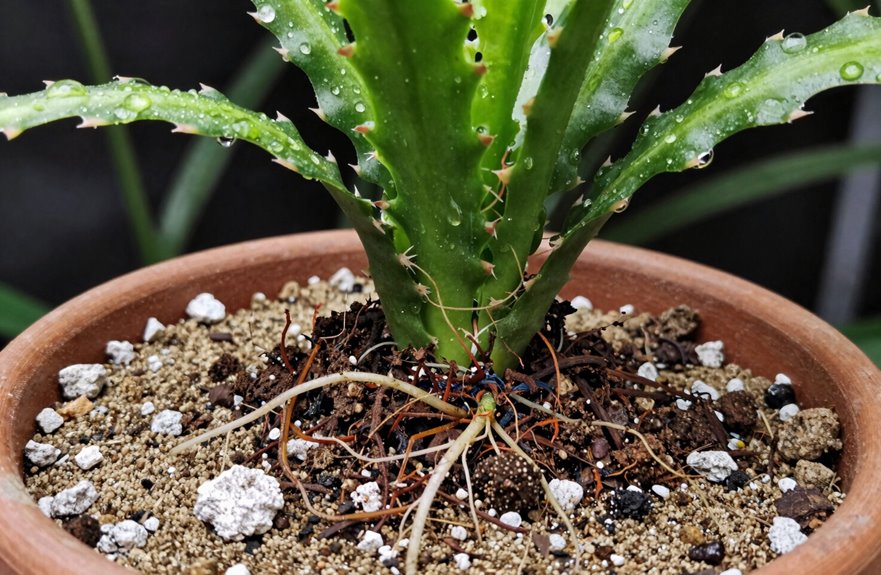
Where does the idea come from that all cacti share the same needs? I’ve made the mistake of using desert cactus mix for my Christmas cactus, thinking it made sense since it’s a cactus. Unfortunately, that’s not the case.
Why Desert Mix Fails
Christmas cacti are not desert survivors. They are tropical epiphytes native to Brazilian rainforests, where they cling to tree branches in humid shade. Desert mixes drain too quickly, which can stress the roots and leave them thirsty. The appropriate soil for Christmas cactus retains moisture without suffocating the roots.
What Actually Works
Look for blends that include orchid bark, perlite, and peat (or coco coir). I use a 2:1:1 ratio, which consists of two parts orchid bark, one part perlite, and one part potting mix. Premade tropical succulent mixes are also suitable. Avoid gritty desert mixes. Your rainforest-native cactus deserves a suitable environment.
Is Your Current Soil Suffocating Roots? Warning Signs to Check
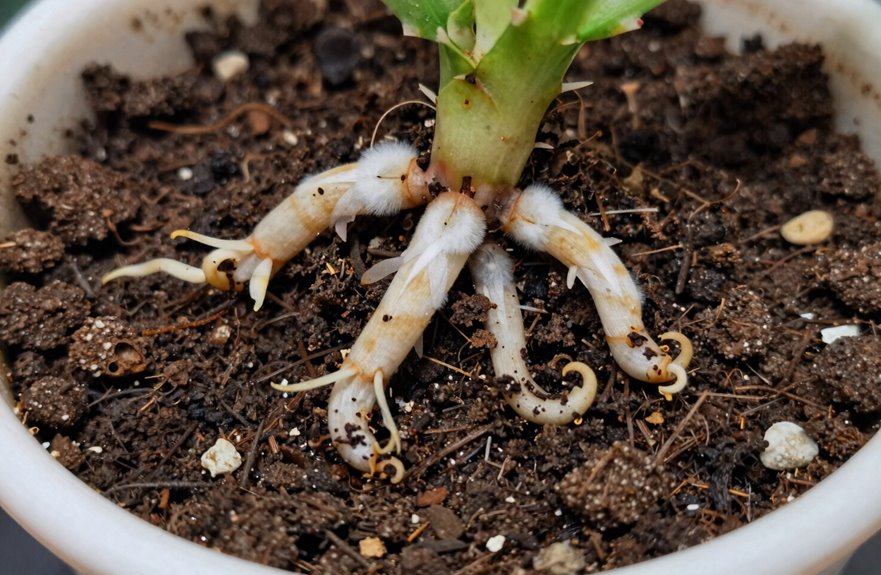
I learned the hard way that soil problems don’t announce themselves with flashing lights. My Christmas cactus sat in regular potting soil for months before I noticed the warning signs: yellowing, limp stems, and that telltale sour smell when I finally checked the roots. They had turned brown and mushy, suffocating in a soil mix that held water like a sponge.
I watch for stems that feel soft instead of firm, leaves that wrinkle despite moist soil, and fungus gnats hovering nearby, as they thrive in wet conditions. If your Christmas cactus struggles after watering, it is likely that the roots cannot breathe. Regular potting soil retains moisture for too long for these tropical epiphytes. When I suspect trouble, I gently remove the plant and inspect it. Healthy roots should look white and plump, never dark or slimy.
Best Christmas Cactus Soil Types: Three Proven Options
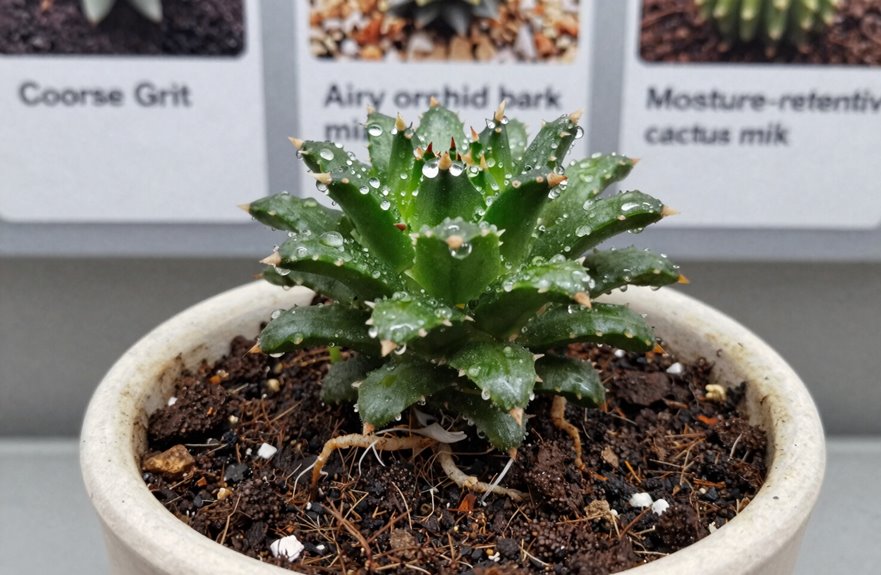
So what actually works once you’ve tossed that soggy regular potting soil? I’ve found three proven options that keep these tropical cacti thriving.
Option 1: The DIY Blend That Saved My First Plant
Mix equal parts all-purpose potting mix, perlite, and orchid bark. I killed two cacti before learning this ratio; now my oldest is fifteen years old. The coarse texture prevents wet feet, which can be harmful.
Option 2: The Speedy Drainage Formula
Combine two parts cactus/succulent mix with one part pumice. This blend dries the topsoil faster, which can significantly benefit your cactus.
Option 3: My Lazy-Day Choice
Oh Happy Plants Tropical Succulent Soil Blend contains coco coir, rock dust, mycorrhizae, and charcoal. It’s expensive, but I choose it when I’m too busy to mix my own.
Select one option, commit to it, and your cactus will reward you with blooms.
Orchid Bark Blends for Fast Drainage and Healthy Roots
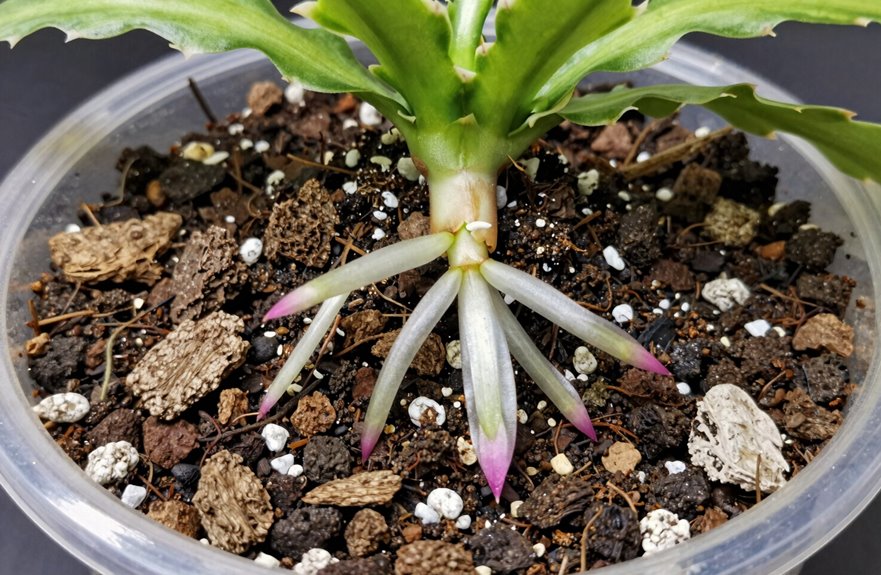
How do you escape the endless cycle of root rot anxiety? My answer lies in orchid bark blends. These chunky mixes create air pockets that allow roots to breathe instead of suffocating in dense, soggy soil. Here’s my go-to formula that has benefited many plants:
| Component | Purpose |
|---|---|
| Potting mix | Base nutrients and structure |
| Orchid bark | Air pockets, prevents compaction |
| Perlite or vermiculite | Extra drainage boost |
| Equal parts (1:1:1) | Balanced, repeatable ratio |
| Top inch dry rule | Prevents gnats, protects roots |
I water more often with orchid bark blends; that’s the trade-off—moisture moves through quickly instead of lingering. Wait for that top inch to dry, then soak thoroughly. Your Christmas cactus will respond with plump, healthy segments.
Perlite vs. Pumice: Which Additive Works Better?
Here’s what I’ve figured out:
- Both prevent waterlogging, but pumice is stricter about it.
- Perlite costs less at big box stores.
- Pumice won’t crush or disappear over time.
- Your local cactus enthusiasts probably swear by pumice.
Belonging to this community means recognizing that adequate drainage is not sufficient.
3 DIY Christmas Cactus Soil Recipes That Drain Fast
I’ve mixed up plenty of bad batches over the years, so let me help you by breaking down what actually matters in these recipes. Essential mix components start with your base; regular potting soil is too dense, so we’re cutting it with materials like perlite (those white, popcorn-looking bits), orchid bark, or coarse sand to create air pockets for roots to breathe. Drainage enhancement techniques focus on particle size and ratios: larger chunks, like ¼-inch pumice, dry faster than fine powder. I always aim for mixes that feel gritty, not spongy, when squeezed.
Essential Mix Components
The right mix is crucial, and I learned this after drowning my first Christmas cactus in dense, waterlogged soil that turned its roots to mush. I now rely on proven potting mixes made from specific components that work together.
Here’s what belongs in your blend:
- Quality potting soil (2–3 parts) — this serves as your foundation, not garden dirt.
- Coarse sand (2 parts) — creates air pockets and prevents compaction.
- Perlite (1 part) — lightweight volcanic glass that keeps things airy.
- Optional boosters — compost for nutrients, orchid bark for texture, or pumice (¼ inch) for sharper drainage.
I have also found success mixing equal parts all-purpose potting mix, perlite, and orchid bark. Some growers prefer two parts cactus mix plus one part pumice. Either way, you’re connecting with a community of plant enthusiasts who have figured this out.
Drainage Enhancement Techniques
Why does drainage matter so much for Christmas cacti? Regular potting soil holds water like a sponge, and soggy roots can rot quickly. These jungle cacti need airy, quick-drying mixes that mimic their natural tree-dwelling habitat.
DIY Recipes That Actually Work
- The Classic Blend: Mix one part potting soil, two parts coarse sand, and one part perlite. This provides balanced moisture without suffocating the roots.
- The Pumice Powerhouse: Combine two parts cactus mix with one part pumice. This mix helps prevent damage from overwatering.
- The Bark Boost: Equal parts potting mix, perlite, and orchid bark create exceptional drainage with plenty of oxygen for healthy roots.
Your Christmas cactus will reward you with blooms.
Premixed Tropical Soils Worth Buying in 2024
Where do you turn when mixing your own soil feels like too much chemistry homework? I’ve been there, staring at bags of perlite and orchid bark, wondering if I’ve doomed another plant. That’s when I discovered tropical succulent soil blends that work straight from the bag.
Oh Happy Plants Tropical Succulent Soil Blend completely changed my approach. It’s designed specifically for plants like Christmas Cactus, using coco coir and chips instead of peat moss. The drainage maintains a balance of moisture without sogginess.
Here are the advantages of this blend:
- Mycorrhizal inoculant and charcoal build stronger root systems naturally.
- Slow-release nutrients from alfalfa meal, flax seed meal, and rock dust provide feeding for months.
- Sustainable coco base holds water better than peat without drowning roots.
- No mixing is required; just open the bag and pot with confidence.
I finally stopped second-guessing my choices.
How to Save a Christmas Cactus From Rotting Soil
I’ve seen too many Christmas cacti turn to mush because I ignored the warning signs. Here’s how to spot root rot, swap out that soggy soil, and prevent it from happening again. We will cover three essentials: Root Rot Signs (like black, squishy stems and a funky smell), Soil Replacement Steps (1) unpot gently, 2) trim rotted roots with clean shears, 3) let dry for 24 hours, 4) repot in gritty mix), and Preventing Future Problems (wait until the top inch dries before watering; consider getting a moisture meter if you find it difficult to resist watering). My experience has shown me what works, and this routine has saved my holiday cacti multiple times.
Root Rot Signs
Because regular potting soil retains moisture for too long, I’ve seen more than one Christmas cactus turn into a mushy mess before understanding what was happening. Root rot can develop quickly, and I missed the signs more times than I’d like to admit. Here’s what to look for:
- Dark, squishy roots that fall apart when touched (healthy ones feel firm and light-colored).
- A pliable, waterlogged root ball that holds together like wet cardboard instead of crumbling gently.
- Foul, musty smell rising from the pot, reminiscent of old gym socks rather than fresh earth.
- Wilting despite wet soil, which can be confusing but indicates the roots are unable to absorb water.
Catching root rot early gives you a chance to save your plant.
Soil Replacement Steps
If you’ve spotted signs of rot in your Christmas cactus, don’t panic. I have successfully revived plants multiple times after learning that waiting doesn’t help.
Step 1: Unpot and Inspect
Gently remove your plant, shaking off the soggy potting mix. Use chopsticks to tease roots apart without tearing healthy tissue.
Step 2: Trim the Damage
Cut away brown, mushy roots with sterilized scissors. Leave firm, white roots intact.
Step 3: Prepare the Right Mix
Blend cactus/succulent potting mix with orchid bark or pumice in a roughly 60/40 ratio. This mimics their tropical tree-dwelling origins rather than dense desert soil.
Step 4: Repot and Wait
Plant in the fresh, coarse mix. Wait one week before watering, allowing the top inch to dry between drinks. Your cactus will benefit from this approach.
Preventing Future Problems
Why do so many of us keep killing Christmas cacti with kindness? I’ve learned that love means letting go of regular soil. Now I swear by the right potting mix, and you can too.
Here’s how I keep my plants thriving:
- I choose airy potting mix; cactus blends or DIY mixes with perlite, pumice, and orchid bark mimic their epiphytic home.
- I wait for the top inch to dry before watering; soggy roots aren’t happy roots.
- I repot every 2-3 years with fresh potting mix to prevent compaction.
- I watch for warning signs; yellowing stems mean I’ve overdone it.
We are learning together as we grow. Your Christmas cactus wants to bloom for you.
Step-by-Step: Repotting Christmas Cactus Into Better Soil
Grab your trowel and let’s get our hands dirty. Repotting a Christmas cactus may seem tricky, but I’ve learned valuable lessons from my gardening experiences, and I’m sharing those with you.
Choose Your Potting Mix
First, ditch regular potting soil. I learned this the hard way with soggy, root-rotten plants. You need well-draining soil. Either grab a premade succulent mix or create your own. I blend one part potting soil with one part perlite or pumice, then add a handful of orchid bark for extra airiness. Aim for a coarse texture, not something that clumps together.
The Actual Steps
- Gently remove your cactus from its old pot, shaking off the tired soil.
- Trim any mushy, brown roots as they are not salvageable.
- Fill your new pot with your custom mix, nestling the roots shallowly since Christmas cacti prefer to be slightly snug.
- Add more mix on top, leaving space at the rim.
Allow the top inch to dry between waterings. Your plant will thrive with this care.
Watering Tips for Freshly Repotted Plants
The first few weeks after repotting are crucial for Christmas cacti. Many have struggled during this time due to automatic watering habits.
Here’s what I’ve learned about watering after repotting into mixes with coarse sand:
- Wait for the top inch of soil to dry completely before watering again; this usually takes longer than expected.
- Water less often than with dense potting soil, since coarse, well-draining blends dry faster at the surface while still retaining moisture below.
- Watch for warning signs: soft leaves, yellowing, or mushy stems indicate overwatering.
- Adjust your schedule based on your mix texture and your home’s humidity; there is no universal calendar.
Your cactus needs close attention, rather than a set routine.
How to Keep Soil Draining Well Without Drying Roots
Once you’ve established your watering routine after repotting, the next challenge is maintaining good drainage without drying out your cactus.
I learned this through experience; my first Christmas cactus sat in soggy regular potting soil, leading to quick root rot. Now, I mix in coarse materials like perlite, orchid bark, or pumice. These create air pockets, allowing water to flow through without drowning the roots while still retaining enough moisture to prevent dryness.
I use a simple method to check moisture: I insert my finger about an inch deep. If it feels dry at that depth, I water. If it’s still moist, I wait. This inch rule helps me stay consistent.
The epiphytic nature of these plants means they prefer an airy, jungle-floor environment—moist but never muddy. Achieving the right drainage is essential for their health.
Common Mixing Mistakes That Ruin Drainage
I’ve seen many well-meaning growers unintentionally harm their Christmas cactus before it even leaves the potting table; I’ve made similar mistakes myself. The three major pitfalls include using fine-textured soil that retains moisture, skipping coarse additives that promote air circulation, and neglecting the fact that these plants are tropical epiphytes rather than true desert cacti. They require proper drainage without experiencing drought. Let’s examine each mistake to help you avoid the same errors I made with my first lopsided, rotting specimen in 2019.
Using Fine-Textured Soil
Why do so many of us reach for that bag of regular potting soil when repotting a Christmas cactus? I did it too, thinking dirt is dirt, right? Wrong. Fine-textured soils wreck drainage, trapping water around roots that evolved clinging to tree bark, not sitting in soggy muck.
Here’s what I’ve learned about why this matters:
- Moisture retention — Fine particles hold water like a sponge, drowning roots that need to breathe between waterings.
- Compaction — That fluffy bagged soil turns dense and concrete-like within weeks, cutting off airflow completely.
- Rot risk — My first Christmas cactus died in 2006 from black, mushy roots that I still remember.
- False security — The top inch dries fast while the root ball stays wet, tricking you into watering too soon.
Skip the regular stuff. Your cactus requires better drainage than fine-textured soil provides.
Skipping Coarse Additives
How often have I stared at a bag of perlite, convinced my Christmas cactus would manage just fine without it? I learned the hard way that skipping coarse additives destroys drainage, and my plants paid the price.
Why Your Mix Needs Grit
Regular potting soil packs tight, squeezing out air pockets that roots need. Without perlite, orchid bark, pumice, or coarse sand (aim for 30-40% of your mix), water sits stagnant. I’ve watched roots turn mushy in dense, water-retentive soil that suffocates rather than supports.
My Fix-It Formula
- Start with quality potting soil as your base.
- Add one part perlite or pumice to two parts soil.
- Mix in orchid bark for extra aeration.
- Test drainage—water should flow through in seconds.
Better drainage leads to healthier roots, resulting in thriving plants that you can proudly showcase.
Overlooking Tropical Needs
I used to think “cactus” meant “desert,” so I packed my Christmas cactus into gritty, sandy soil like I would for a saguaro. This was a mistake. My tropical succulent turned yellow and mushy because I ignored where it actually comes from: rainforest treetops, not dry canyons.
Here’s what I’ve learned about honoring those tropical roots:
- Ditch the sand and grab orchid bark instead; your cactus craves that airy, tree-branch feel.
- Mix in perlite or pumice, about one-third of your blend, for a loose, breathable texture.
- Skip fine potting soil completely, as it stays wet too long and suffocates epiphyte roots.
- Check the top inch before watering, allowing it to dry slightly between drinks.
We’re not just keeping plants alive; we’re recreating their natural environment.
When to Repot Again: Timing Your Next Upgrade
So when should you pull your Christmas cactus out of its pot again? I watch for two clear signals: roots circling the pot’s bottom and soil that stays damp for too long. When my mix loses its drainage capability—usually every 2-3 years—it’s time to upgrade.
Check These Signs:
- Water sits on top instead of sinking through.
- Roots peek through drainage holes.
- The pot feels heavy days after watering.
I repot in spring, right after blooming ends. My plant is already stressed from flowering, so I avoid repotting during winter. I learned the hard way after losing one by repotting in December.
Use the coarse mix we discussed: 2 parts potting soil, 2 parts sand, 1 part perlite. Your cactus will have better blooms next year.
Troubleshooting: Soil Fixes for Yellow or Drooping Plants
What’s causing those sad, yellow leaves on your Christmas cactus? I’ve been there, staring at my drooping plant wondering where I went wrong. Usually, it’s the soil mix holding too much water, suffocating those delicate epiphytic roots.
Here’s how I fix it:
- Check your drainage. I pop the plant out and inspect the roots. If they’re brown and mushy, rot has set in from that dense regular potting soil.
- Switch your soil mix. I blend 2 parts coarse sand, 1 part perlite, and 2 parts potting soil for quick drainage that mimics their natural habitat.
- Add pumice. I toss in ¼ inch pumice chunks, which work better than perlite alone for keeping roots airy.
- Water smarter. I always let the top inch dry completely before watering again, regardless of the soil mix I’m using.