
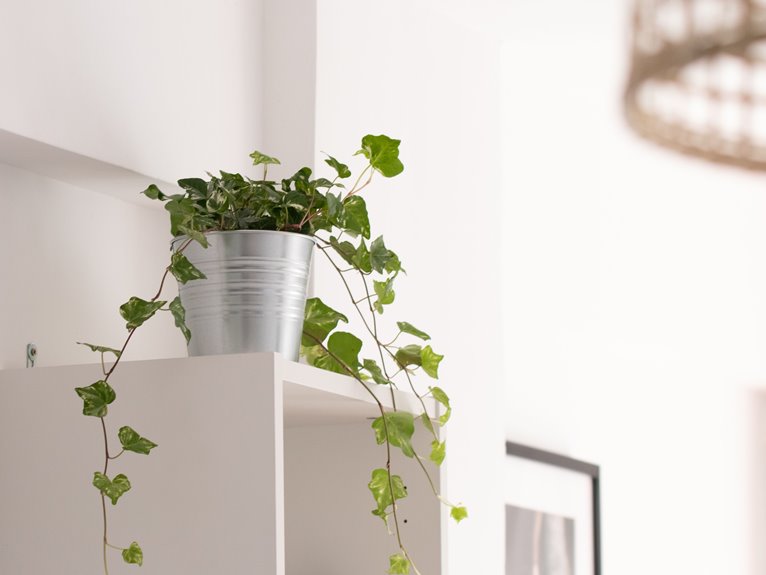
I’ve grown enough indoor vines to know that the biggest mistake happens before you even water them: picking the wrong growth habit for your space. Trailing vines like pothos and philodendron drape beautifully from shelves with minimal effort, while climbing vines require supports, such as moss poles for aerial root climbers and trellises for tendril types. These supports should be inserted 2–3 inches from the stem base before planting to avoid damaging established roots. Train early by guiding new growth weekly with soft ties until the stems cling firmly at 4–6 inches tall, which usually takes about 6–8 weeks. Pinch stem tips with your fingers to encourage a bushier appearance, and when pruning above the node, leave ¼ inch of stem to root those cuttings and fill bare spots. Keeping these plants thriving involves more than what most guides cover.
Pick Climbing or Trailing Vines for Your Space
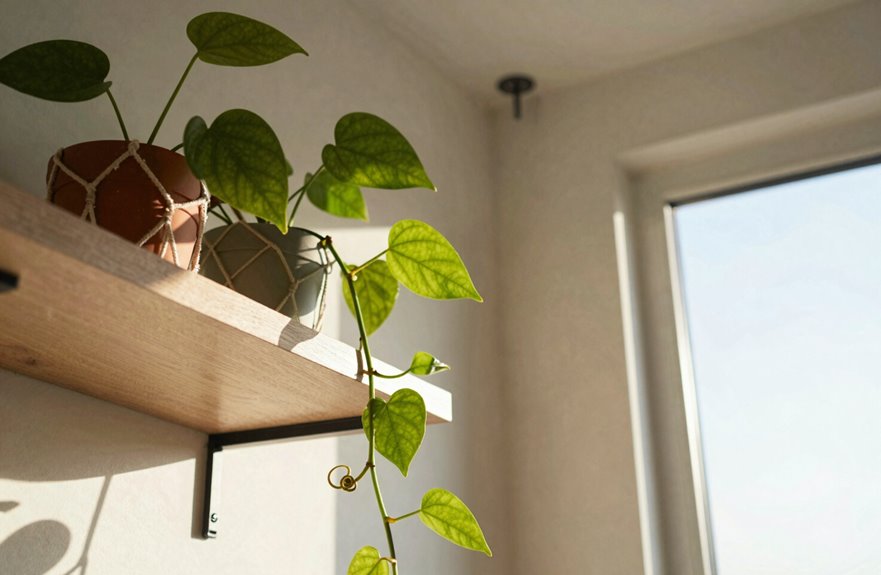
Before I buy anything, I ask myself three questions: (1) How much vertical space do I actually have? (2) Do I want the plant to fill wall space or hang into my sightlines? (3) Am I willing to install supports, or do I want something that just works out of the pot?
Trailing vines drape naturally from hanging baskets or shelves, requiring little maintenance. If you’re looking for low-effort options, start here. Pothos and philodendron are great choices.
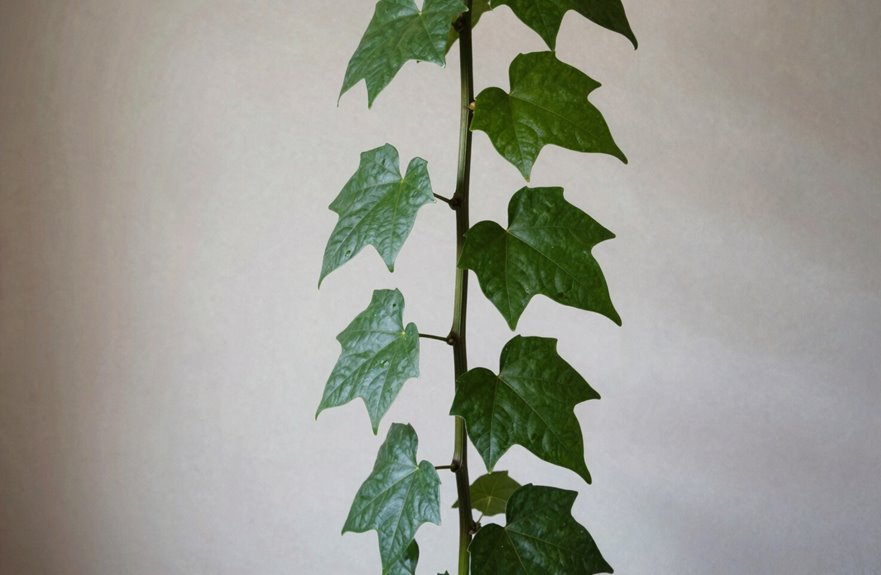
Climbing vines require supports, such as a trellis, pole, or wall training system. They attach via aerial roots or attaching tendrils. It’s best to insert the pole before planting to avoid damaging the roots.
Make sure to match your light requirements and use well-draining potting mix. Your space dictates your choices.
Train Indoor Vines Early for Vertical Growth
| Training Task | Timing & Tool |
|---|---|
| Insert support structure | Before planting, 2–3 inches from stem base |
| First attachment point | When vines reach 4–6 inches tall |
| Guiding new growth | Weekly adjustment with clips or soft ties |
| Remove temporary supports | After 6–8 weeks of firm clinging |
Start early to make vertical growth easier. Delaying this process can lead to tangled vines.
Choose the Right Support for Your Vine Type
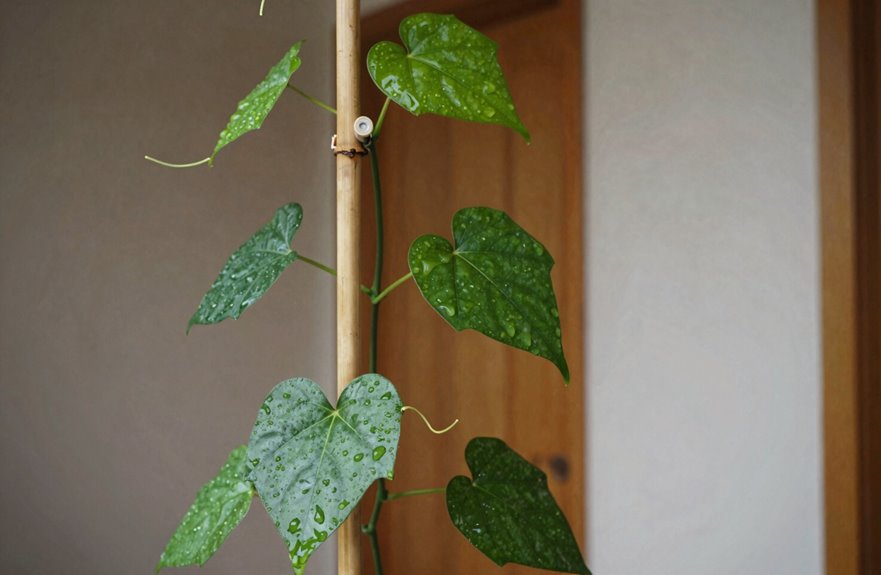
How to Choose the Right Support for Your Vine Type
To determine which support works best for your vine, matching support options to your plant’s natural habits is essential.
For Climbing Vines with Aerial Roots
Insert your pole or trellis before planting to avoid damaging roots later. Moss poles are ideal for philodendrons and hoyas; their rough texture allows aerial roots to grip naturally. You can create a DIY version using sphagnum moss wrapped around a PVC pipe with a diameter of about 1-2 inches.
For Wall-Trained Vines
Use wall attachments such as Command hooks, metal picture hangers, or simple string to guide growth along surfaces. If stems struggle to stay in place initially, use trellis clips or covered wire temporarily. Remove them once the vine is secure to prevent scarring; plant vine clips are gentler than bare wire.
The Golden Rule
Avoid binding stems too tightly. Leave enough space to slip a finger through to promote healthy growth.
Prune and Pinch Indoor Vines for Fuller Plants
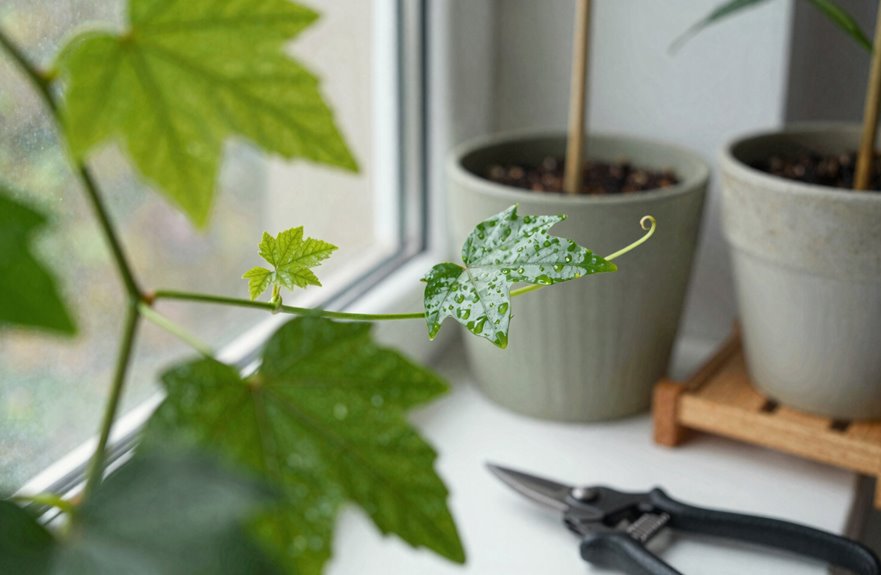
Why do some indoor vines look lush and full while others become stringy and sparse? The key lies in pinching back and pruning.
Pinch for Bushier Growth
I regularly pinch back tips using just my fingers, no tools needed. This encourages bushier growth and denser foliage in desired areas. For larger tasks, I use clean pruning shears.
Prune with Purpose
My method is straightforward: I cut above the node, leaving about ¼ inch of stem. This is the leaf node where new growth will emerge. I limit myself to removing no more than one-third of the plant at once, as I learned the hard way with my pothos.
Boost Vine Fullness
To fill in bare spots, I propagate cuttings from the pruned sections. I root these in water, replant them, and the plant’s vigor increases. More stems and leaves lead to a fuller vine.
Fix Leggy Leaves and Other Common Vine Problems
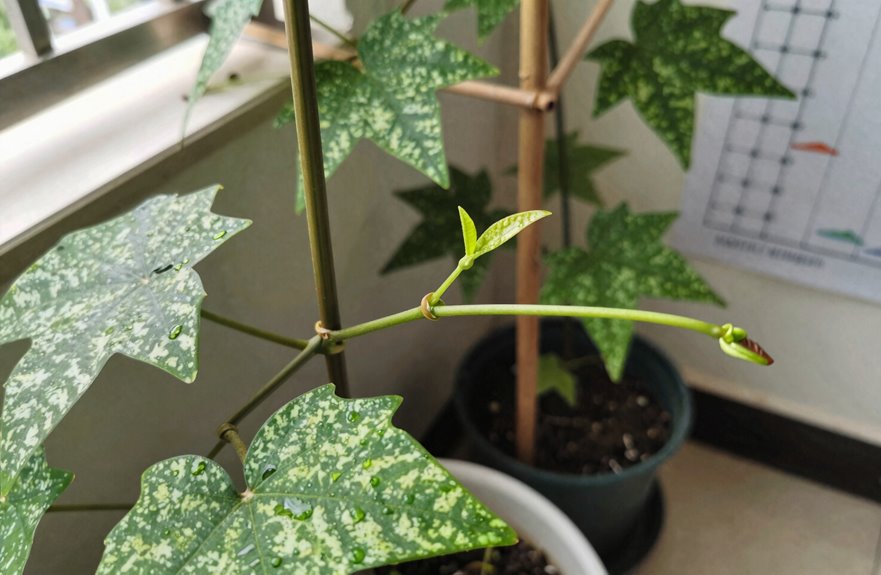
Where do those sad, stretched-out stems come from? I’ve battled leggy growth myself; it’s usually due to insufficient light. Your trailing vines stretch toward windows, leaving sparse, lanky gaps between leaves. Let’s address this together.
| Problem | Solution |
|---|---|
| Leggy growth | Move to brighter indirect light gradually |
| Sparse stems | Pruning back by one-third |
| Weak new growth | Pinch tips weekly during spring |
| Uneven attachment | Loosely tie, don’t wire tight |
| Slow recovery | Feed balanced fertilizer at half strength |
Vine care requires regular pruning, not just a one-time effort. Since I began pinching new growth every few weeks, my pothos has transformed. The bushier growth you desire comes from consistent attention and care. By following this guidance, your plants will reward you with the fullness you seek.