Leaf blower power comes down to three key metrics. CFM (cubic feet per minute) indicates how much air volume moves, which affects the coverage area. MPH (miles per hour) measures air speed, helping to tackle stubborn debris. Newtons measure actual pushing force, a specification often overlooked by manufacturers but closely monitored by professionals. I learned that chasing high MPH alone can be misleading; for example, 250 MPH with low CFM clears slower than more balanced specifications. For average yards, aim for 400–700 CFM and 110–200 MPH, with 15+ Newtons for heavier tasks. Understanding how these three numbers interact is essential for effective cleanup.
CFM vs. MPH: Which Metric Actually Matters More?
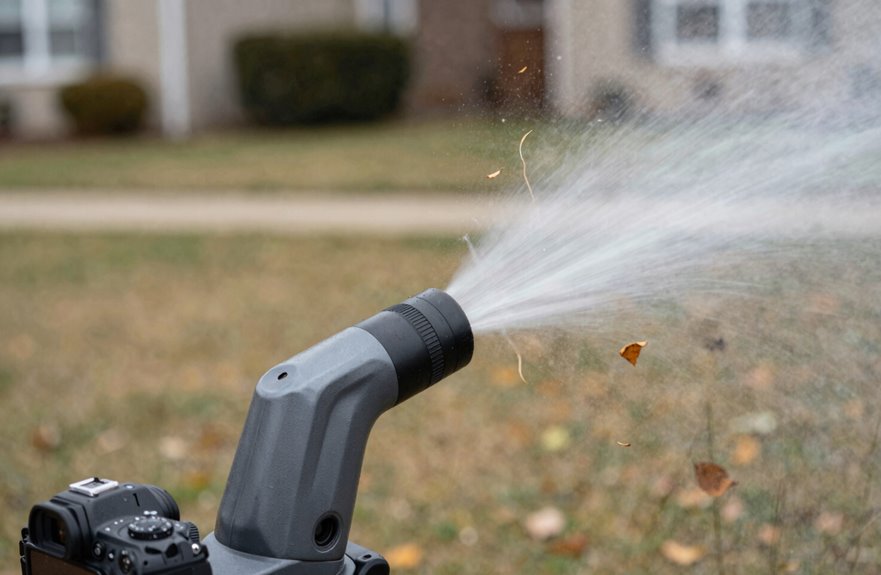
How do you choose a leaf blower that won’t leave you battling the same pile of wet oak leaves for twenty minutes? You need to understand CFM and MPH, as neither metric alone provides the complete picture.
CFM (cubic feet per minute) measures air volume, indicating how much debris you can push in one pass. MPH measures speed, providing the power needed for stubborn, wet debris. I learned this from experience with a high-CFM, low-MPH model that struggled with soggy maple leaves.
For most yards, aim for 400–700 CFM and 110–200 MPH. Additionally, nozzle design and power source (gas or electric) significantly affect real-world performance. A narrow nozzle increases MPH, while battery voltage influences sustained air volume. Balancing both metrics will help you finish faster than your neighbor.
What CFM Measures (and Where It Falls Short)
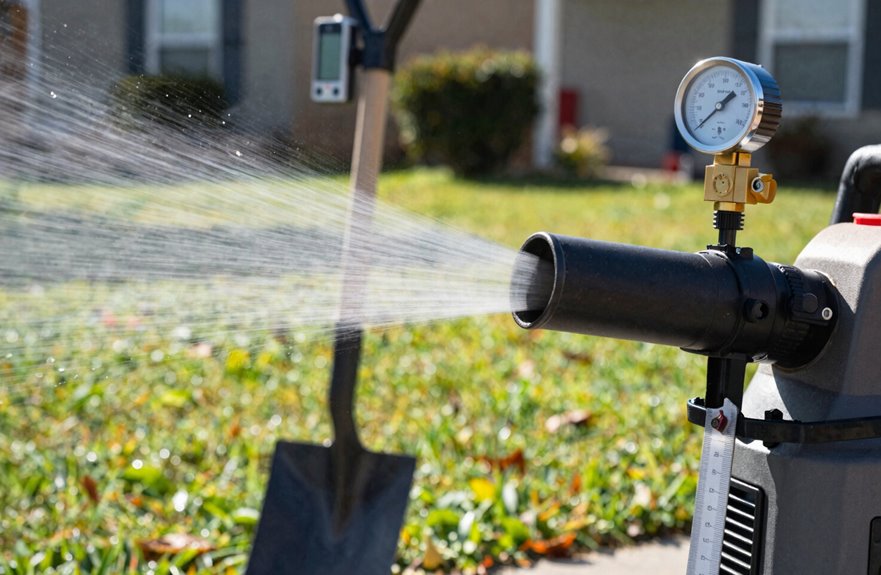
I want you to understand what CFM actually tells you before you buy the wrong blower, like I did back in 2019. CFM, or cubic feet per minute, measures air volume—essentially how much air your machine pushes through its nozzle every sixty seconds. This measurement directly determines your debris clearing capacity for tasks like removing autumn leaves from half-acre lawns. A high CFM number won’t be very effective if you’re dealing with wet, matted leaves stuck in gravel, because volume without speed (measured in MPH) is not adequate for the job.
Air Volume Measurement
Why should we care about CFM when shopping for a leaf blower? Bigger numbers don’t always translate to better performance. CFM (cubic feet per minute) indicates how much air volume moves through the machine, directly affecting how quickly we can clear debris.
Here’s how that translates to your yard:
- A 400 CFM blower pushes enough air to scatter dry leaves across a 20-foot driveway in roughly 30 seconds.
- Higher CFM models (600+) create visible waves that roll pine needles off uneven terrain.
- Wide nozzle designs spread that air volume thin, while tapered tips concentrate it for stubborn spots.
- Pairing adequate CFM with proper MPH and air thrust (measured in Newtons) completes the power comparison.
I once purchased a high-CFM blower with a poor nozzle design, which ended up just pushing wet leaves around. Achieving the right balance is crucial for effective performance.
Debris Clearing Capacity
CFM indicates how much air is being moved, but it doesn’t provide a complete picture. I learned this after purchasing a high-CFM blower that struggled with wet leaves.
Understanding the Limits
CFM measures air volume, indicating how much space your blower fills with moving air each minute. Higher numbers allow for faster debris clearing in large, open areas. However, CFM does not account for air speed (MPH) or actual force.
Where CFM Falls Short
Wet, heavy debris can be difficult to manage with high CFM alone. MPH is essential for breaking surface tension and lifting stubborn material. I have observed 600 CFM machines struggle where 450 CFM units with focused nozzles were effective.
Nozzle Design Matters
Narrow nozzles sacrifice air volume for increased velocity, which enhances clearing efficiency in tight spots. Wider openings take advantage of CFM’s coverage capabilities.
Finding Balance
Choose your tool based on the task: high CFM for dry lawns and a balanced CFM/MPH for mixed conditions.
What MPH Measures (and Where It Falls Short)
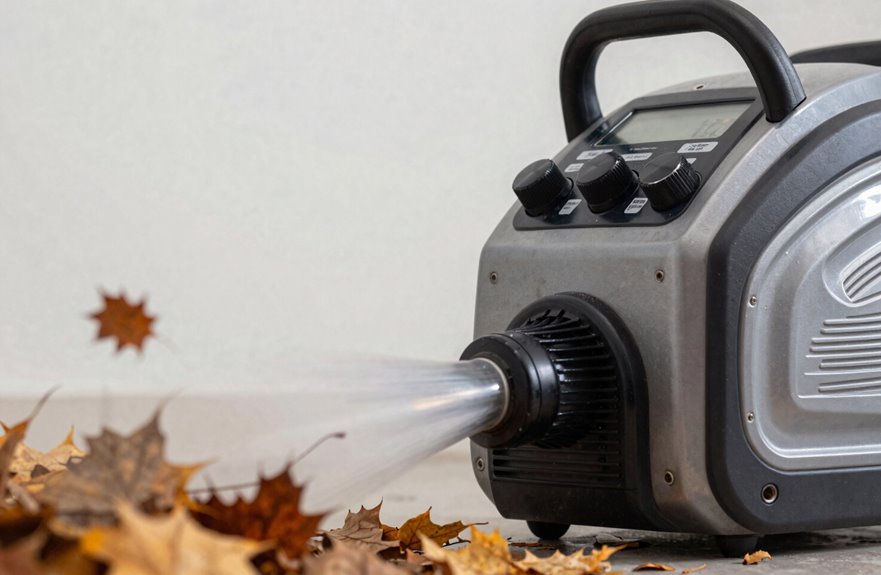
I want to explain what MPH tells you about a leaf blower, as it’s one of those numbers manufacturers prominently feature on the box. Miles per hour measures air speed, meaning how fast the air shoots out the nozzle, much like the velocity of a water hose. However, speed isn’t everything. I once bought a blower with impressive MPH specs, only to see it struggle with a modest pile of wet leaves because I hadn’t considered the other half of the equation: volume.
Air Speed Definition
How do we measure the effectiveness of a leaf blower? I start with miles per hour (MPH), as it indicates how fast the air exits the nozzle. Miles per hour seems straightforward, but there’s more to consider.
- Picture a narrow nozzle shooting a concentrated stream that blasts wet leaves off your driveway.
- Imagine increasing airspeed without moving more actual air, simply by tightening that opening.
- Observe heavier debris skitter away when there is significant velocity behind your airflow.
- Experience frustration when high MPH still leaves piles behind, indicating something is lacking.
That nozzle design misled me once. I purchased a blower with impressive MPH ratings, only to find its performance unsatisfactory. MPH does drive debris movement, but it is not the only factor that matters.
Velocity vs Volume
Nozzle Design Tricks
Narrow nozzles increase your mph readings by concentrating flow, though they reduce total air moved. Manufacturers often prefer this approach because higher numbers attract buyers.
Finding Your Balance
Effective debris clearance requires performance balance: enough mph to tackle stubborn material and sufficient cfm for actual productivity. Review both specifications to avoid the frustration of raking at dusk.
Precision Task Performance
You’ve seen the numbers on boxes—180 mph, 200 mph—and I used to select the highest one without much thought. I learned that mph (airflow velocity) only tells part of the story for precision tasks. High mph can blast debris off concrete quickly, but without enough cfm (air volume), you end up just moving leaves around.
Nozzle design is crucial; a narrow tip increases mph without affecting cfm, allowing for precise control. For effective precision tasks, you require both sufficient velocity to lift stubborn debris and adequate air volume to manage the amount of debris you’re targeting.
Balanced power looks like this:
- Clearing grass clippings from flower beds without disturbing mulch
- Pushing wet leaves into neat piles along driveway edges
- Blowing sawdust from tight workshop corners
- Moving gravel back into beds after driveway sweeping
What Newtons Add That CFM and MPH Miss
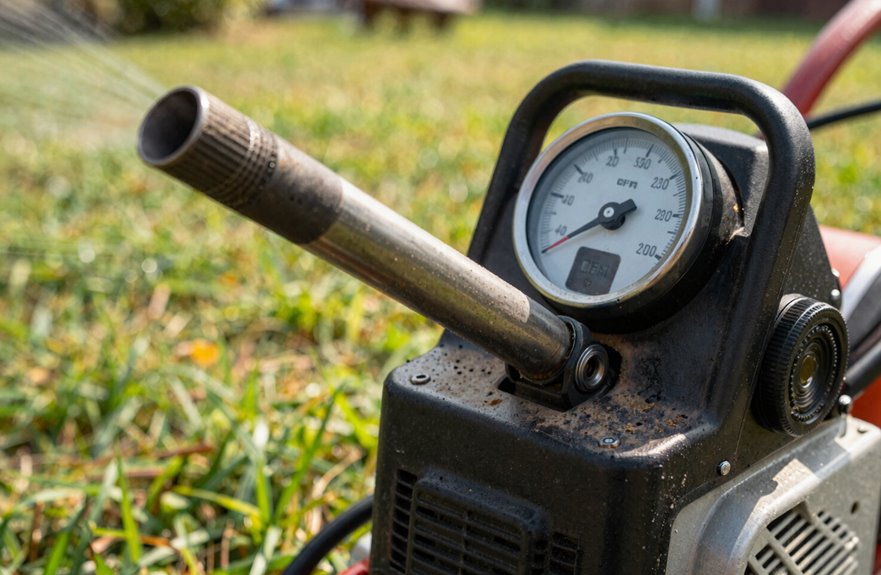
Why do we even need Newtons when we’ve already got CFM and MPH in front of us? I used to ignore that third number entirely, which was a mistake. CFM tells you how much air moves, and MPH indicates how fast it travels, but neither captures actual pushing power. This is where Newtons come into play.
Newtons measure thrust, the real force behind your blower power. Turbine design and nozzle geometry work together to convert engine output into measurable push. A narrow nozzle might boost MPH while sacrificing CFM, but strong Newtons ensure the blower can still tackle stubborn debris.
Think of it this way: CFM and MPH get leaves dancing, while Newtons make them leave the area. For versatile performance, you want all three working together.
How Wet Leaves and Heavy Debris Change the Math
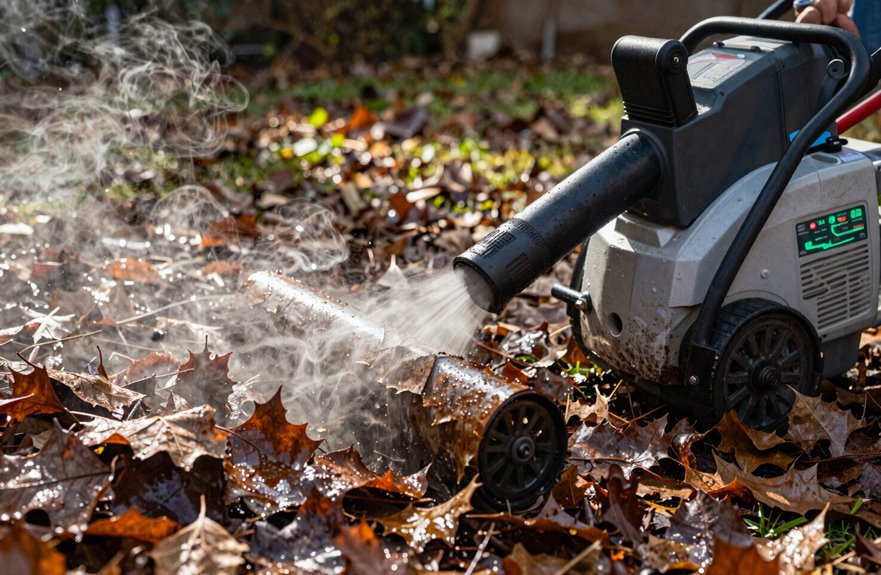
When did I realize my trusty blower was actually making me work harder than necessary? It was last October, staring at a soggy pile that wouldn’t budge despite my best efforts.
Wet leaves change everything. That debris density turns a simple job into a real workout, and I learned the hard way that specs matter. Here’s what happens out there:
- Wet leaves cling together, creating suction that fights your every push.
- Debris density multiplies your effective debris load beyond what dry specs suggest.
- Higher airflow velocity, measured in mph, breaks the seal and lifts damp material.
- Balanced cfm, in the 400–700 range, with upper-tier mph, between 110–200, delivers the high-performance blast you need.
Make sure to match your tool to the mess.
What Leaf Blower Power You Actually Need (By Yard Size)
So how do I know I’m not overbuying or underpowered when I’m looking at that shelf of blowers? It comes down to matching performance metrics to your yard size and debris situation.
Matching performance metrics to your yard size and debris situation prevents overbuying or ending up underpowered.
For most average yards, aim for 400–700 CFM and 110–200 MPH. This power is sufficient to clear leaves without straining yourself. CFM measures volume—how much area you cover—while MPH addresses stubborn, wet debris stuck to pavement.
I once made the mistake of buying a blower with high MPH but low CFM for my quarter-acre yard. It took a long time to clear the area. You need a balance of both metrics.
For larger properties or heavy debris, increase to 600–800 CFM with serious thrust, specifically 15N or higher. Newtons measure real pushing power, complementing those other numbers.
Focus on specifications that align with your needs.
Why Gas and Electric Blowers Hit Different CFM/MPH Numbers
I used to stare at those spec sheets wondering why a 40V electric blower claiming 500 CFM felt weaker than my neighbor’s gas model with the same number. I learned that the power source significantly affects real-world performance. Gas versus electric involves essential principles of physics.
- Engine displacement (measured in cc) allows gas blowers to pull more air, boosting both CFM and MPH under heavy loads.
- Voltage limits electric motors; even 80V batteries cannot maintain RPM like gas combustion.
- Nozzle design enhances MPH for both types, but gas units maintain speed without voltage drop.
- CFM measures volume, while MPH measures speed; gas engines excel at sustaining both simultaneously.
My electric blower works well for light jobs, but I borrow that gas model when the wet leaves accumulate.
How Manufacturers Inflate MPH (and Other Spec Tricks to Avoid)
Why do some blowers claim eye-popping MPH figures that don’t match their actual clearing power? I’ve fallen for this myself, chasing big numbers without understanding their implications.
How Manufacturers Game the Numbers
The trick is simple: they shrink the nozzle. A narrow outlet forces the same air into a smaller space, boosting airflow velocity (your MPH reading) without increasing actual work capacity. It’s like putting your thumb over a garden hose; the water shoots faster, but you’re not moving more water.
What Actually Matters
Real power metrics combine both measurements:
- MPH = how fast the air moves (velocity)
- CFM = how much air moves (volume)
A blower with 250 MPH but 350 CFM won’t clear your yard like one with 180 MPH and 600 CFM. Check nozzle design too; tapered tips inflate specs.
Compare both numbers to avoid disappointment with underwhelming blowers.