
Playground mulch is engineered wood fiber or rubber material installed under equipment to cushion children’s falls. Schools use it because certified options that meet ASTM F1292 standards absorb impacts from heights up to 8 feet.
Non-certified landscape mulch will not provide adequate protection against serious injuries.
Wood mulch requires a depth of 9–12 inches, while rubber needs about 6 inches, with inspections every 2–3 months to maintain safety.
Proper installation and maintenance can reduce liability risks and create safer play environments for children.
Getting these details right involves more than many people initially consider.
What Playground Mulch Is and How It Cushions Falls
Why do we use playground mulch? I have seen kids take tumbles that could have ended badly without proper protection underneath them.
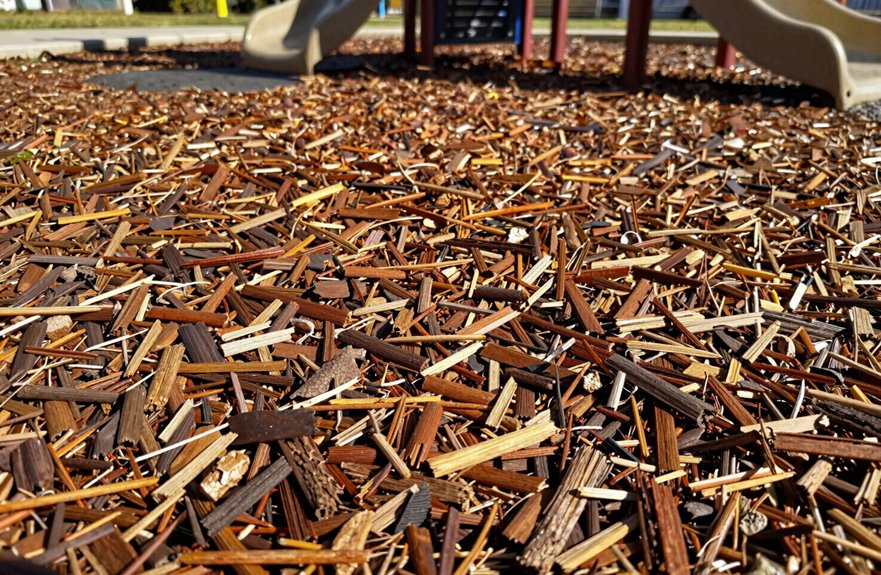
Certified playground mulch is not your typical landscaping material. It is specifically engineered for fall cushioning and tested to absorb impacts when children inevitably lose their grip on monkey bars or swing sets. Depth is crucial: we are talking 9 to 12 inches for wood-based options and about 6 inches for rubber alternatives to handle falls from up to 8 feet.
The key difference lies in impact absorption that meets ASTM F1292 requirements. This installed surfacing undergoes rigorous evaluation to ensure it performs effectively when needed. Safety standards are vital; they separate decorative ground cover from genuine protection. When properly maintained, this material creates a space where kids can explore freely without severe consequences.
What Safety Standards Matter for Playground Mulch
How can you determine if playground mulch will effectively protect a child during a fall? It all comes down to certified standards, not guesswork.
Certified standards, not guesswork, determine real playground safety.
What Actually Matters
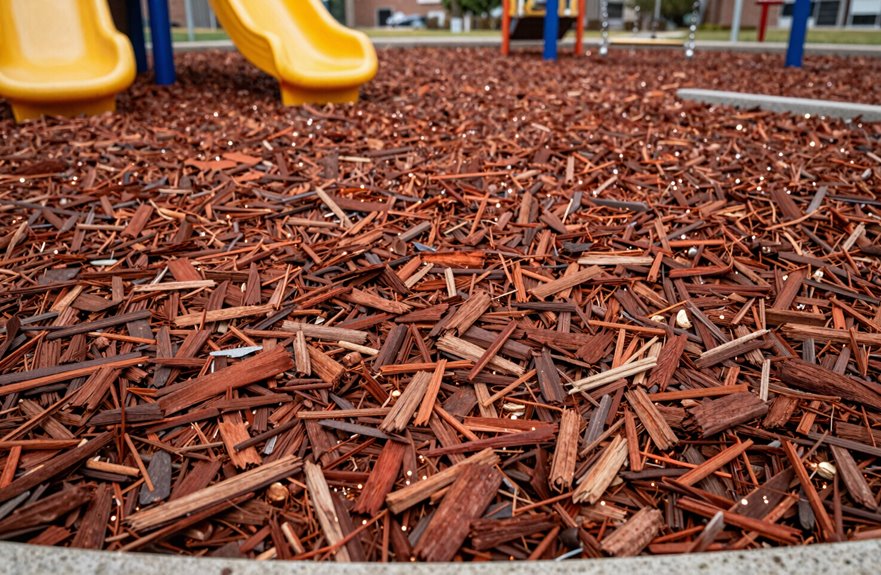
I used to think any soft material would suffice; that’s incorrect. Real safety requires ASTM F1292 compliance, which tests impact absorption for falls up to 8 feet. The CPSC supports this standard, and schools rely on it because certified mulch meets strict, measurable criteria.
Getting Depth Right
The recommended depth for wood mulch is 9 to 12 inches, while rubber requires about 6 inches. Proper depth is crucial for effective protection. Neglecting this can lead to increased risk of injuries.
Keeping It Safe
Maintenance is essential. I inspect the mulch depth every 2 to 3 months and replenish as needed. Using non-certified products can expose districts to significant liability. Adhering to safety standards ensures protection for children and the community.
Playground Mulch vs. Other Surfaces: Which Works Best for Schools
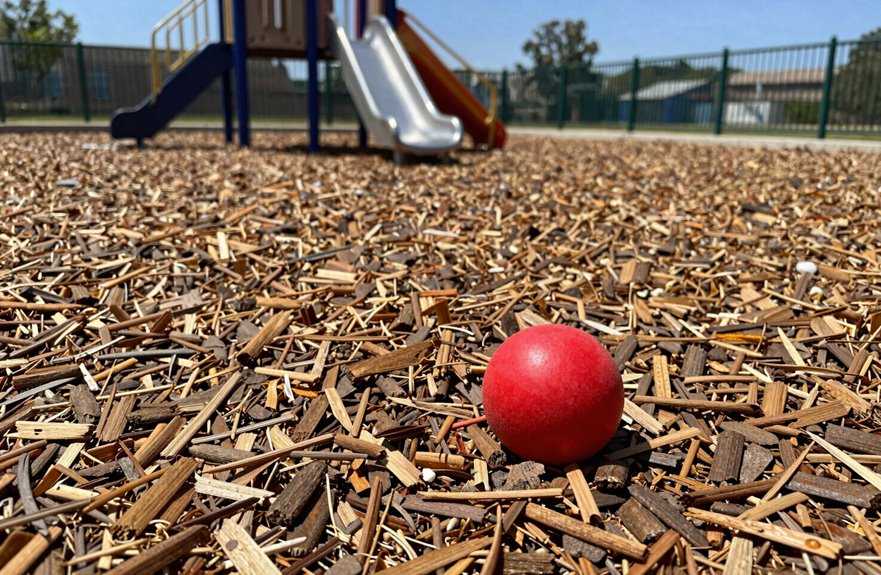
Where do you begin when every surface claims it’s safe, yet they all feel different underfoot? After walking playgrounds for fifteen years, I can confirm that playground mulch engineered for cushioning impact outperforms standard landscape mulch every time.
Why Certification Changes Everything
I once witnessed a school forgo certified installers to save money, which proved to be a significant error. Non-certified mulch does not meet safety standards. Proper playground mulch adheres to ASTM F1292, the recognized standard for fall protection. Wood fiber requires a depth of 9-12 inches, while rubber needs about 6 inches for equivalent protection.
The Maintenance Reality Check
Regular maintenance is essential; inspecting every 2-3 months and topping up annually is necessary for safety. Displacement occurs in high-traffic areas, and I’ve observed liability risks increase when schools neglect this.
Certified installers understand that local availability is crucial; timely delivery ensures your surface remains compliant when needed.
How Deep Playground Mulch Needs to Be for Fall Protection
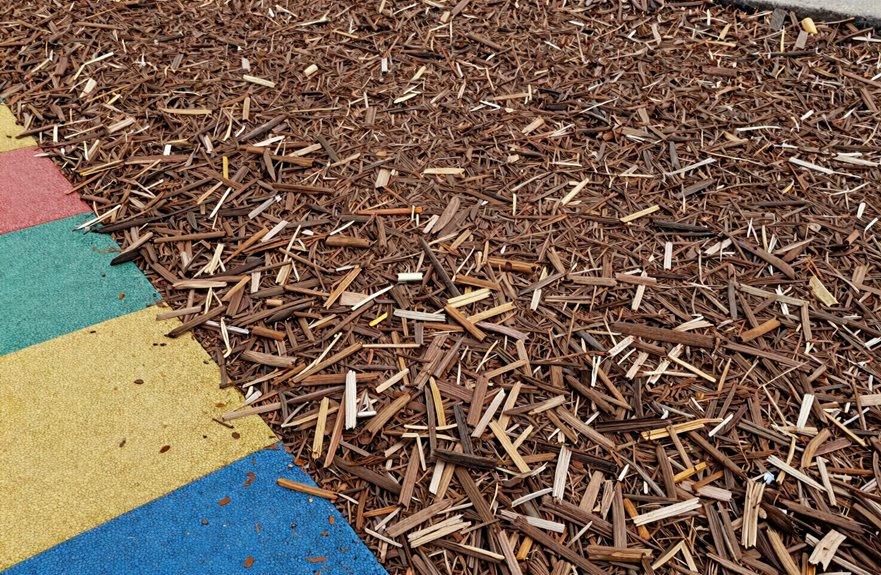
When I’m standing on a playground with a principal who’s worried about liability, the first thing they ask isn’t about color or cost; it’s about depth. I’ve learned that getting this wrong puts kids at risk and schools in legal trouble, so let’s ensure we understand the requirements.
For proper fall protection, here’s what you need to know:
- Wood mulch needs 9–12 inches to meet ASTM F1292 standards for playground safety.
- Rubber mulch works at 6 inches, but I prefer engineered wood fiber.
- Impact absorption only works if depth stays consistent. I’ve seen compliant playgrounds fail inspection because of thin spots.
- Mulch maintenance isn’t optional. Swings and slides compact fastest, so check monthly.
Settle, compact, and repeat. This cycle is essential for keeping kids safe.
How to Calculate How Much Playground Mulch Your School Needs
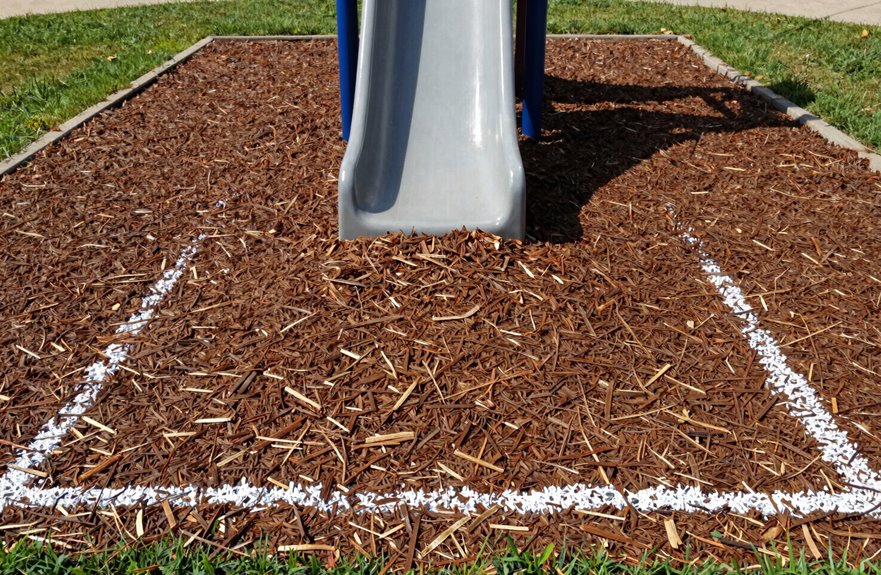
Every school I’ve worked with has ordered either too much mulch or not enough, and I’ve made both mistakes myself. Getting the calculation right isn’t hard once you break it down.
The Basic Math
First, I measure my play area (length × width). Then I multiply by my required depth—9 to 12 inches for wood playground mulch, about 6 inches for rubber. This gives me cubic inches. I then divide by 46,656 to convert to cubic yards for my volume.
Measure length times width times depth in inches, then divide by 46,656 to get cubic yards of mulch needed.
Don’t Forget These
I always add 10 to 20% extra for settling and compaction. For irregular spaces, I split them into rectangles, calculate each separately, and add them up. I also account for edging and underlayment, as they affect my effective surface area. Budgeting a cushion is important, as running short mid-project can cause delays.
How to Install Playground Mulch Properly
I will guide you through the proper installation of playground mulch, as skipping steps can lead to complications later. We will cover the site preparation, which includes clearing debris, leveling the ground, and laying fabric. The layering technique involves two stages with light compaction. Finally, we will address the essential safety checks that catch what tired eyes may overlook.
Site Preparation Steps
First, start with bare dirt; no shortcuts here. I learned that the hard way when I rushed site preparation once and ended up with lumpy, unstable mulch that failed safety standards within months. We will go through how to do it right.
Essential Preparation Steps
- Clear and level the ground completely; remove every rock, root, and debris for a stable base.
- Roll out geotextile fabric to block weeds and keep soil from mixing with your mulch.
- Install sturdy edging around the perimeter to contain everything and prevent migration.
- Account for settling by preparing extra depth; this will help maintain proper mulch depth longer.
Good site preparation leads to less maintenance, safer play, and a durable surface.
Proper Layering Technique
With the site prepped and ready, I will guide you through the process of applying mulch effectively.
Step 1: Build Your Base
I roll out geotextile fabric first. This keeps soil and mulch separate and prevents weeds from growing.
Step 2: Lock It In
Install edging around the playground surface perimeter. Mulch tends to shift without proper borders.
Step 3: Layer Smart
For proper layering, add half your target depth, lightly compact it, then add the rest. This approach helps avoid uneven spots that could cause trips.
Step 4: Plan for Reality
Expect settling; your depth decreases by 1–2 inches with use. I incorporate this settling adjustment into the initial installation to avoid issues later.
For ongoing mulch depth maintenance, inspect every 2–3 months and top off annually.
Final Safety Checks
Here’s what keeps me and my team accountable:
- Verify depth maintenance meets mulch requirements (9–12 inches for wood, 6 inches for rubber) after that inevitable 1–2 inch settling.
- Test impact absorption in high-fall zones by pressing firmly; your boot shouldn’t hit bottom.
- Establish an inspection schedule every 2–3 months, with extra eyes on swings and slides.
- Schedule topping and redistribution before wear creates bald spots, ensuring surface longevity.
Solid safety requires consistent effort and attention.
How Schools Should Maintain Playground Mulch Year-Round
I’ve learned the hard way that installing mulch correctly is only half the battle. Keeping it safe year-round is where most schools struggle, including myself when I first started managing grounds. You need a solid rhythm of scheduled inspection routines, ideally every 2–3 months, paired with smart seasonal replenishment strategies that consider how kids actually use the space. Let me share what has worked for me, including the mistakes I made so you can avoid them.
Scheduled Inspection Routines
Here’s what I’ve built into my calendar:
- Regular inspections every 2–3 months. I walk the entire playground surface, checking under swings, slides, monkey bars, and climbing structures for wear patterns and erosion spots.
- Depth maintenance with precise measurements. I verify 9–12 inches for wood mulch and 6 inches for rubber, especially after storms.
- Surface uniformity and debris removal. I rake out compacted areas and clear leaves and trash, ensuring consistent protection.
- Topping and redistribution. I shift displaced material back to high-traffic zones and lightly compact it for stability.
These habits keep me compliant with safety standards and ensure a safe environment for our community’s children.
Seasonal Replenishment Strategies
The rhythm of a school year doesn’t wait for anyone, and I’ve learned that mulch maintenance can’t be a one-and-done deal. I once tried stretching a single installation through two full years; the compacted, patchy result taught me more than any safety manual ever could. Seasonal replenishment isn’t about perfection; it’s about staying ahead of the wear that weather and little feet inflict on your surface.
I run inspections every 2–3 months, measuring depth under swings and slides. Fresh impact-absorbing mulch needs 9–12 inches (6 for rubber), and I redistribute displaced material before adding top-ups. New installations settle 1–2 inches first; patience pays off.
| Season | Focus | Action |
|---|---|---|
| Fall | Depth maintenance | Measure, rake, prepare for winter compaction |
| Spring | Settling and redistribution | Address frost heave, level surface |
| Summer | Playground surfacing top-ups | Add fresh material, verify safety compliance |
Annual replenishment keeps us compliant, and suppliers offering next-day delivery statewide make depth maintenance manageable. Consistent effort is more effective than occasional, large fixes.
How to Find Certified Playground Mulch Suppliers and What to Ask
Where should you start when searching for certified playground mulch suppliers? I have learned this through experience, so here are some important steps to follow.
First, insist on ASTM F1292-certified playground mulch. This certification confirms that the material absorbs impacts and meets safety standards. Always ask for current test reports. Skipping this step can result in playgrounds that aren’t up to code.
Now, here’s what to check:
- Certification proof: ASTM F1292 documentation with valid dates
- Toxin-free guarantees: no harmful dyes, chemicals, or contaminants
- Depth guidelines: 9–12 inches for wood, 6 inches for rubber, plus remeasurement services
- Local delivery: confirm they service your area and comply with municipal requirements
Inquire about installation support as well. The right supplier should feel like a partner, not just a vendor.