
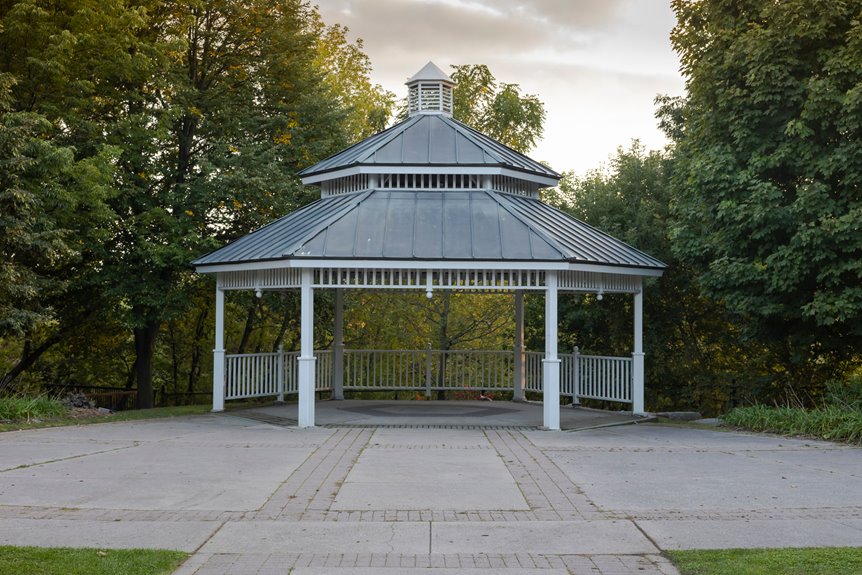
I’ve seen both structures fail at inconvenient times; my canopy once flew across the yard during a barbecue.
Here’s what matters. Gazebos require 10×10 feet of level ground, take 2–4 hours to install, and cost $500–$2,500. They can withstand winds of 20–25 mph and last for years.
Canopies set up in 5–45 minutes, cost $100–$300, and fit awkward corners, but they collapse in gusts over 25 mph and can pool water.
Your weather and ground type play a critical role in your choice, and I’ve detailed how to decide below.
Backyard Events or Seasonal Shade: Which Structure Fits Your Life?
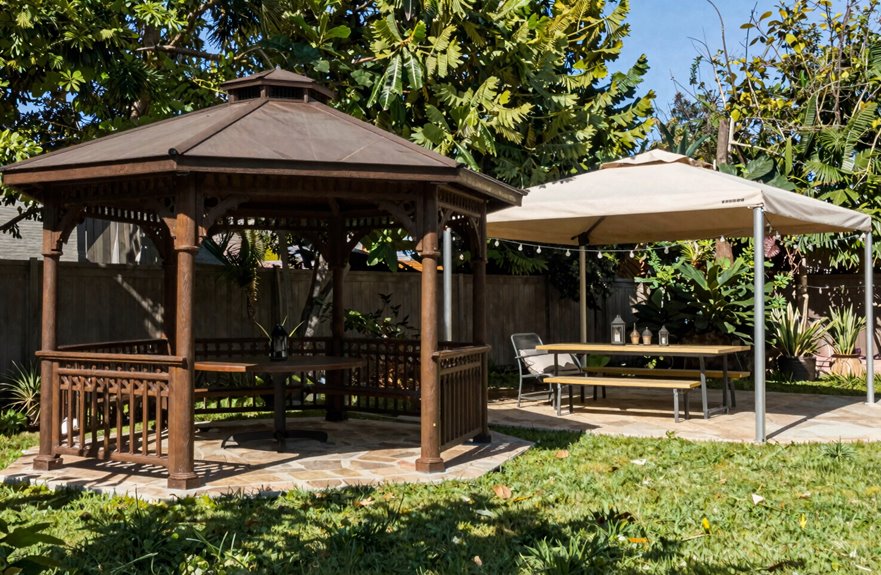
How do you actually use your backyard? I used to think any shade would do until a sudden downpour ruined my niece’s birthday cake. I learned that not all structures are created equal.
Not all shade is created equal—sometimes the wrong structure costs you more than just comfort.
For Gatherings That Matter
A gazebo provides a true outdoor room with a solid roof and attached floor. I’ve hosted barbecues where sudden storms hit, and that weather protection kept everyone dry and laughing without the need to scramble for cover.
For Flexible Shade
Canopies are useful for quick setups; they are lighter and more portable. However, I’ve seen cheaper models collapse in the wind, with plastic joints snapping easily.
My Take
If you’re creating a backyard where people feel welcome and where memories are made regardless of the weather, choose permanence. A reliable structure ensures your space remains functional when it matters most.
Gazebo vs. Canopy: How Much Space Do You Actually Need?
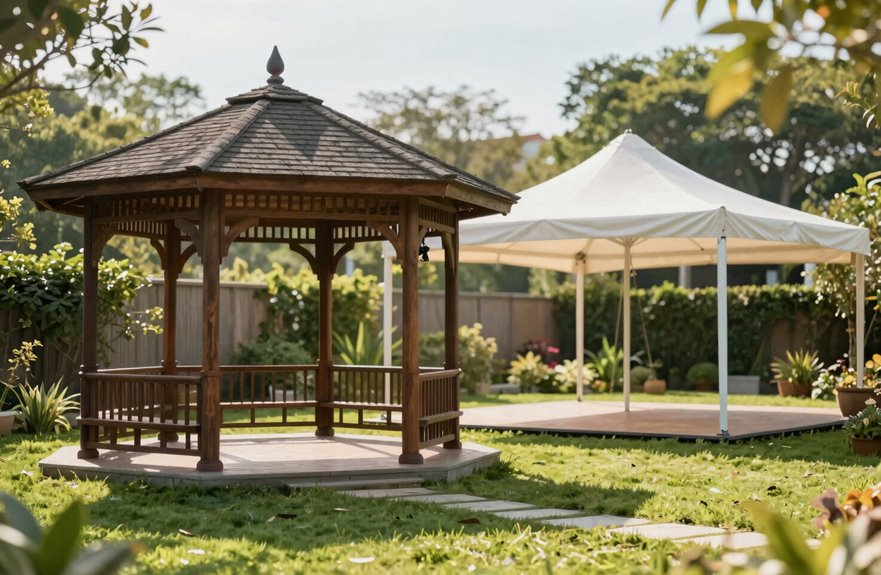
When determining how much space I actually have, I start by grabbing my tape measure because gazebos and canopies have different requirements. A gazebo needs a solid, level footprint, with a minimum of 10×10 feet, plus additional clearance for posts, overhang, and walking space. In contrast, a canopy can fit into awkward corners or extend over your patio edge without requiring perfection. Layout flexibility is essential; it can mean the difference between a structure that suits your yard and one that doesn’t fit well. Let’s break down what each option really requires.
Site Size Requirements
| Feature | Gazebo | Canopy |
|---|---|---|
| Minimum base | 10×10 feet, level ground | 6×6 feet, adaptable |
| Total footprint needed | Structure plus 2–3 foot perimeter | Base plus stake and drainage room |
| Surface requirement | Fixed floor, dedicated outdoor room | Ground-level, no built-in floor |
Gazebos require commitment with level ground, proper anchoring, and space for entry and furniture. Canopies are more forgiving, suitable for cramped quarters like patios and decks. It is essential to measure accurately to avoid rearranging everything mid-setup while guests watch.
Layout Flexibility Factors
Gazebos provide a room, not just shade. When planning my backyard gatherings, I notice how layout flexibility varies between these two options.
Gazebos: Defined Spaces
A gazebo requires commitment. I need a minimum of 10–12 feet for posts, roof overhang, and walking space. Once anchored, that’s my layout for good. The benefit is a genuine outdoor room where furniture remains in place, rain doesn’t disrupt guests, and there’s a strong sense of gathering.
Canopies: Shape-Shifting Coverage
Canopies excel in adaptability. I can fit mine into 8×8 corners, expand modular sections for 20-person cookouts, or pack it for camping in under 10 minutes. There’s no foundation hassle or permanent footprint.
My Take
I’ve managed to place canopies in areas where gazebos wouldn’t fit. However, when I want guests to linger and feel a sense of belonging in a dedicated space, I choose the gazebo’s fixed structure.
Wind, Rain, and Weight: Which One Survives Real Weather?
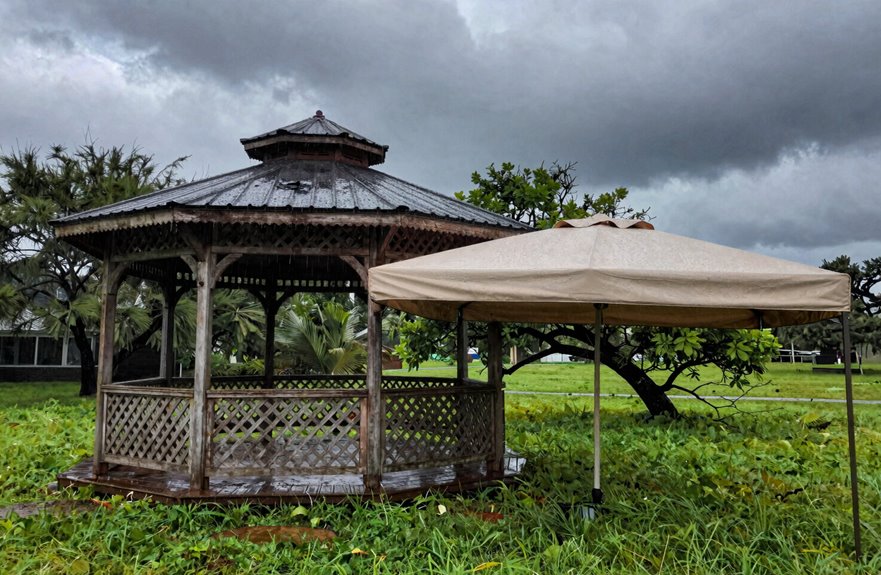
How do you know if your backyard shelter will still be standing after the first real storm hits? I’ve learned this the hard way, and here’s what actually matters.
Wind Resistance
Gazebos provide solid construction with metal posts, anchored flooring, and roofs that don’t turn into sails. I’ve seen canopies lift off the ground, their fabric snagging and tearing while plastic joints struggle under stress. Hard-top gazebos can handle pooling water and gusts that would damage a soft-top in minutes.
The Heat Factor
Don’t overlook the summer sun. I’ve observed cheap canopy fittings warp and melt during heat waves, leading to failure when storms arrive later that day.
Anchoring Reality
Gazebos are bolted down permanently. Canopies require constant attention—stakes, weights, and checking ballast. Neglect this, and you risk losing your shelter to the wind.
Setup Reality Check: From Box to Shelter in How Long?
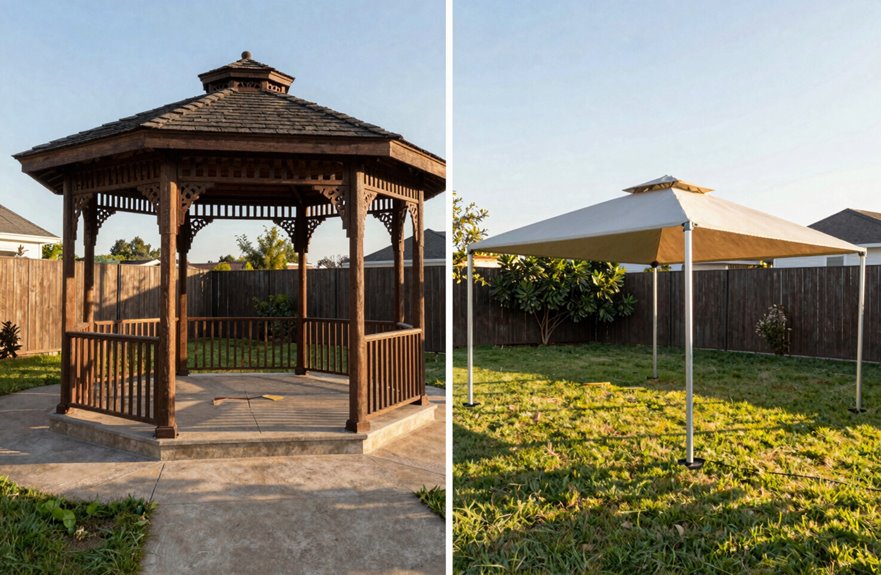
When you’re sweating in your driveway at noon, hoping to finish before the afternoon storms roll in, every minute of setup time counts.
I’ve learned this the hard way. Here’s what you need to know:
| Shelter Type | Typical Setup Time |
|---|---|
| Pop-up canopy (Walmart-style) | 5–15 minutes |
| Standard canopy with staking | 20–45 minutes |
| Hard-top gazebo | 2–4 hours |
| Soft-top gazebo | 1–2 hours |
The “box-to-shelter” reality includes unpacking, leveling ground, and securing everything properly. I’ve seen plastic joints warp in 90-degree heat; check your manufacturer guidance first. Loose ground can add 10–30 minutes easily. Pop-ups deploy quickly, but stabilization takes additional time. Rushing the anchoring step can result in your shelter being blown across the yard.
Price Breakdown: Budget Canopies to Built-to-Last Gazebos
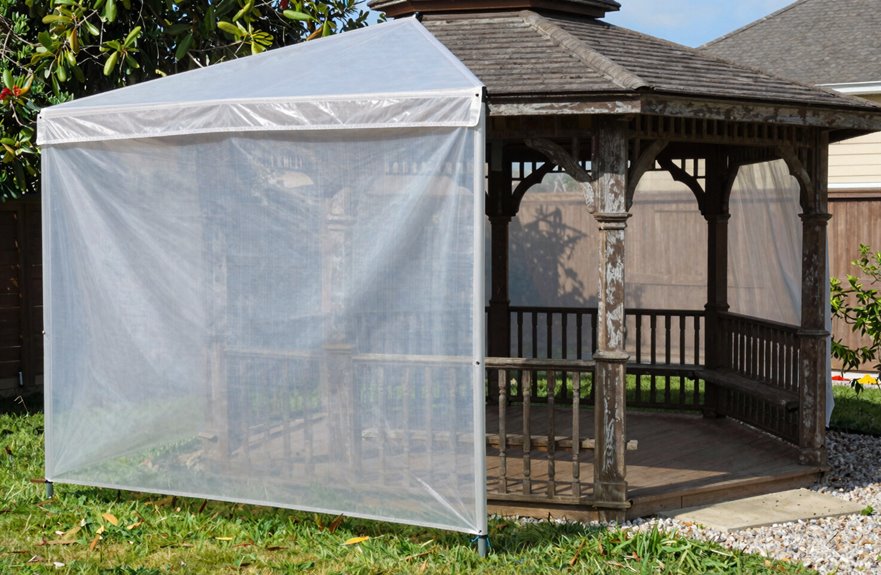
Setup time is important, but what you pay upfront influences every season afterward.
Budget Canopies ($100–$300)
I’ve seen friends buy these at big box stores, featuring polyester tops and aluminum frames that take about twenty minutes to set up. They work for Saturday soccer games, but they often collapse in winds over 25 mph. Their durability is lacking; the fabric fades, poles bend, and you’ll find yourself replacing them every couple of years.
Built-to-Last Gazebos ($500–$2,500+)
This is where I ended up after my third cheap canopy failed. These gazebos have hard-top steel roofs and heavy-gauge frames, sometimes with professional anchoring. Mine withstood last winter’s ice storm that damaged my neighbor’s tent. The initial cost was significant, but my yard now feels like a genuine outdoor room that contributes to property value rather than adding to landfill waste.
Gazebo or Canopy: What’s the Real Difference?
I want to explain how gazebos and canopies differ when you’re in the yard trying to choose. I’ve made the wrong choice before and learned through experience. The structural design contrast is noticeable; gazebos resemble small houses with real roofs and floors, while canopies are essentially tents that can be set up and taken down easily. This distinction affects everything else: protection levels differ, with a hard-top gazebo keeping you dry during heavy rain, in contrast to a canopy that may flap and leak. Additionally, installation varies significantly; gazebos require level ground, concrete footings, and a weekend of work, whereas canopies can be staked down in about twenty minutes but are not durable in storms.
Structural Design Contrast
Although both structures provide outdoor relief from the sun, I’ve learned that a gazebo and a canopy serve completely different purposes. When I first started hosting backyard gatherings, I chose a cheap canopy, which turned out to be a poor decision. The thing flapped uncontrollably.
Here’s what separates these two structures:
| Feature | Gazebo | Canopy |
|---|---|---|
| Support | Self-standing, anchored to level ground | Stakes or weight bags, portable |
| Roof | Solid hard-top (wood, metal, vinyl) | Fabric or mesh, removable |
| Floor | Built-in decking or platform | Open ground underneath |
| Shape | Hexagonal, square, circular | Rectangular, square |
Gazebos create defined spaces with flooring suitable for dining or lounging. Canopies simply provide overhead shade for whatever is underneath. One is a permanent architectural feature, while the other offers temporary cover.
Protection Level Variation
How much protection you actually need depends on your outdoor plans, and I learned this during a spring barbecue that turned into a scramble for cover. A gazebo provides a solid roof—either hard top or soft top—that keeps rain out and blocks strong sun, while most canopies leave you peeking at the sky, wondering if that wind gust signifies trouble.
What protection actually looks like:
- Gazebo roofs stay put; they are fixed, durable, and do not warp when summer heat hits or wind speeds reach 20-25 mph.
- Canopies flex and flap; fabric tops deform, pool water, and can sometimes collapse mid-party.
- Wind resistance matters; gazebos anchor down with real foundation strength, providing reliable shelter for gatherings instead of that tent-flying-across-the-yard moment everyone has seen on YouTube.
Installation Requirements Differ
Where you plan to put this structure is crucial, and I learned that when I tried setting up a gazebo on my sloped backyard without checking the grade first. Gazebos require level ground, a solid foundation, and proper anchoring. This means hours of prep work, measuring, and leveling before you can start building. I have spent entire weekends on this task.
Canopies, on the other hand, have a completely different setup. Their lightweight frames can be assembled in minutes on grass, concrete, or any other surface. No foundation is necessary.
Here’s the breakdown:
- Gazebos need 6-8 hours, anchored posts, and often a finished floor.
- Canopies take 30 minutes and can be placed temporarily anywhere.
If you’re renting, hosting a party, or lack level ground, choose the canopy.
Your Local Weather: The Final Choice Between Gazebo and Canopy
Your weather dictates this choice; don’t resist it.