
I’ve used both types enough to know they aren’t interchangeable. Jobsite blowers compact under 10 lb, push 100–200 CFM at 90+ dB, and handle nails and drywall dust daily. Leaf blowers are lighter and quieter, operating at 60–75 dB, focusing on open-yard speed rather than maneuverability. You’ll also notice a difference in runtime: gas models provide hours of use but require ear protection, while battery packs last only 15–30 minutes. Choosing the wrong type can lead to wasted time; however, the seven distinctions ahead will help you make an informed decision.
Which Blower Type Do You Actually Need?
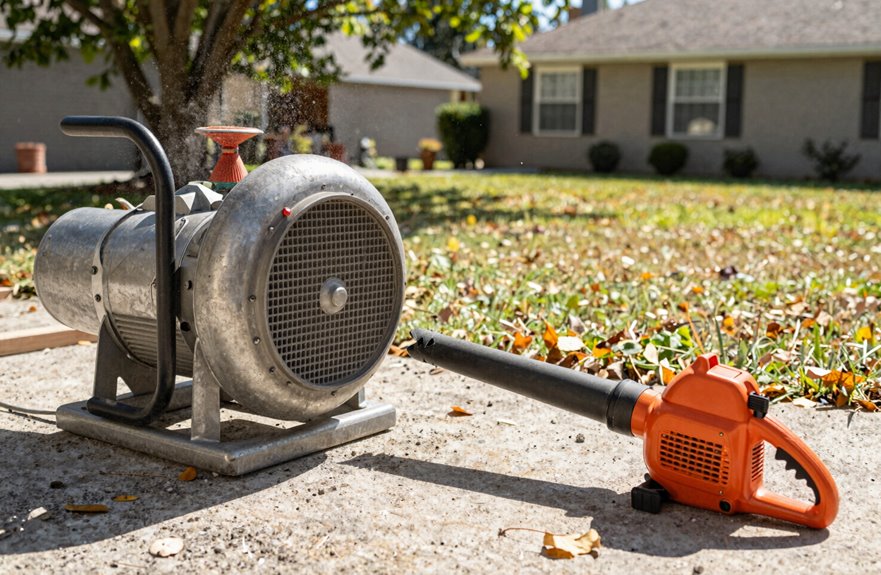
Why do we often grab the wrong blower? I have mistakenly chosen raw power when I needed precision or brought a jobsite model to clear my quarter-acre of oak trees. Matching blower types to your situation can save you hours of frustration.
Start with your yard size. If it’s under 5,000 square feet, you probably don’t need the highest CFM ratings available. I’ve seen neighbors overbuy 700-CFM models for small urban lots and then struggle with control.
Consider your debris. Dry leaves scatter easily with standard airflow, but wet leaves require a different approach. When October rain hits, I switch to hybrid blower-vacuum combos with mulching modes; standard blowers tend to push soggy clumps around.
Check your power source priorities. Gas models can exceed 90 dB, making ear protection essential. Battery options like the SENIX X6 run quieter with zero emissions, benefiting both your ears and your neighbors.
Jobsite Conditions vs Backyard Cleanup
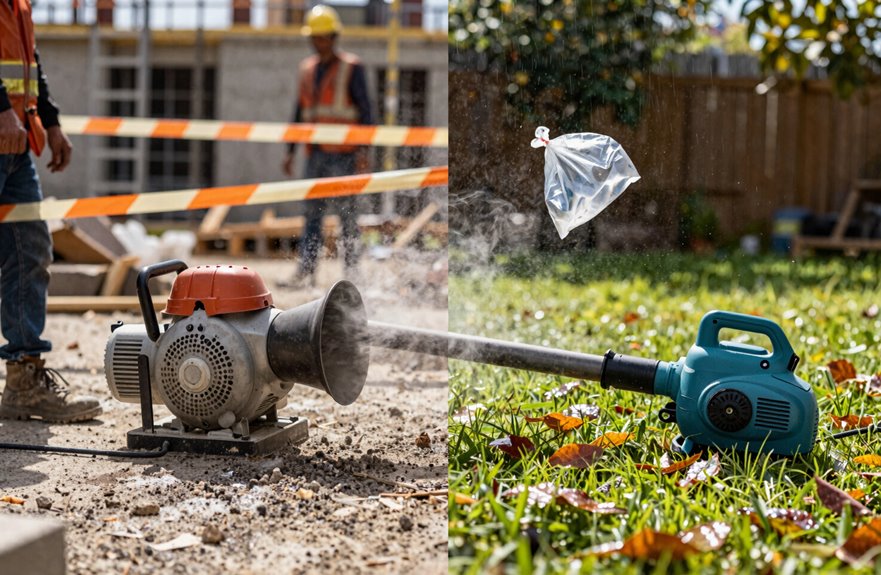
I learned the hard way that sawdust in a cramped garage workshop and wet oak leaves across half an acre require different tools. Jobsite blowers, such as DeWalt or Milwaukee’s compact 20V models, typically weigh under 10 pounds and deliver 100-200 CFM. These models focus on agility in tight spaces and operate at a quieter 60-70 dB. In contrast, leaf blowers like Stihl’s BR 800 achieve air speeds of 240+ mph and 900+ CFM, enabling quick debris clearance over open ground. The type of debris—fine dust versus bulky leaves—determines whether you need maneuverability for indoor corners or raw power for outdoor tasks. I experienced issues with a low-quality leaf blower while trying to clear my workshop because I overlooked this distinction.
Debris Type Differences
The debris you’re fighting shapes everything about the blower you’ll need. This is a crucial factor to consider.
Jobsite debris handling demands brute force. We’re talking nails, gravel, chunks of drywall—materials that resist weak airflow. That’s why I reach for units pushing serious cfm (cubic feet per minute, basically how much air moves) and velocity (mph) north of 150. You need that power to clear open spaces quickly.
Backyard cleanup is a different challenge. Wet leaves can be particularly problematic—they stick, clog, and require more than standard blowers to handle effectively. I’ve found that vacuums or mulching models actually perform better for soggy piles. Dry leaves are manageable with either type.
Understanding the type of debris is essential before you shop.
Power Output Needs
Once you’ve figured out what kind of mess you’re dealing with, you need to match your blower’s power to the job. I learned this after bringing a 200 CFM residential model to clear a construction site, which was ineffective. Here’s what actually works:
| Application | CFM & mph | Power Output |
|---|---|---|
| Jobsite conditions | 500–700+ CFM, moderate mph | Gas or high wattage electric |
| Backyard cleanup | 200–400 CFM, higher mph | Lower wattage, battery-friendly |
Jobsite blowers prioritize raw power output and wattage to push heavy debris across open areas. For yard work, you want optimized CFM and mph for speed without the bulk. Using the wrong tool results in wasted time, energy, and effort.
Mobility Requirements Vary
How do you move around with these tools when the terrain keeps changing? Mobility isn’t one-size-fits-all.
Jobsite and residential demands split my approach entirely. On jobsites, I navigate between trucks, scaffolding, and piles of lumber; maneuverability means tight turns and zero tolerance for bulk. My jobsite blower’s compact frame, usually 15-20 lbs, pivots around obstacles without risking injury.
Yard access presents a different challenge. Residential spaces reward straight-line efficiency with long driveways, open lawns, and fence lines. Here, I prioritize lightweight freedom under 10 lbs for battery models, avoiding struggles with heavy torque.
The mobility gap has practical implications. Jobsite models sacrifice some agility for durability, while leaf blowers trade ruggedness for effortless sweeping. Matching your environment is essential to effectively manage debris.
CFM for Heavy Debris vs MPH for Light Leaves
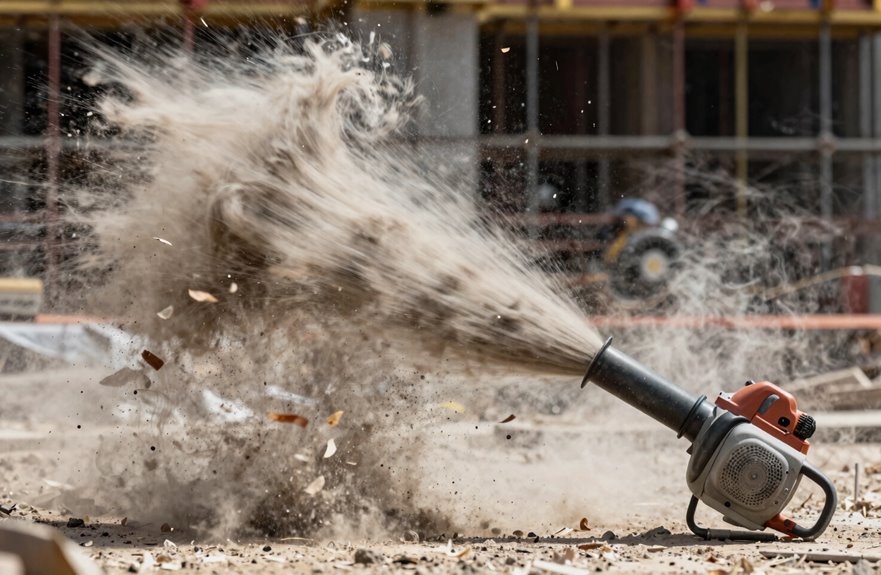
Why do some blowers struggle with wet leaves while others clear them effortlessly? It comes down to what you’re measuring—CFM versus MPH—and I picked the wrong metric during my first three seasons.
CFM (cubic feet per minute) measures air volume, which is essential for heavy debris. MPH measures air speed, which is ideal for light leaves. When I tried clearing wet, clingy piles with a high-MPH, low-CFM unit, I scattered only the top layer while the bottom remained intact. It was a frustrating experience.
Since then, I’ve gathered the following insights:
| Task Type | Prioritize This | Typical Range |
|---|---|---|
| Heavy debris (wet leaves, gravel) | CFM | 400–600+ CFM |
| Light leaves (dry, loose) | MPH | 150–400 CFM range |
| Bulk clearing (jobsites, trailers) | CFM | Higher volume wins |
| Precision edging (lawns, gaps) | MPH | Speed is crucial |
For heavy debris, I need volume to move everything at once. For light leaves, speed helps them scatter quickly across the yard.
Jobsite Gas Power vs Leaf Blower Electric Options
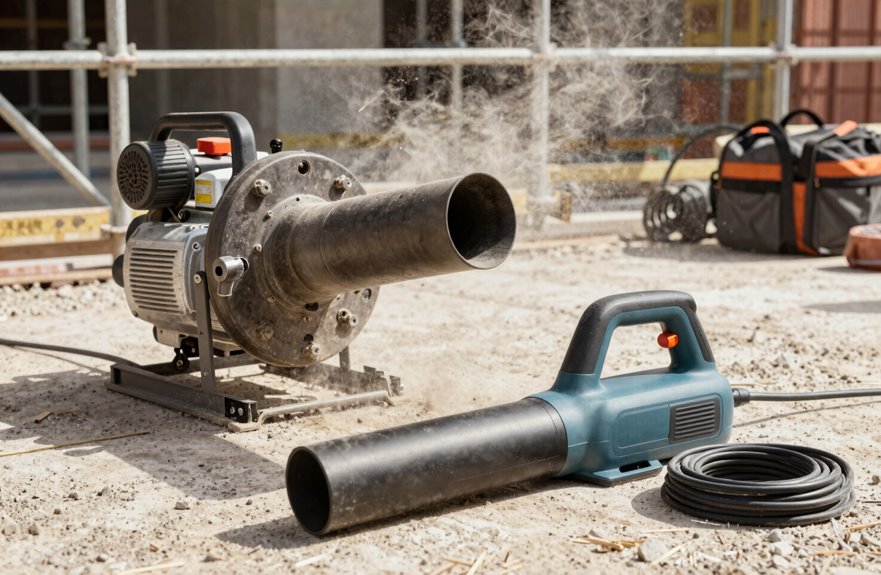
I learned the hard way that choosing between gas and electric is about matching your power source to your actual worksite. I once lugged a gas can across three acres when I should have grabbed a battery pack. Gas jobsite blowers provide raw, sustained power for heavy debris and wet leaves, but they come with ear-piercing noise, often exceeding 90 dB, similar to standing next to a motorcycle, as well as fumes that can be overwhelming in enclosed spaces. Electric and battery options maintain a more manageable noise level of 60–75 dB with no exhaust emissions, though they may lack some of the brute force found in gas models.
Power Source Variations
The biggest split between these two blower types comes down to what makes them run. I used to think power was power until I burned through three cheap extension cords on a construction site back in 2019.
Gas-Powered Muscle vs. Electric Convenience
Jobsite blowers rely on internal combustion engines. These gas-powered machines deliver sustained, raw output for clearing heavy debris. They typically exceed 90 dB, so ear protection is necessary. They also require fuel, oil, and filter changes, which can be costly.
Leaf blowers are mostly electric (corded) or battery-powered. They operate quieter at 60–75 dB with zero emissions. There’s no need for gas station runs or oil mixing; just charge and go. The trade-off is less brute force and a more neighborhood-friendly operation.
Runtime and Portability
Power sources shape everything that happens after you pull the trigger, especially how long you can work and how far you can roam.
I learned this the hard way. Gas-powered jobsite blowers offer serious runtime, providing 2-4 hours of continuous clearing without searching for outlets. The trade-off is the weight; you’re carrying 15-20 pounds of machine plus fuel cans. Your shoulders definitely feel it by hour three.
Battery leaf blowers transformed my weekend routine. Weighing in at 6-10 pounds, their portability is unmatched. I grab mine, insert a 5.0Ah battery, and clear my quarter-acre in 25 minutes. Most batteries, however, last only 15-30 minutes of heavy use. I keep three charged, having learned the importance of this mid-job.
Choose your fighter:
- Gas-powered = marathon runtime, heavy lifting
- Battery = featherweight freedom, frequent swaps
Noise and Emissions
How loud is too loud when you’re clearing debris at 7 AM on a Saturday? I learned this the hard way after a neighbor suggested I find a new hobby.
Here’s the breakdown:
1. Noise Levels That Matter
Gas-powered jobsite blowers often exceed 90 dB; that’s like standing next to a motorcycle revving its engine. Electric and battery leaf blowers typically run 60–75 dB, which is closer to normal conversation. There’s a significant difference when you’re trying to stay on good terms with the folks next door.
2. Emissions and Air Quality
Gas-powered models emit exhaust that is immediately noticeable; they require a mix of fuel and oil. Electric and battery options produce zero on-site emissions. I have switched mostly to battery now; my lungs appreciate it.
3. Environmental Footprint
During actual use, electric and battery blowers leave a lighter mark. They create less noise, produce fewer emissions, and contribute to neighborly harmony. It is worth considering.
OSHA Noise Limits vs Neighbor-Friendly Volume
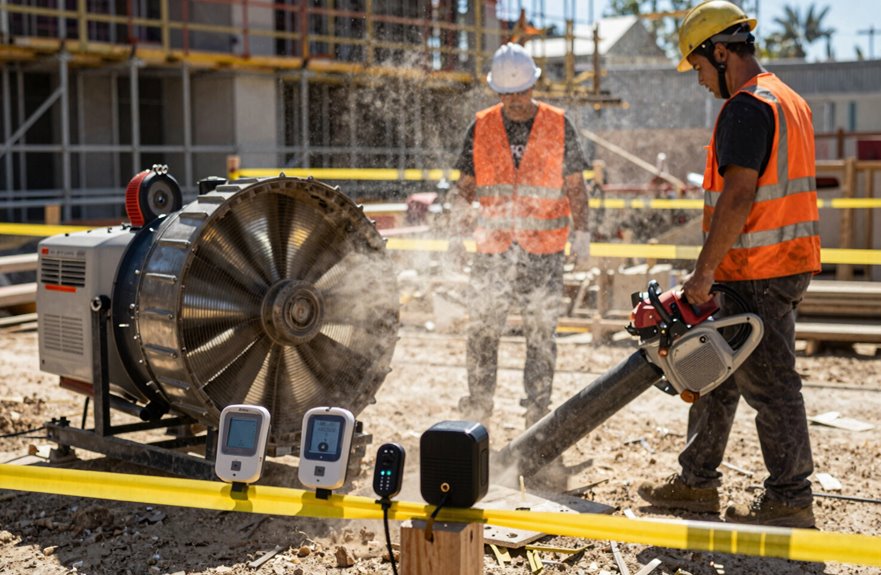
Why does noise matter so much when I’m picking a blower? I’ve learned that noise isn’t just annoying; it can affect my relationships with neighbors.
Noise isn’t just annoying; it can affect my relationships with neighbors.
Here’s what I consider now:
- OSHA sets 85 dB as the danger zone for hearing damage over an 8-hour shift, and gas jobsite blowers often exceed 90 dB, which can lead to permanent damage without proper protection.
- Neighbor-friendly electric models typically operate at 60-65 dB, about the level of normal conversation, allowing me to work on Sunday mornings without causing disturbances.
- Battery leaf blowers provide decent CFM without the loud noise, making them ideal when I’m near property lines.
I measure twice, buy once, and feel assured knowing I haven’t become a nuisance in the neighborhood.
Built to Take a Beating vs Built for Weekend Work
Where do you draw the line between a tool that lasts and one you can carry without straining your back? I learned this the hard way.
Jobsite blowers prioritize durability. They are designed for heavy-duty cleanup day after day, handling construction debris, wet leaves, and gravel without issue. I’ve seen these machines run for eight hours straight in dusty Arizona summers, where lesser tools would fail.
Weekend work demands different priorities. Leaf blowers trade raw toughness for portability and ease of use. They are lighter, quieter, and less likely to disturb neighbors while clearing your driveway on a Sunday morning.
Jobsite blowers excel at large-scale tasks, while leaf blowers effectively manage quick residential jobs. Choose based on how demanding your tasks will actually be, not based on assumptions about future needs.
Pro Tool Pricing vs Homeowner Costs
- Contractor pricing starts around $200–400 for decent jobsite units, while homeowner leaf blowers run $50–150.
- Jobsite vs homeowner cost reflects motor size, metal components, and warranty length (3–5 years vs 1–2).
- Daily-use durability means pros pay more upfront; however, replacing tools less often is more economical. I’ve gone through three cheap blowers in two seasons before making a smarter choice.
That $250 difference is noticeable, but buying twice is more costly.