

I’ve learned these ten differences on wet job sites. Flat nozzles blast higher air speed (MPH) for stuck debris, while round nozzles push more air volume (CFM) for wide coverage. Flat shapes come in straight (narrow focus) or curved (parallel to ground) varieties; round shapes spread broadly with a steadier flow. Wet pavement benefits from the power of flat nozzles, while dry lawns are better suited for the efficiency of round nozzles. MPH breaks adhesion, and CFM moves larger masses.
Round nozzles reduce fatigue through their wider passes. Surface protection is enhanced with curved flat tips. Switching nozzles mid-job can save considerable time. Professionals carry both types due to rapidly changing conditions. Compatibility is crucial; I’ve purchased incorrect nozzles that ended up unused. It’s important to match the debris type first and consider ground contact second. The details below will clarify when to make the switch.
Flat vs. Round Leaf Blower Nozzle: Which Should You Choose?
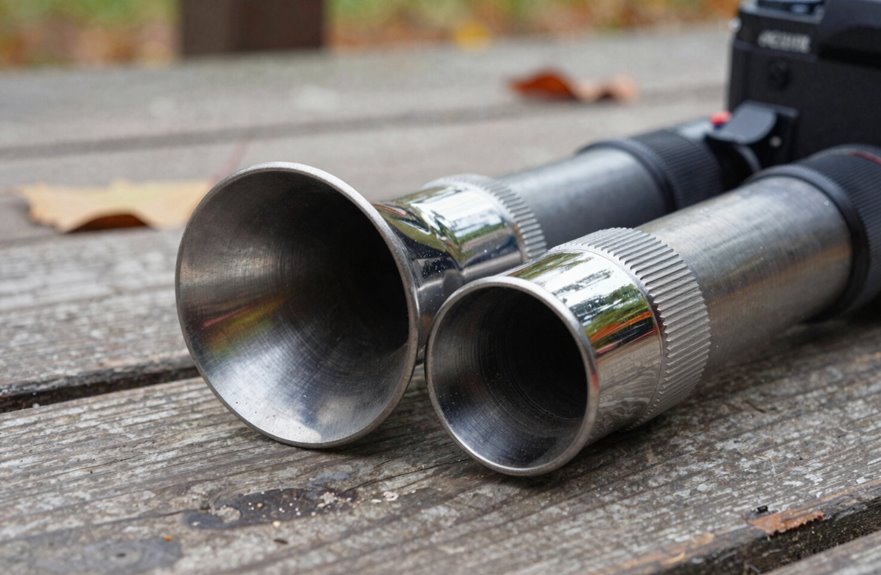
I used the wrong nozzle for two whole seasons before I figured this out, wasting a lot of time pushing leaves around instead of actually moving them.
What Actually Matters
Your blower’s nozzle shape significantly impacts performance. A flat nozzle generates higher air speed (MPH), providing real power for stuck-on debris. Round nozzles push more air volume (CFM) across wider areas, making them effective for fluffy, dry leaves.
Flat nozzle for stuck-on debris, round nozzle for fluffy dry leaves—matching nozzle shape to the job cuts your work time in half.
My Simple Test
- Grab wet leaves stuck to your driveway.
- Try the flat nozzle first.
- Watch them actually lift instead of scooting around.
I learned this after rainstorms left my patio a mess. The flat nozzle’s concentrated blast cut through that bonded debris in half the time. For routine dry-yard clearing, I switch back to the round nozzle.
Quick Answer: Use Flat for Power, Round for Coverage
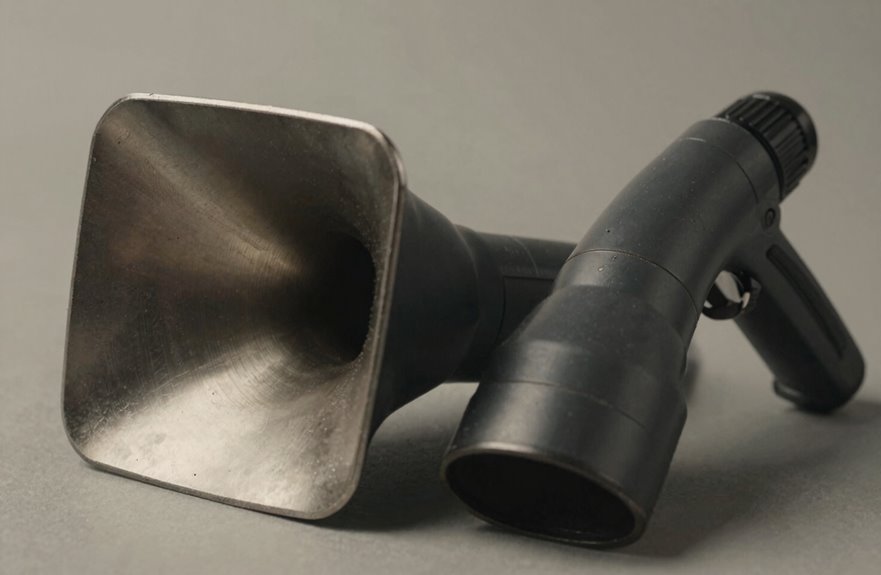
Why make this more complicated than it needs to be? I’ve learned this the hard way after swapping nozzles mid-job more times than I’d like to admit.
The Simple Breakdown
- Grab your flat nozzle when you need raw power. It pushes higher air speed (MPH), perfect for wet leaves or debris stuck to your driveway.
- Switch to round when you want coverage. It moves more air volume (CFM), clearing wider paths through loose, dry material quickly.
I keep both handy because conditions change. Yesterday morning, the round nozzle handled dry grass clippings in five minutes. After the afternoon rain hit, that same debris turned stubborn, and the flat nozzle saved me.
You’ll find your rhythm quickly. Start with the round for general clearing, then swap when stuff won’t budge. Owning both is just practical.
How Flat Nozzles Tackle Wet, Stuck Debris
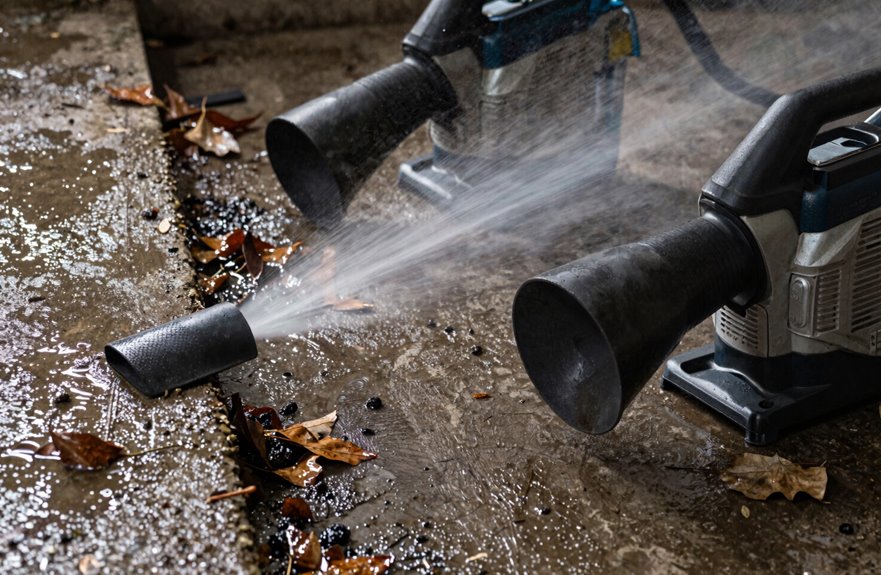
How does a flat nozzle effectively remove debris that has adhered to your driveway? I learned this after many frustrating mornings battling wet leaves with the wrong attachment.
A flat nozzle delivers higher air speed than round alternatives, focusing concentrated force where you need it most. Here’s what makes it essential for stuck-on messes:
A flat nozzle delivers higher air speed than round alternatives, focusing concentrated force where you need it most.
- Higher velocity breaks the adhesion holding wet leaves to pavement.
- Narrow profile directs air precisely at ground-level material instead of scattering it.
- Curved or straight designs both optimize dislodgement without pushing debris sideways.
I wasted seasons believing that more air volume equated to better results. When leaves are plastered down by rain, you need speed and focus, not broad coverage. Experienced users prioritize the flat nozzle for such tasks.
How Round Nozzles Clear Large Areas Faster
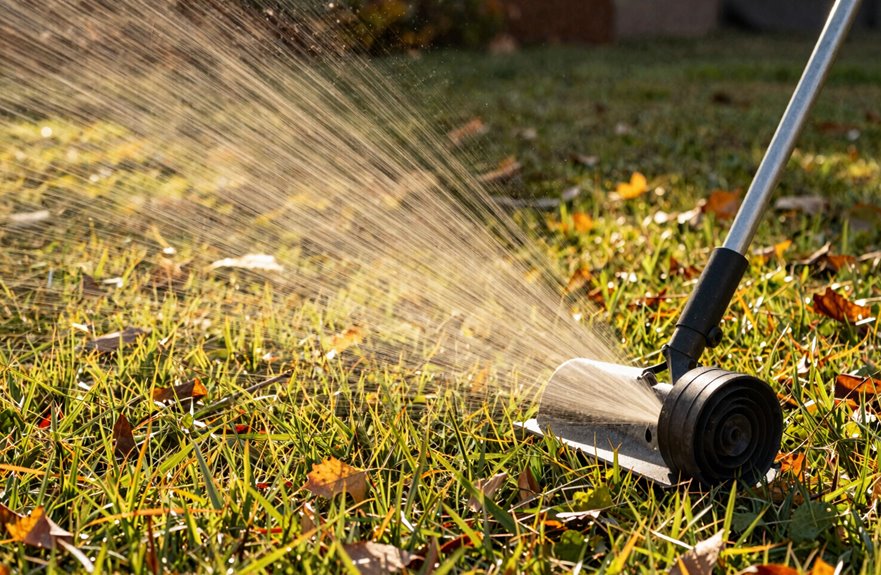
Switching back to my round nozzle felt like I had doubled my arm strength. I had been using my flat nozzle across the whole backyard and felt like a rookie.
The change is clear: my round nozzle moves more air volume with each pass, allowing me to clear wider paths without extra effort. The broader air spread also keeps the blower steadier in my hands, reducing the twisting force that leads to fatigue.
Reasons to use round nozzles for large jobs:
- Wider footprint equals fewer passes across your lawn.
- Less arm fatigue from reduced gyroscopic pull.
- Consistent airflow; STIHL equips most of their units with these for a reason.
I learned this after trying to push through with my flat nozzle on dry leaves, which took twice as long. Now, I reach for my round nozzle first when the yard is messy.
MPH vs. CFM: What the Numbers Mean for Your Yard
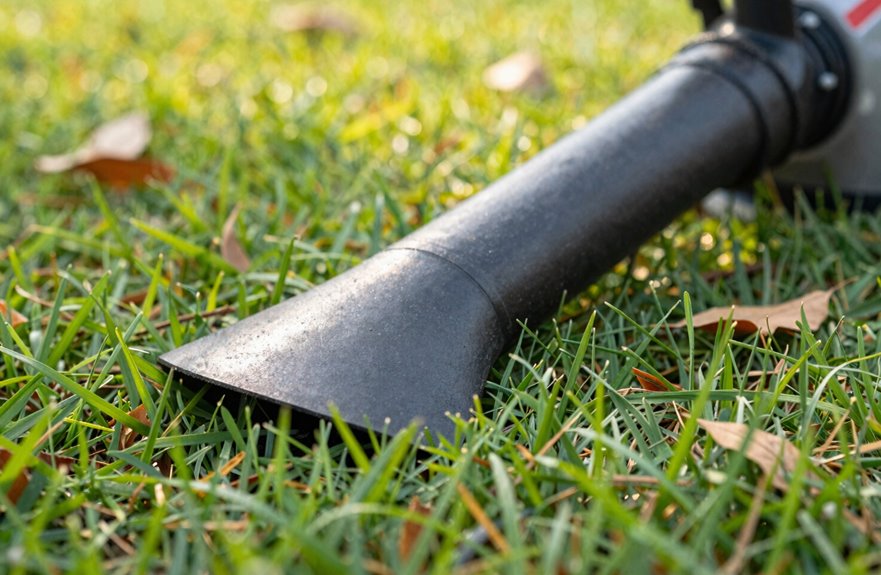
I used to stare at those numbers on the box—mpH and CFM—like they were some kind of secret code. MpH measures air speed, indicating how hard the air hits, while CFM measures volume, indicating how much air moves. Flat nozzles excel in mpH, delivering concentrated force that breaks up stubborn, wet debris stuck to pavement. Round nozzles excel in CFM, sweeping broad paths with less intensity.
Flat nozzles punch through wet debris with concentrated force; round nozzles sweep wide with gentler volume—choose the tool that matches your mess.
- Higher mpH from flat nozzles penetrates ground-level crust, such as hardened mulch or damp leaves.
- Greater CFM from round nozzles clears open lawns in fewer passes.
- Neither number alone tells the whole story; it’s about matching capability to challenge.
I have chased leaves across my yard with the wrong nozzle, wondering why nothing worked. Now I check those specs first.
Matching Your Nozzle to Common Debris Types
I’ve learned that picking the wrong nozzle can turn a quick cleanup into a frustrating workout. Let me break down what works for different messes. When I’m facing loose debris, like dry leaves scattered across your driveway or sidewalk, I reach for the round nozzle. Its higher CFM (cubic feet per minute, usually 400-600 on most handheld models) pushes a wide, powerful stream that sweeps everything ahead of me in broad, efficient strokes. However, when dealing with wet, heavy leaves plastered to the ground after a storm, I switch to the flat nozzle. This nozzle increases the air speed (often 150-200 MPH versus 120-160 for round) into a concentrated jet that blasts stuck material free, making the cleanup much easier.
Loose Debris Handling
Why does debris sometimes scatter everywhere when you’re trying to clean it up? I’ve learned that nozzle choice is crucial.
When I’m tackling loose debris, here’s what I’ve figured out:
- Flat nozzles blast higher air speed (MPH), which is perfect when leaves stick to pavement or I need precision.
- Round nozzles push more air volume (CFM), clearing wide swaths of lightweight material quickly.
- Curved round nozzles spread air evenly, covering larger areas without excessive blowback.
I used to grab whatever nozzle was handy; that was a mistake. Now I match the tool to the job. If dry leaves are spread across your driveway, a round nozzle saves time. For heavier debris that skitters instead of flying, flat nozzles are more effective. Choosing the right nozzle reduces the need for extra chasing and allows for quicker completion.
Wet Debris Removal
How do you tackle leaves that feel glued to the ground after a rainstorm? Flat nozzles make all the difference here.
Why Flat Nozzles Are Effective for Wet Jobs
Flat nozzles deliver higher air speed than round ones, and that focused punch is crucial when debris sticks like cement. I used to fight wet leaves with my round nozzle, watching them barely move. It was a frustrating waste of time.
Two Flat Nozzle Styles to Know
- Straight flat nozzles – narrow, laser-focused path for ground-level material.
- Curved flat nozzles – spread air parallel to surfaces, maintaining speed while targeting precisely.
Round nozzles move more air volume, which is great for dry sweeping, but they lack the velocity needed to break wet bonds. For soggy, heavy, or adhered debris, flat nozzles are a reliable solution.
Protecting Delicate Surfaces: When Nozzle Shape Matters
Where should you start when your flower beds and gravel paths need cleaning, but you’re worried about blasting mulch into your neighbor’s yard? Choosing the right tool for the job, specifically the flat nozzle, is essential.
Here’s what I’ve learned about protecting delicate surfaces:
Protecting delicate surfaces requires the right technique—and the right nozzle choice makes all the difference.
- A flat nozzle increases air speed (higher MPH), reducing contact time and allowing precise, high-velocity strikes that won’t linger and cause damage.
- The curved flat nozzle spreads air parallel to the ground, directing force away from surfaces to prevent gouging or scouring.
- The straight flat nozzle concentrates air along a narrow path, enabling targeted cleaning on delicate edges without broad, disruptive airflow.
Round nozzles move a larger volume of air at lower speeds, which may seem gentler, but this can risk displacing loose materials. For fragile areas, the control of a flat nozzle is the best choice.
Switching Nozzles Without Losing Momentum
Because I’ve wasted too many afternoons trudging back to the garage mid-cleanup, I’ve learned that keeping both nozzles within arm’s reach is essential for maintaining any rhythm. When I need to strip wet leaves from pavement, I grab the flat nozzle for a speed boost, then swap back to the round nozzle for open grass without missing a beat.
My Quick Nozzle Switch Setup
| Task | Nozzle Choice |
|---|---|
| Heavy, wet debris sticking to concrete | Flat nozzle, straight tip |
| Broad lawn clearing without stopping | Round nozzle, full CFM |
| Ground-level edging without losing flow | Flat nozzle, curved tip |
With high-power units like Stihl’s BR 800, the right nozzle switch prevents arm fatigue and keeps airflow steady. Poor planning can disrupt your efficiency, which is frustrating.
Why Professional Landscapers Carry Both Nozzles
Why do the pros always seem to work faster with fewer headaches? It’s preparation. I carry both nozzles because job sites throw curveballs, and switching is better than struggling.
Preparation beats improvisation every time—carry both nozzles and let the job site tell you which one to use.
Here’s what I’ve figured out:
- Flat nozzle power blasts wet, stuck debris that round nozzles can’t handle.
- Round nozzles sweep broad areas quickly when clearing dry lawns.
- Swapping takes seconds and saves me 20+ minutes per job.
I learned this through experience. One rainy October, I fought soaked oak leaves for an hour before grabbing my flat nozzle, finishing in ten minutes. Now I pack both every morning. Brands like Stihl offer curved and straight flat options, providing ground-targeted precision when needed. This approach reduces tool strain and minimizes callbacks.
Choosing Your First (or Next) Leaf Blower Nozzle
When I pick a nozzle, I match the shape to the job at hand: round for everyday leaf clearing and flat for wet, stuck-on messes that need concentrated power. I’ve learned that using a round nozzle on soggy debris wastes time and battery life, while a flat nozzle on dry lawns scatters leaves instead of moving them. Here’s how to select the right nozzle from the start.
Nozzle Shape Basics
Although picking a leaf blower nozzle may seem straightforward, nozzle shape plays a significant role in performance. I’ve observed friends struggle with wet leaves using the wrong attachment, and I have experienced the same issue.
Here’s what I have learned about how nozzle shape works:
- Round nozzles push a larger air volume, covering wider areas for loose, dry debris.
- Flat nozzles increase air speed (MPH), effectively cutting through heavy or stubborn wet material.
- Curved flat variants maintain airflow parallel to the ground, targeting specific areas more accurately.
STIHL includes round nozzles as standard on many models, which handle most tasks adequately. However, when dealing with soaked leaves or packed debris, the flat shape’s higher velocity can save considerable time. Always check your blower’s compatibility before purchasing a new nozzle; I have a useless nozzle in my garage from not verifying that detail.
Task Matching Guide
How do you pick the right nozzle when faced with a wall of options? I’ve experienced that moment of indecision in the hardware aisle.
Start with your debris. Wet leaves stuck to pavement? Use a flat nozzle. Its higher air speed (MPH) cuts through stubborn, heavy messes. Dry leaves scattered across your lawn? Round nozzles move more air volume (CFM), covering wider areas more efficiently.
Consider your ground contact. Straight flat nozzles blast ground-level material directly. Curved flat nozzles run parallel to the surface, skimming without scattering.
A mistake I’ve made: I once used round nozzles for wet spring cleanup, which took longer than necessary. Now I keep both types handy.
Tip: On the Stihl BR 800 C-E, stick with the standard straight round nozzle for maximum force, or switch to the curved round for gentler tasks.
Finding the right nozzle will improve your efficiency.