These 22 ideas run from a window sill bowl that needs no soil to a tiered fountain with pump and pad, and the right one depends on whether you own the ground or answer to a landlord, how many weekends you have, and what your front yard actually gives you for sun and drainage.
A window sill flower bowl suits renters with no soil to plant in; a circular raised brick bed in the lawn needs a flat spade, a hose laid out for the curve, and the patience to check that curve from the curb before you cut.
1. Layered Perennial Border

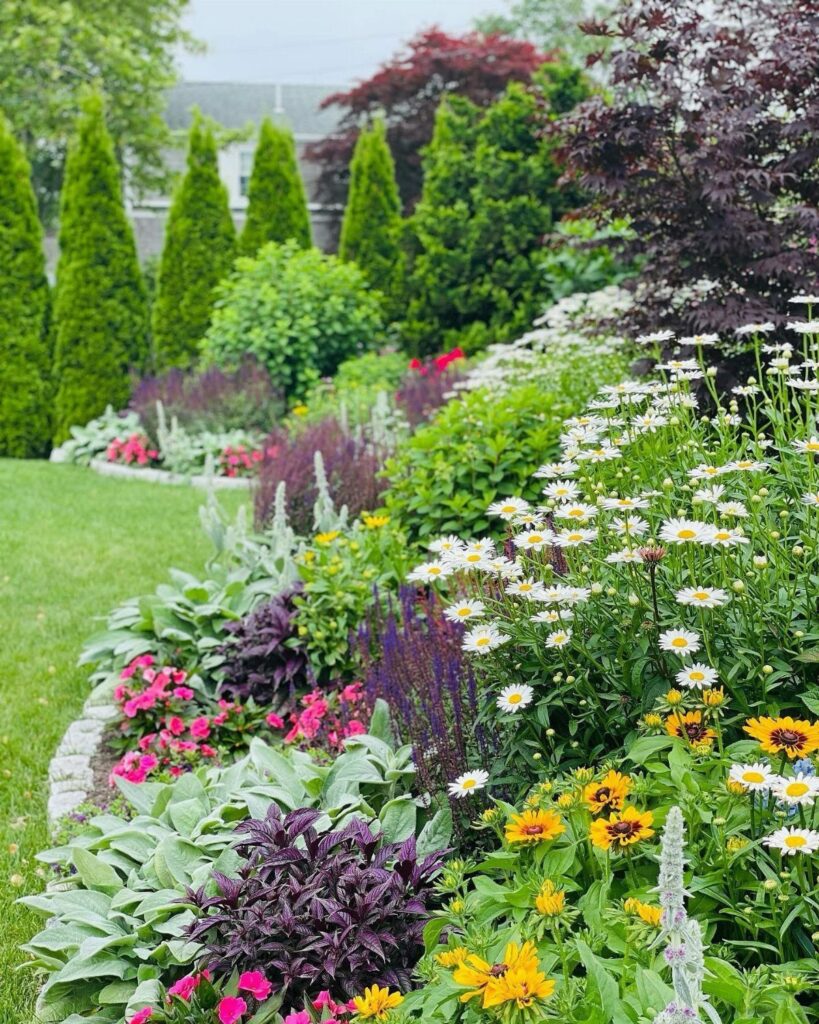
A layered perennial border stacks plants by height so every bloom stays visible from the street, shortest in front and tallest against the fence or property line.
I would check my soil drainage and sun hours before buying anything, since swapping a plant that failed to read the label is harder than getting it right the first time.
Stone edging like the visible paver strip keeps the lawn from creeping in and gives you a clean line to mow against.
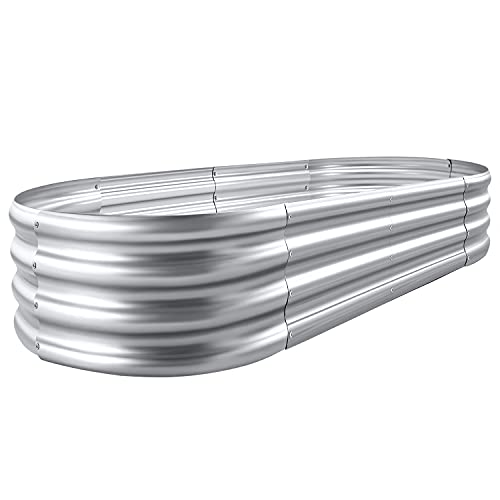
Each raised metal garden bed size: 4×2×1ft ,7.14Cu


GOTHIC FLOWER & HERB SEED COLLECTION A curated assortment of 6 varieties selected for deep color, dramatic texture, and a romantic, moody garden style.
2. Unique Planters

A tiered planter turns one footprint into several growing levels, which matters when your front yard is mostly lawn and you want flowers without surrendering the whole patch.
A permanent stone build with integrated lighting takes a real budget; I would price out concrete or cast stone for that look, or stack precast tiers myself for less and keep the option to move them later.
The central palm and white pebble fill read tropical, but the format works with herbs, succulents, or annuals swapped each season.

Timeless Design: Perfect for adorning garden pathways, porch steps, and indoor patios, showcase plants beautifully in this fluted garden urn that features graceful lines and an ornamental rim.


Timeless Design: Perfect for adorning entryways, porches, and patios, showcase plants beautifully in this fluted garden urn that features graceful lines and an ornamental rim.
3. Cottage Garden Flower Bed

Cottage style means planting close enough that plants touch and spill, no mulch showing, no rigid spacing.
Tulips, roses, and hydrangeas give 3 layers of bloom time, which is how this style stays full from spring through summer without looking tired.
I would start with a backbone of shrubs like the hydrangeas, add bulbs in fall, and scatter self-seeding annuals to fill gaps the first year while perennials establish.
The informal density hides weeds and bare soil both, so it suits gardeners who prefer picking and deadheading to edging and weeding.

Indoor Small Forest: Create a stylish and organized indoor plant area with the Yzosvki Indoor plant stand. Its L-shaped design allows for the perfect display of up to 6 plants, ensuring that each plant has sufficient room to grow both upwards and downwards.

7 Pots Plant Stand: which can hold 11-25 pots of regular size,A single board can hold a high pot plant, making it an ideal decorative piece for organising your plant collection. And the bottom of the stand is designed with a protective pad to prevent any scratches and wear on the floor

【ONLY 5-Minute Assembly & Space-Saving】Enjoy a tool-free, screw-free setup 5-minutes with a detailed manual with installation steps. The corner plant stand indoor outdoor & folding tall rack features a fixed center pole and smoothly rotating outer legs, allowing you to adapt its shape to fit corners or straight walls, saving space and fold it for compact storage
4. Seasonal Container Gardens

One glazed pot by the door lets you change the whole look in an afternoon when the season turns or your color mood shifts.
Cobalt blue reads bold from the curb, and dusty miller gives you silver foliage that cools down hot colors without demanding its own bloom cycle.
I would size the pot to the doorway: too small looks apologetic, too large blocks the swing. A container that fills the space beside a standard front door without crowding the path is the size to aim for.

Realistic Faux Stone Texture: Our landscape edging boasts a lifelike stone texture with detailed surface patterns that add depth and a polished look to your outdoor space. It beautifully enhances garden beds, lawns, pathways and flower beds, bringing a natural, decorative touch to any yard.

20-Pack Garden Edging Set: Includes 20 gray plastic edging panels. Each panel measures approx. 9.65 x 3.94 x 9.06 in and weighs about 0.13 lb. When connected, the full set covers up to 16 ft.

Stone-Look Decorative Landscape Edging: 2.75 inch tall rustic stone design complements any flower gardens and provide clean look for your gardens, flower beds, lawns, grass, raised garden beds, shrubbery, pathways, yard trees, ground pool, etc.
5. Flowers Along the Wall
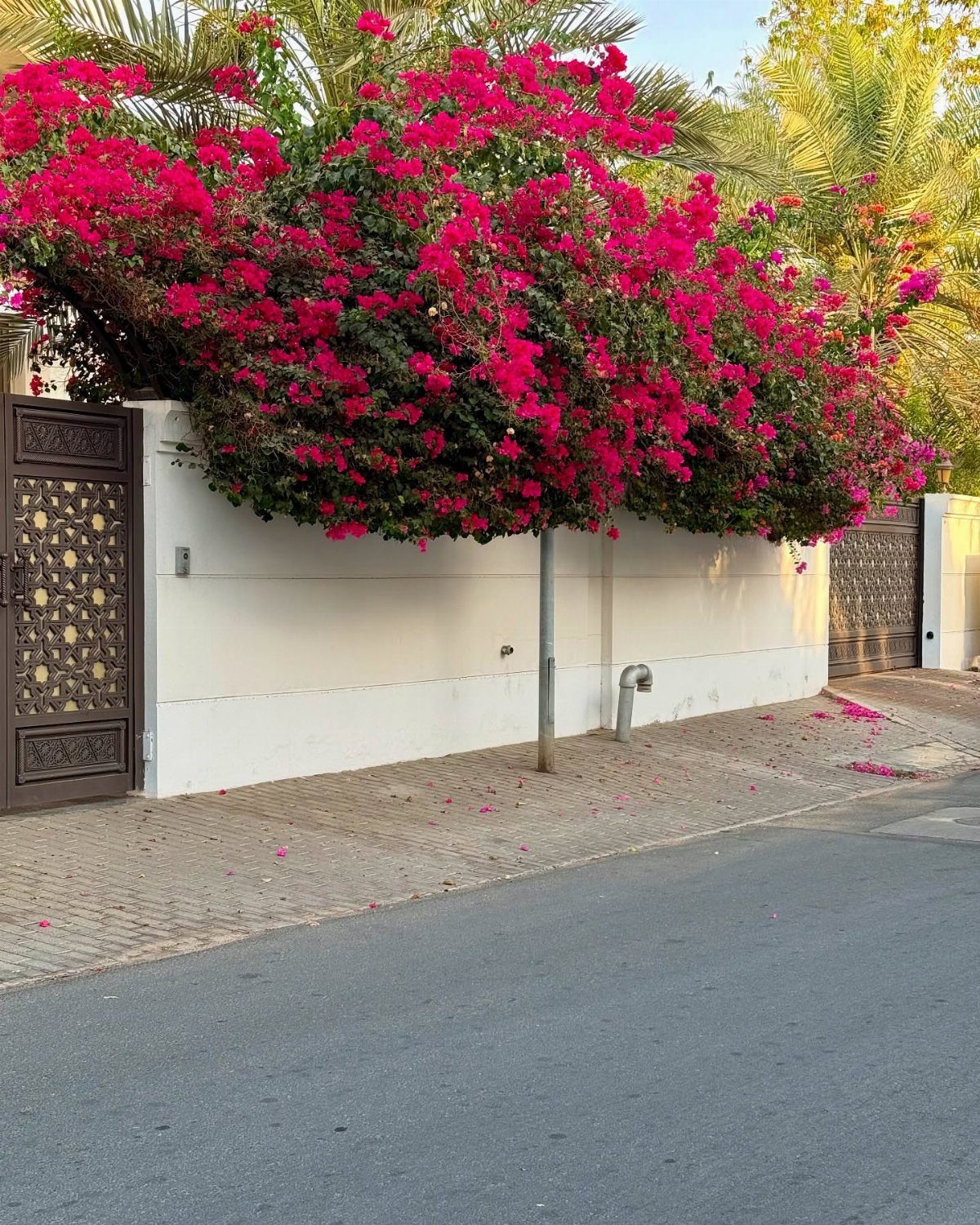
Bougainvillea against a white wall is a specific climate bet; the plant wants heat, drought, and no frost, so I would skip it in cold-winter areas unless I planned to treat it as an annual or move a container in for winter.
Where it works, the thorns and the vigorous spread need a plan: the wall needs to be high enough to contain the cascade, and gate gaps should let the color frame the entry rather than block it.
A lower wall would need more aggressive pruning to keep the thorns off passing shoulders.

【16inch Window Box Planter】Dimensions: 16×3.8×3.3" (planter) + 15.1×3×1.2" (saucer). Perfect for herbs, succulents, cacti, lilies, or faux plants. Holds soil, pebbles, or decorative stones.

Perfect for Narrow Windowsill - Lovely beige colors, perfect size to fit windowsill, great space savers. Herbs planters size: 16 × 3.8 × 3.3in, Saucer size: 15.1 × 3.0 × 1.2in. Each very light plastic, enough to be moved around the anywhere.

Decorative flowerpot--the imitation wooden barrel is great addition to courtyard, yard, balcony, garden, office, etc,succulent pots with drainage
6. Climbing Roses on a Trellis
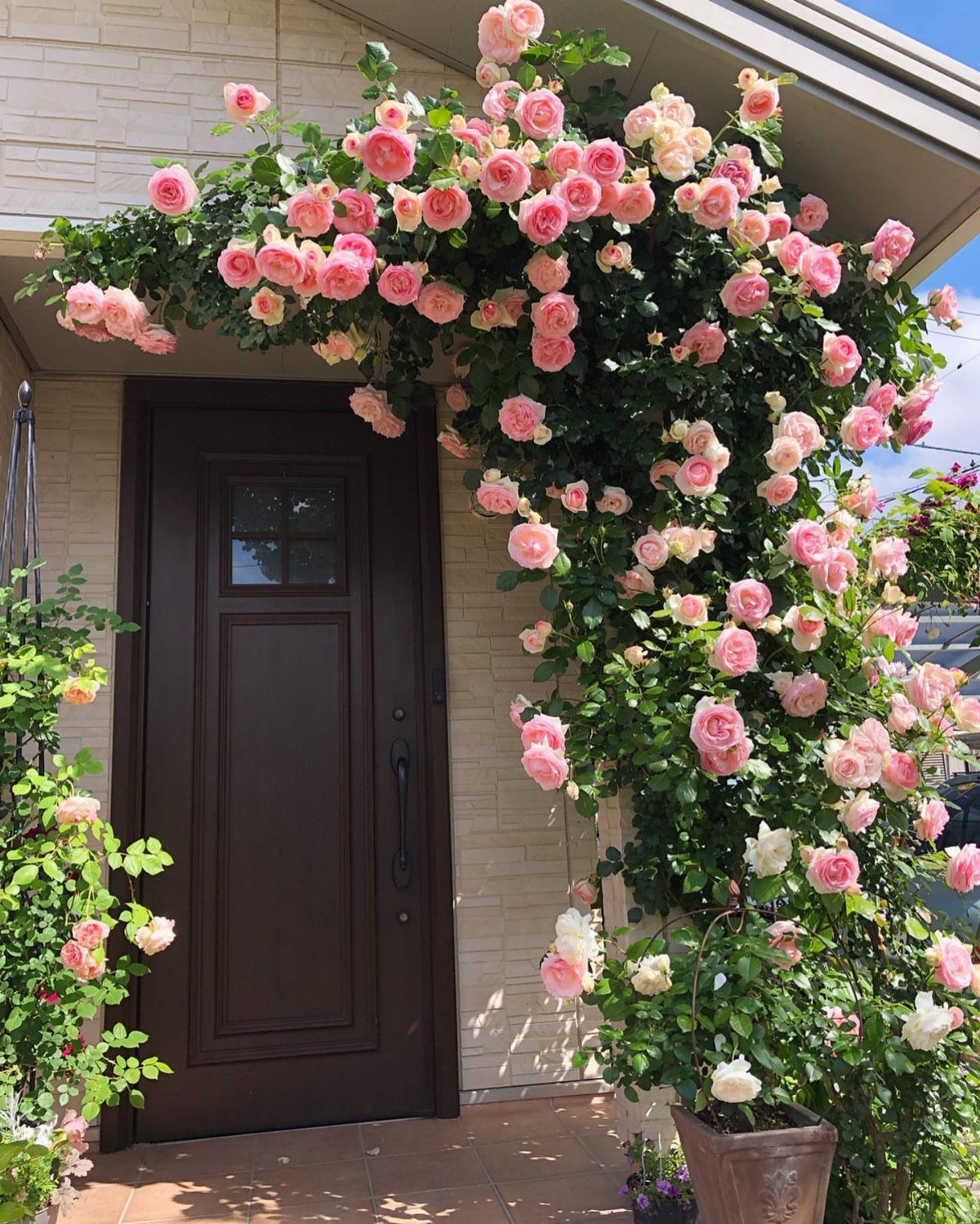
A rose trained over the door turns the entry into a destination, but the structure has to last longer than the plant.
I would build the trellis in wood thick enough to take the weight of a mature climber in full wet bloom, 2 inches square minimum, anchored into the framing, not the siding.
A dark door makes pink read brighter; a pale door would need a deeper rose color to carry the same contrast.
Repeat-blooming climbers flower on new wood, so I would prune in late winter before growth starts, not after the first flush the way once-blooming types need.

Indoor Small Forest: Create a stylish and organized indoor plant area with the Yzosvki Indoor plant stand. Its L-shaped design allows for the perfect display of up to 6 plants, ensuring that each plant has sufficient room to grow both upwards and downwards.
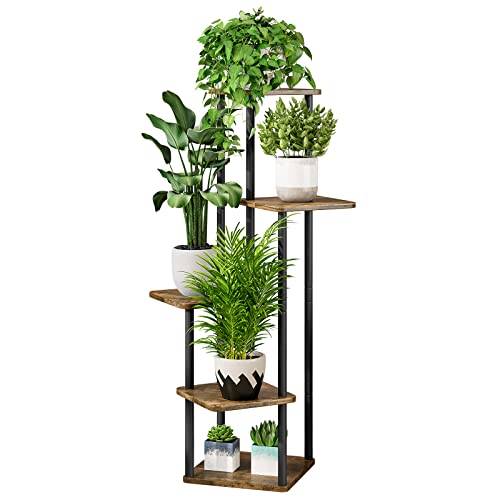
【Unique Plant Holder Design】 Multi-tier metal flower rack not only provides enough storage space for your flower pot, but also decorates your living room, bedroom and office with modern appearance, make your house have a pleasant view.

【 Exquisite Plant Stand Indoor 】Unique design of plant stand indoor let each pot of plants absorb sufficient sunlight, fully display, and form a beautiful landscape. 3 tier plant stand indoor not only provides enough storage space for your flower pot, but also decorates your living room, bedroom and office with modern appearance.
7. Formal Boxwood-Framed Bed
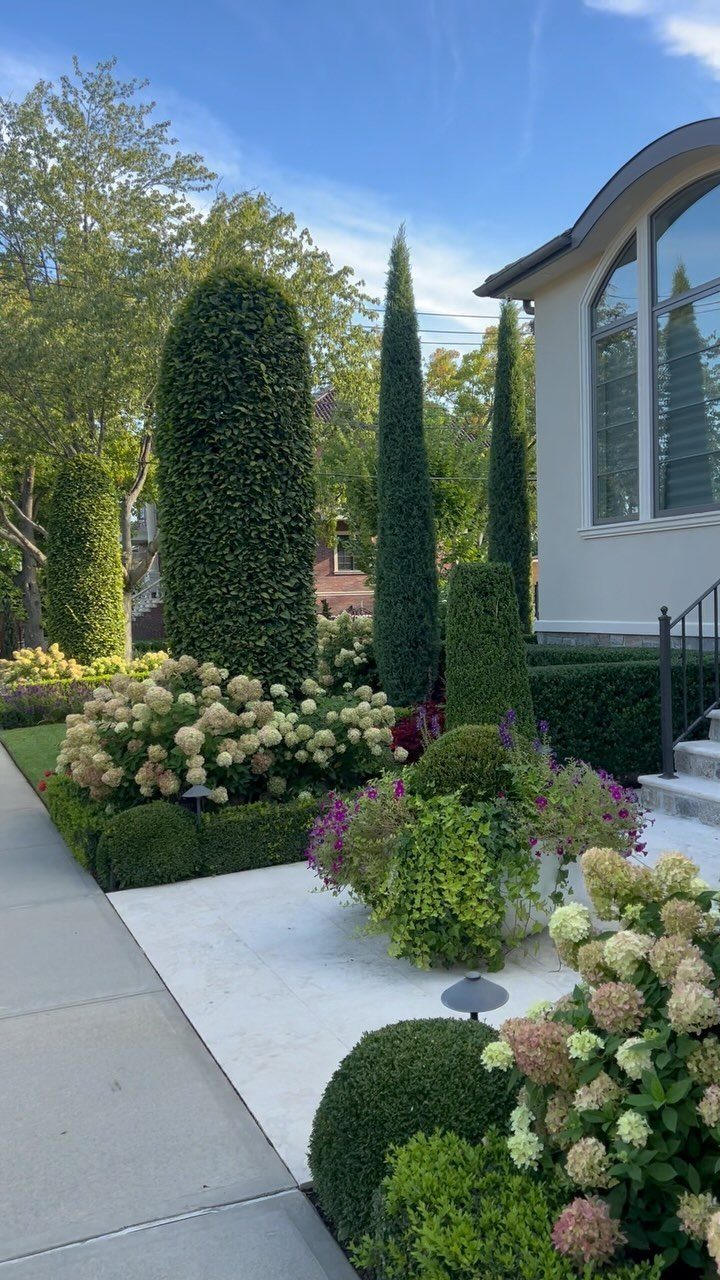
Boxwood frames a bed the way molding frames a door: it gives the flowers inside a clean edge to perform against.
The visible pairing of clipped hedge with loose hydrangea bloom works because the boxwood stays green and geometric through every season when the flowers are gone.
I would check my soil pH before planting; boxwood tolerates a range but yellows in alkaline conditions, and sulfur amendment is easier done beforehand. Conical evergreens at the corners add height without demanding the pruning schedule of a formal parterre.


Pink sunflower blooms: Pale petal edges and dark centers bring contrast to outdoor flower beds
8. Classic Hanging Baskets with Trailing Petunias

Trailing petunias in a hanging basket buy you color at eye level without giving up ground space.
Magenta and orange petunias read tropical; I would match them to a painted door or shutters for coherence, or let them clash deliberately against brick.
Watering is the real task: a basket this full dries to wilting in a single hot afternoon, so I would plan for daily checks in July and August, or fit a reservoir liner before I plant.
Choose a bracket rated for wet weight, not just the empty basket.
Timeless Design: Perfect for adorning garden pathways, porch steps, and indoor patios, showcase plants beautifully in this fluted garden urn that features graceful lines and an ornamental rim.

Elegant, Glazed Design – Features the stylish look of ceramic with a glossy finish and horizontal brush lines that enhance your plant’s natural beauty; available in bold, vibrant colors to suit any decor.

Lightweight Planter: Keep your plants safe and sound with this large plant pot designed to work well with many different kinds of plants from flowers to shrubs to herbs
9. Foundation Flower Bed
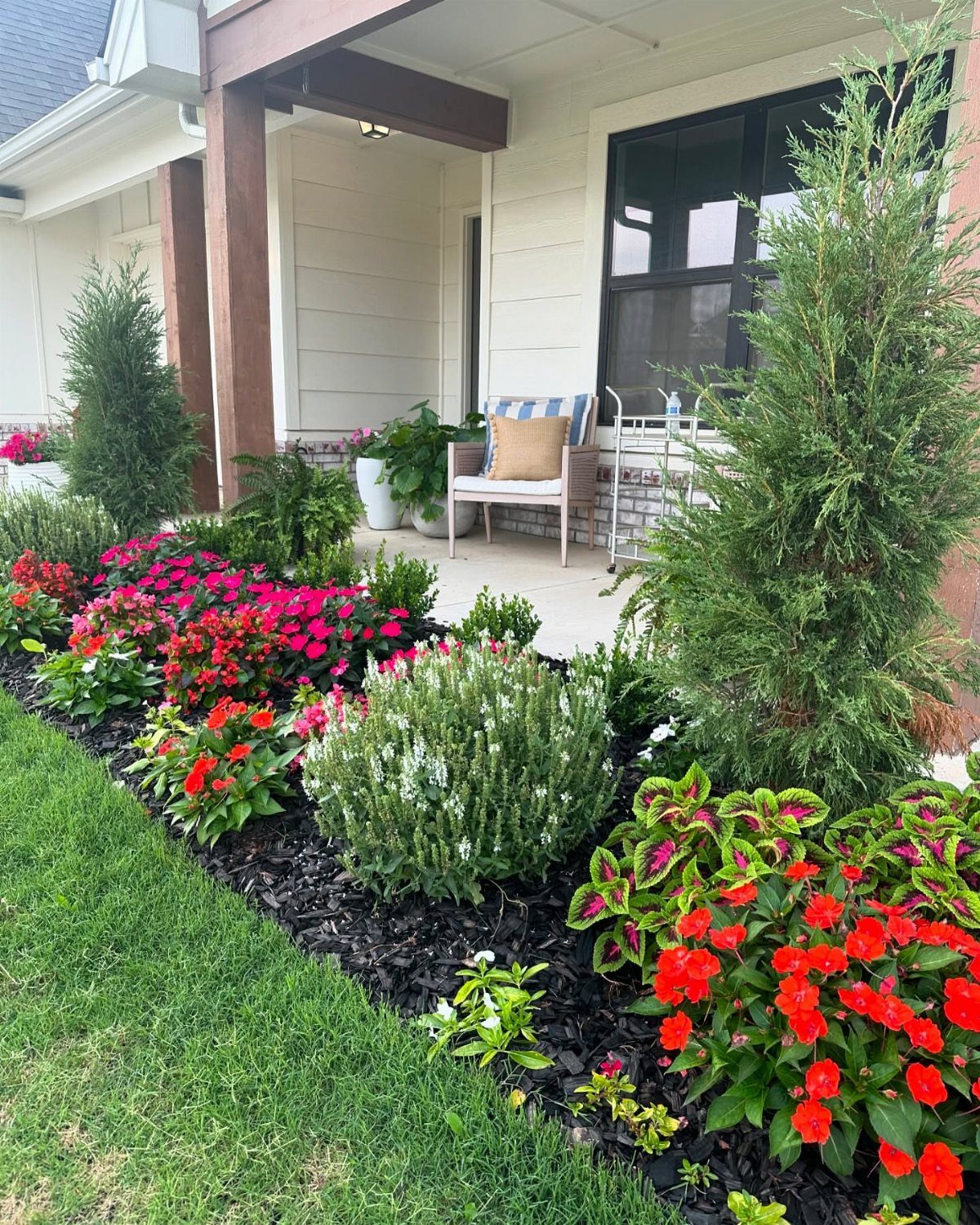
A foundation bed fills the strip between house wall and lawn, softening the foundation line without hiding it.
Dark mulch against white siding gives the contrast that makes a planting read from the street; red impatiens and coleus stay low enough to keep window sightlines clear.
I would plant beyond the overhang drip line, or the dry shadow underneath will stunt anything I set there. This is the bed for annuals and tender perennials, since the house wall moderates winter cold by a half-zone or so.
Traditionally, a front yard consisted of a green lawn, a few foundation shrubs, a cement driveway, and sidewalk that leads to the front door. This often-overlooked and underutilized outdoor space presents many opportunities, as well as unique design challenges.

Realistic Stone Look Edging: Imitation stone design adds elegant curb appeal without the weight or cost of real rocks. Blends naturally into any garden

Durable & Flexible Material GTSABWAY garden edging is Made from high-quality metal, ensuring superior durability and flexibility. Easily shape it into straight lines,curves, circles, or unique contours ,without cracking,Can withstand all kinds of weather conditions, ensuring long-term durability and reliability. providing reliable Garden Border solutions.

Interlocking Structure Design: The interlocking structure adopts thin tongue and groove style design which will tightly hold the each edgings, preventing the garden edgings peel off. Made of premium material, these interlocking garden border edgings stand the wear and tear, no fading, no crackling, no deformation. It can be used for a long time.
10. Mailbox Garden Flower Bed
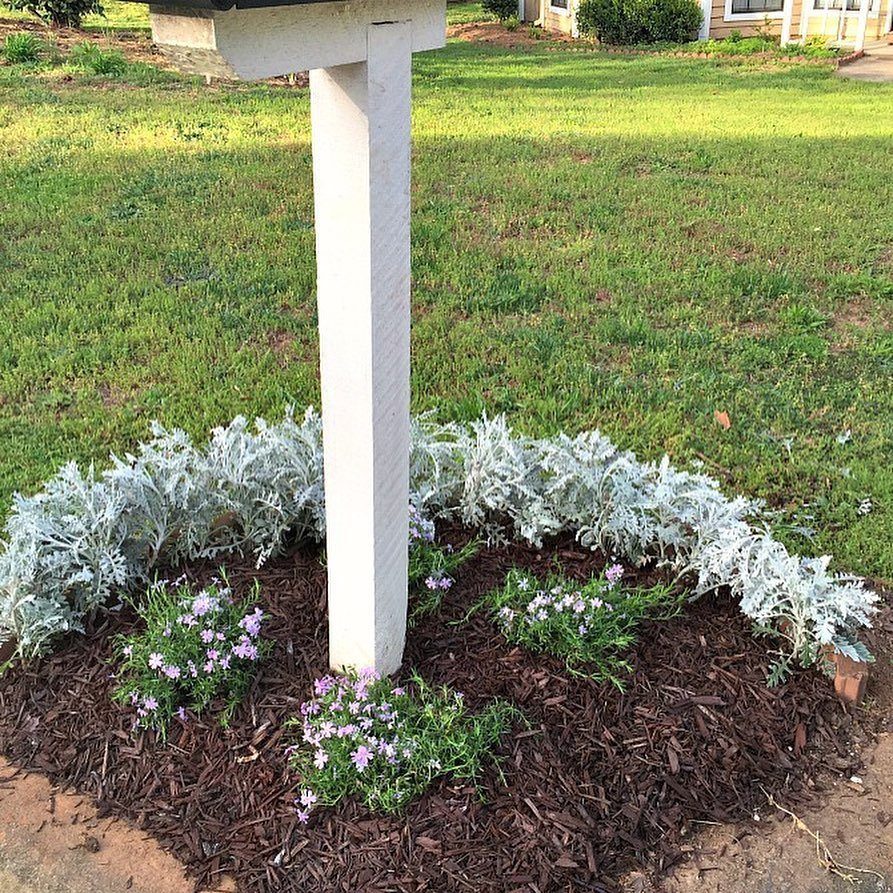
A mailbox bed turns a utility post into a garden punctuation mark. A semicircular bed keeps clear of the postal carrier’s path and the mower’s turn radius; a full circle looks balanced but invites weed-whacker damage on the back side.
Dusty miller carries silver foliage through heat that wilts blooms, which matters when the mailbox sits in full sun at the curb. I would keep the planting low, or the flag and number start to hide.

Durable Construction: Built to last with heavy, durable metal material for indoor or outdoor use. Elegant Style: Rich creamy finish and minimalist design blends with any home...
11. Picket Fence Flower Border

A picket fence with flowers at its feet turns boundary into backdrop. Pink geraniums against white pickets is a specific cottage combination; the color reads from the street because the fence gives a light, neutral ground.
I would set plants close enough to touch the lower rail, but not so close that growth traps moisture against the wood and starts rot.
Climbing roses on the fence itself need tying and annual pruning to keep thorns off passersby; bush roses stay manageable without that commitment.
12. Hydrangea and Evergreen Border
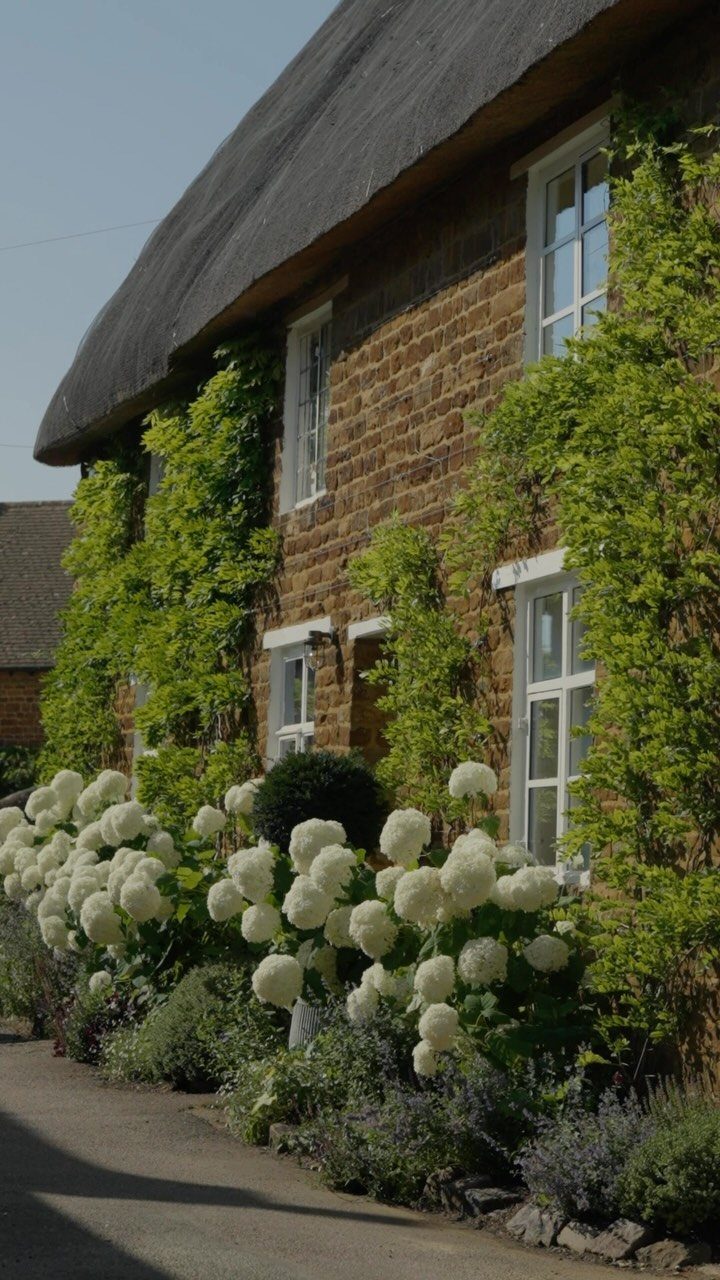
Hydrangea and evergreen together give you two seasons of interest from one planting: structure all year, bloom through summer.
White hydrangea against stone needs the acidic soil that stone leaching rarely provides; I would test and amend with peat or sulfur if the leaves start yellowing between veins.
A clipped evergreen beside it, rather than a loose grower, keeps the contrast sharp and the maintenance predictable. This pairing suits a wall or foundation where you want presence without the bare winter look of deciduous shrubs alone.
13. Colorful Flower Borders
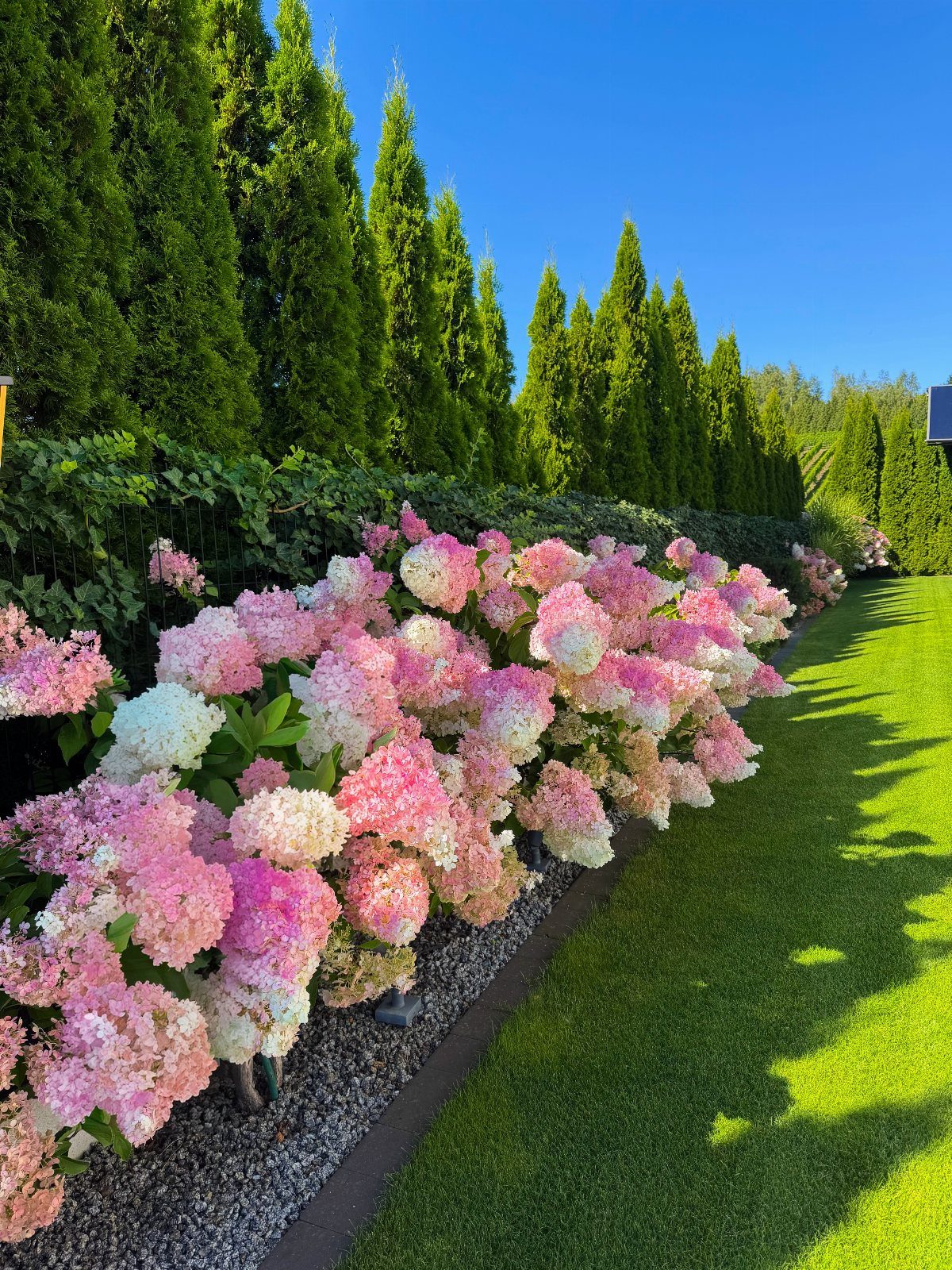
Pink and white panicle hydrangeas massed in a long border give you a color statement that reads from the street through every bloom cycle.
I would edge with dark stone rather than brick; it disappears visually and lets the flowers carry the whole effect. The evergreen backdrop behind this bed is doing real work, giving winter structure when the border is bare.
Check your bloom times before you buy. A border built on one species gives you a short burst of glory and a long stretch of green; I would add late summer asters or sedum to extend the show.
14. Gravel Walkway Flower Border
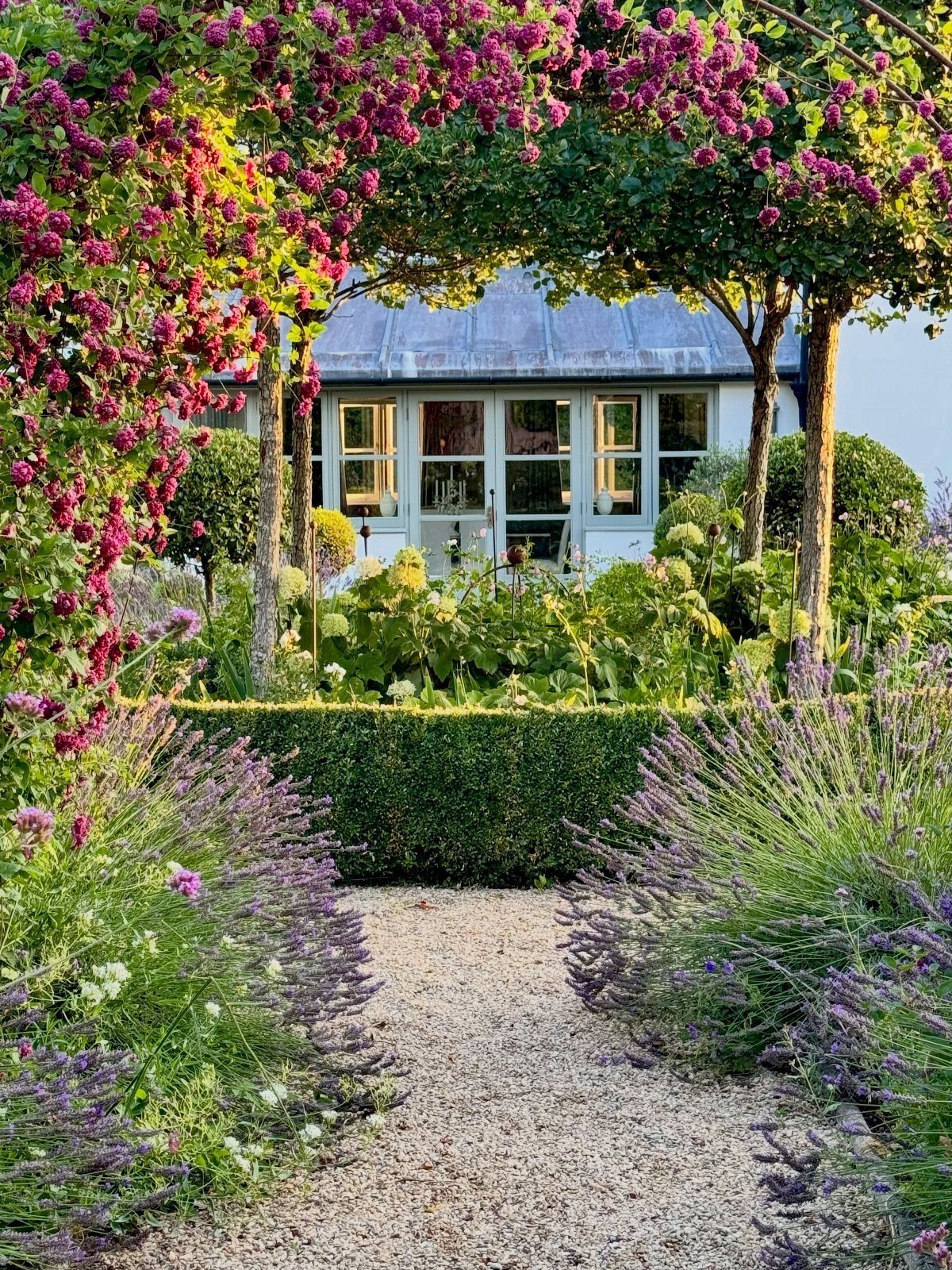
A gravel path with lavender planted tight to its edges gives you fragrance underfoot and a color that softens as it dries.
The arch of climbing pink blooms overhead turns a straight walk into an approach; I would check the structure’s weight rating before I planted a vigorous climber, or the frame bows in year three.
Gravel over landscape fabric drains well but migrates; a steel or brick edge set flush with the lawn keeps the stones where you put them.
The glass building at the end of this path gives the walk a destination, which is worth considering if your entry faces the street without a focal point.
15. Circular Raised Brick Bed
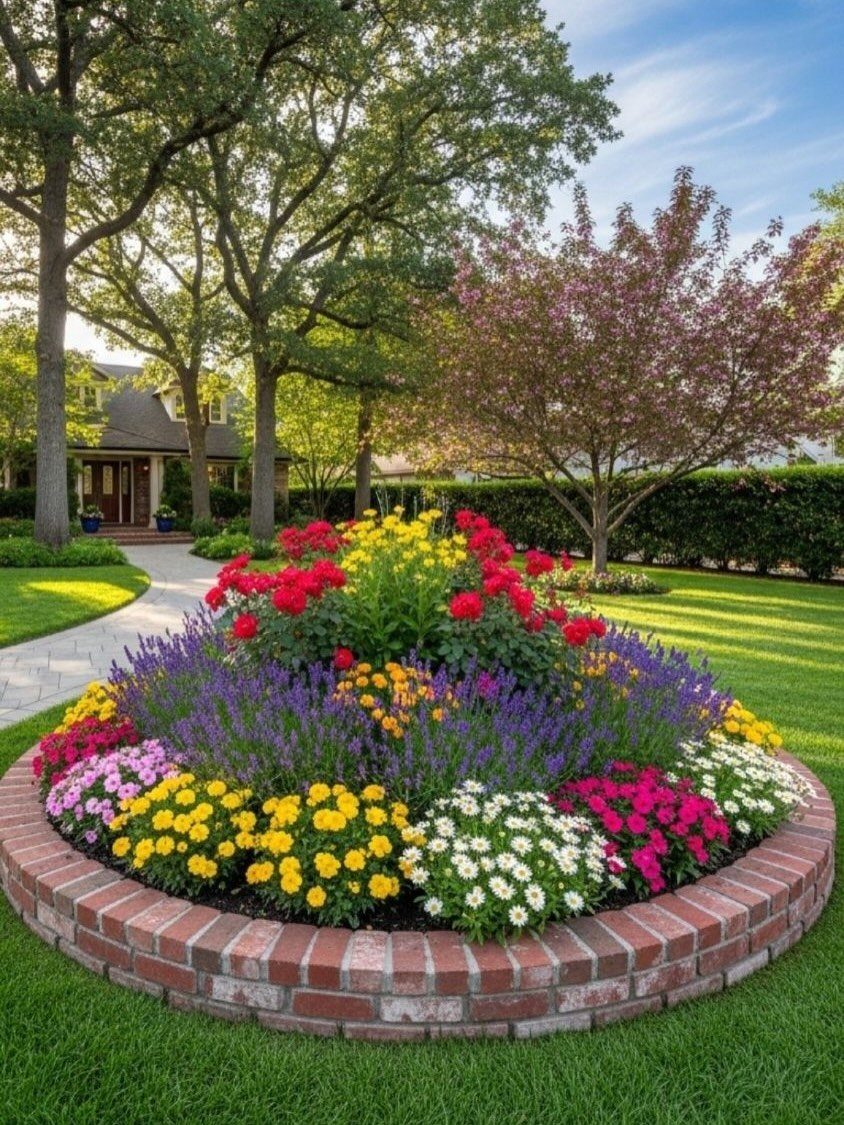
A circular raised bed in the lawn breaks up flat ground and gives you controlled soil where the existing dirt may be compacted or thin.
Red brick warm-toned with age reads traditional; new brick would look sharper and colder, which suits some houses less.
I would build to a height that contains the soil and shows the flowers without becoming a trip hazard on the grass.
The mixed planting of red, yellow, white, and purple here is cottage-intense; a single-color scheme would read more modern and calm the visual noise.
16. Lamp Post Flower Bed
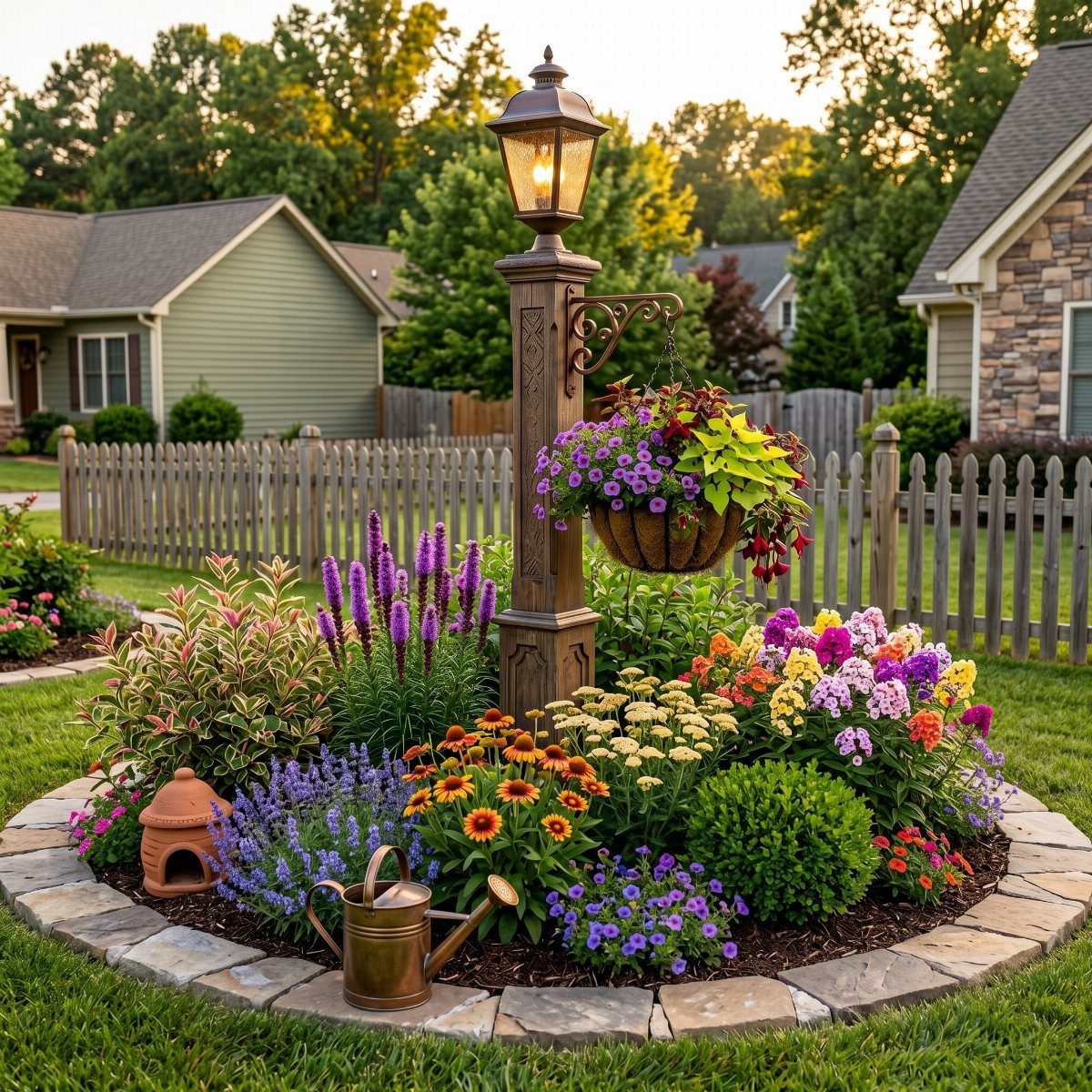
A circular bed around a lamp post turns a utility pole into a garden feature.
The stone edging here keeps the mower back and defines the circle against the lawn; I would match the stone to any existing hardscape rather than introduce a second color.
The hanging basket on the post adds height, but the bracket needs to clear the light fixture and the basket must not block the glow.
Salvia and black-eyed Susans are tough enough for the root competition and reflected heat at a post base; tender annuals would need more water than this spot gives.
17. Illuminated Evening Flower Garden
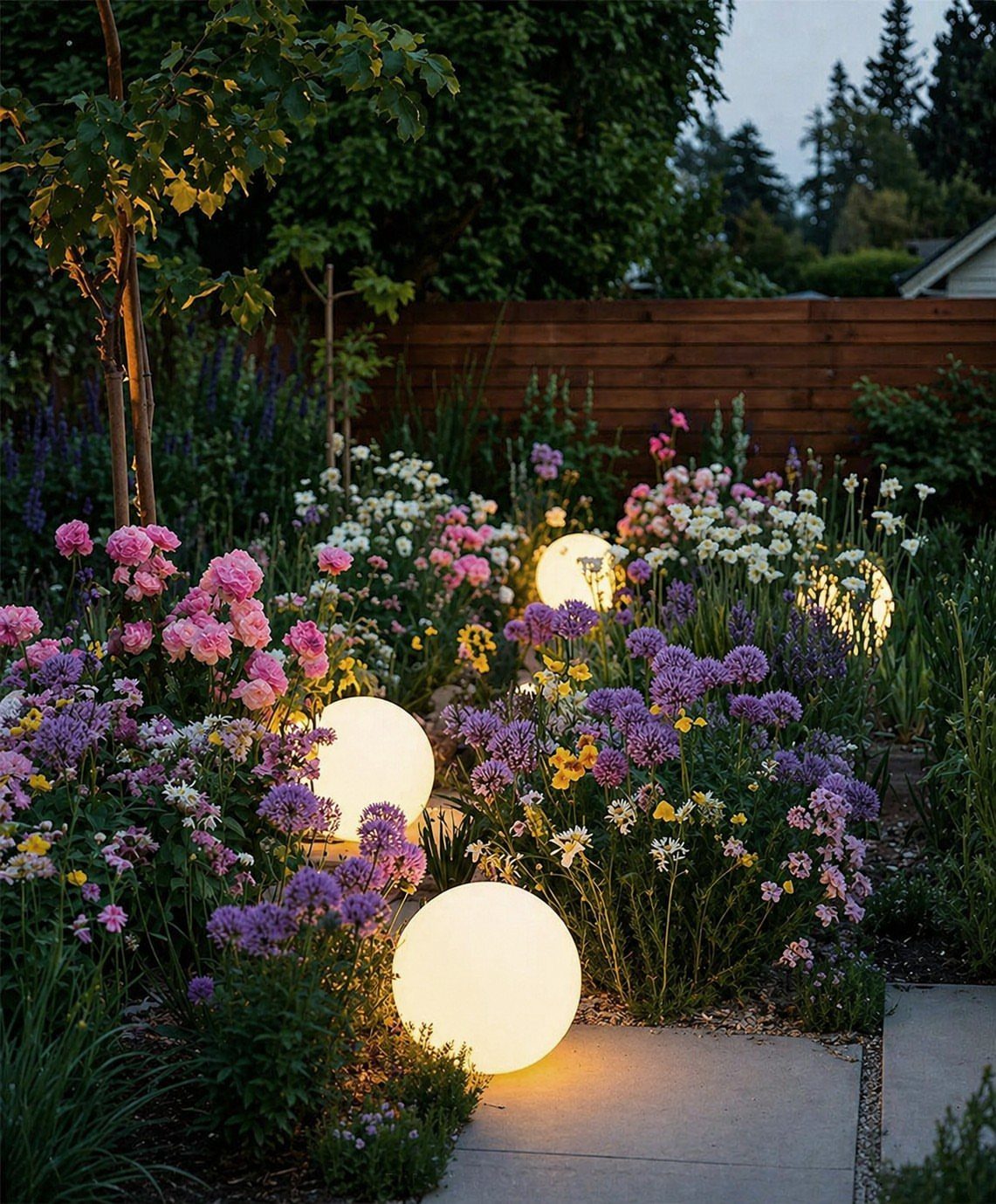
Orb lights set among flowers let the garden perform after dark, which matters if you come home from work at 6 pm and want to see what you planted.
Solar orbs are simpler to place but dimmer and less reliable; wired low-voltage fixtures give consistent output and take a transformer tucked somewhere dry.
I would set the lights at varied heights rather than in a row, and let the flowers grow to partly obscure them.
The stone path here reflects some light upward; concrete would do the same, gravel less so. Twilight color reads cooler than noon color, so purple and pink stay visible when red starts to disappear.
18. Shade Garden Mulched Bed

Hostas and coleus under mature trees give you foliage color where bloom is scarce and brief.
The dark mulch here is doing 2 jobs: it suppresses weeds and it reflects less light than pale mulch, which keeps the shade feeling intentional rather than accidental.
Sloping ground under trees is the hardest place to establish anything; I would plant small and water through the first 2 summers while roots compete.
Ornamental grass in this mix is a surprise that works, catching sideways light that reaches under the canopy. Blue-purple flowers in shade tend toward short bloom spans, so I would choose them for timing rather than duration.
19. Flower Garden with Water Fountain
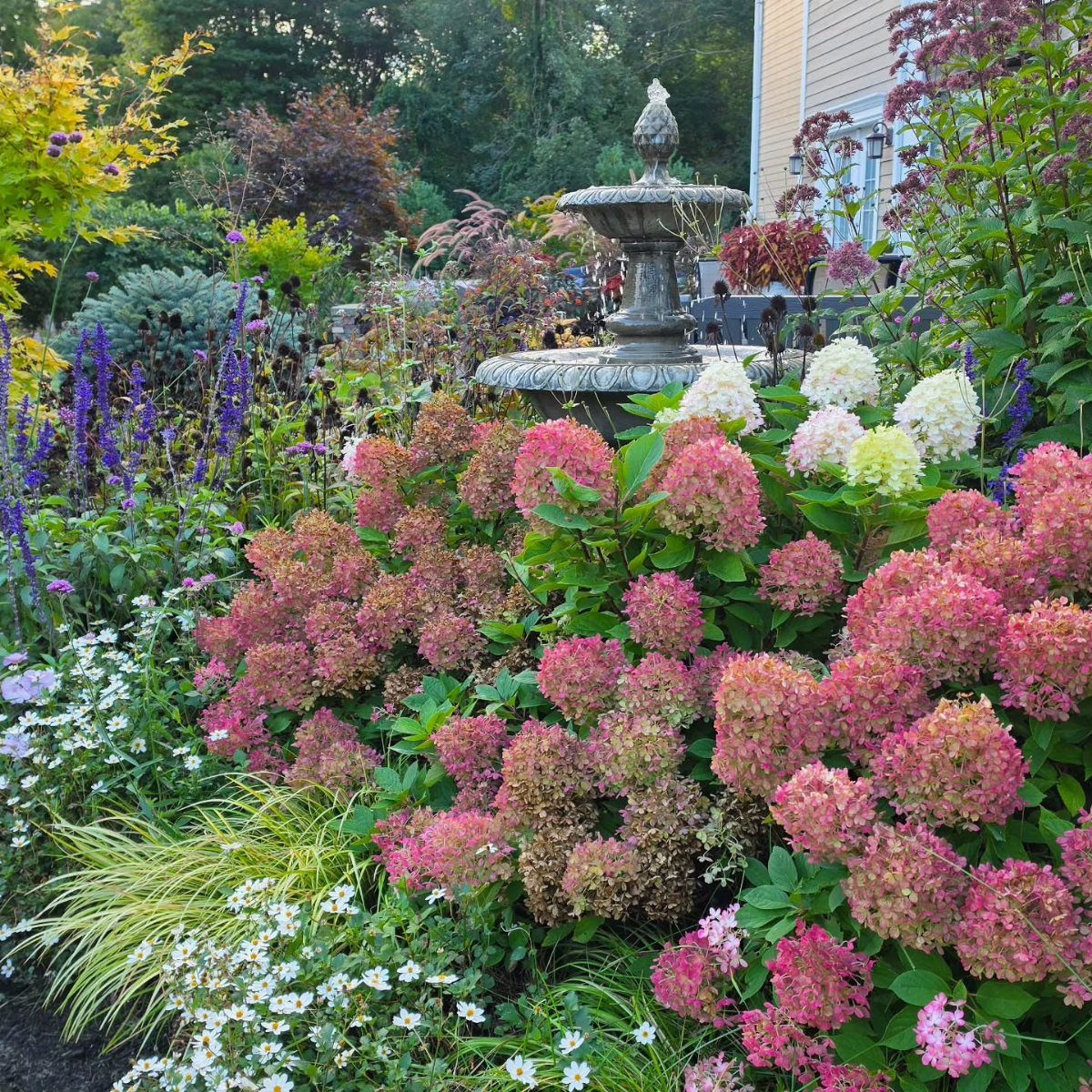
A tiered stone fountain in the front yard gives the garden a destination that draws the eye past the flowers to the water itself. The sound covers street noise, which matters on a busy block.
Stone this size needs a level pad and access to power for the pump; I would check the frost line in my area before setting the base, or winter heave tilts the tiers in year two.
The dense planting of pink hydrangea, purple salvia, and small white flowers around it wants consistent moisture from the splash, so I would choose varieties that tolerate wet roots rather than drought lovers that sulk.
20. Circular Tree Island Flower Bed

A circular island bed in the lawn, anchored by a small Japanese maple, breaks up flat grass with height and color without blocking the house.
The metal edging here is doing the work of containing mulch and defining the shape against the mower.
I would size the circle to the lawn: too small reads accidental, too large dominates the yard.
A maple this young will widen and deepen its shade; underplant with annuals for now and switch to shade-tolerant perennials as the canopy fills. Dark mulch shows off the maple’s structure in winter when the flowers are gone.
21. Window Sill Flower Bowl

A bowl of cut flowers on an exterior windowsill brings color to the facade without planting anything in the ground, which suits renters or anyone with thin soil by the foundation.
Peach roses with yellow daisies and wildflowers read warm against dark siding or cool against pale.
I would choose a ceramic bowl heavy enough to stay put in wind, with no drainage hole; these are stems in water, not planted.
The wood sill needs checking for rot before it takes regular moisture, and the arrangement wants replacing often in summer heat. A bowl this wide fills a standard double window proportionally.
22. Stepping Stone Path Flowers

Low flowers growing between dark wet stepping stones turn a path into a garden moment.
The gaps need to be wide enough for soil and root, roughly 2–3 inches, but not so wide that a heel catches; this is a secondary walk, not the main approach.
I would choose creeping thyme or mazus for the gaps; both tolerate foot traffic and the reflected heat of dark stone.
The wet look here suggests recent rain or morning dew, but the stones themselves need to drain or the roots rot. A path this informal suits cottage or woodland gardens; it would read out of place against a formal facade.
Preparing Your Flower Garden
A flat spade will slice through sod faster than most people expect, so I start there rather than renting equipment I don’t need.
I lay a garden hose where I want the border to run, then step out to the curb and look back; the distance shows me what actually reads from the street.
The curve reads differently from distance than it does up close, so adjust until it holds its shape from both angles.
Getting that amendment deep into the soil does more for the plants than any fertilizer I could sprinkle on later.
Set your edging before you plant, whether you choose stakes, brick, or metal; positioning is simpler in an empty bed than around roots you have already tucked in.
Mulch after planting, two to three inches, to lock moisture in and suppress weeds from the start.
Choosing the Right Plants
Knowing your USDA hardiness zone keeps you from selecting plants that need winter protection you will not give them.
Observe actual sunlight hours across the day; the front of a house can read full sun at noon and deep shade by four o’clock depending on orientation and overhang.
Test drainage by filling a dug hole with water; slow absorption means you are planting in a slow-dying root zone unless you amend or choose wet-tolerant species.
Maintaining Your Flower Garden
Water regularly, deadhead spent blooms, and refresh mulch as it breaks down. Those 3 tasks cover most of what keeps a bed healthy through the season.
Even in a single bed I stack by height: tall stuff at the back or center if the bed is islanded, mid-height filling the middle, and low trailers or ground covers spilling the front edge.
The depth this creates is what separates a flat planting from one that reads lush and intentional from the street.
Restrain your color palette to two or three colors repeated throughout. White flowers with one accent color is the combination I trust when I want a bed to read as intentional; white catches light and lifts everything near it.
If you are unsure at the garden center, that formula keeps you from coming home with one of everything.
A crisp edge, whether I cut it with a half-moon edger or line it with stone, makes the planting look finished even when the plants inside are doing their own thing.
The tidy border signals intention, which is half of what makes a front bed look cared for.
Frequently Asked Questions
What flowers are best for the front of a house?
Low-maintenance perennials and colorful annuals that match your actual sun hours and soil drainage.
USDA hardiness zone checks come before any purchase of mine; a plant that needs winter protection I will not give is a plant I will be digging out next spring.
How to make a flower garden in front of your house?
Lay a garden hose where you want the border, step to the curb, and look back; the curve reads differently from distance than up close, so adjust until it holds from both angles.
Slice sod with a flat spade, amend soil deep rather than fertilizing later, set edging before planting, and mulch two to three inches after.