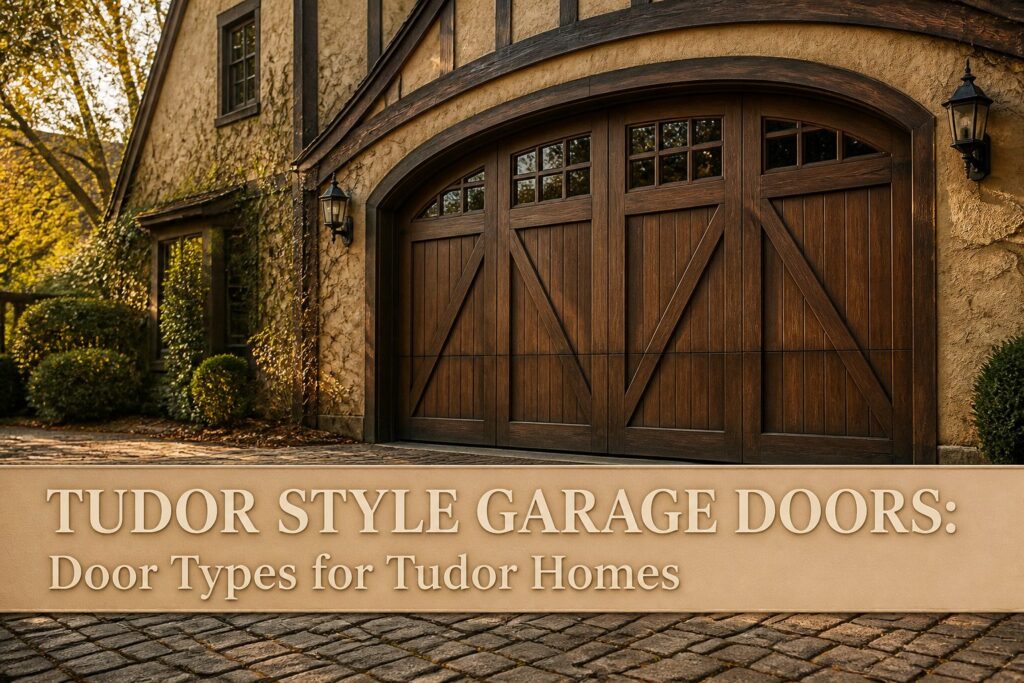
A Tudor style garage is a garage door built to match the half-timbering, steep gables, and arched openings of Tudor Revival homes, and the detail that makes it look original rather than added later is the arch radius measured from the facade itself.
Carriage house doors replicate the swing-out panels of early 20th-century carriage houses, but the custom work costs more than stamped steel or composite alternatives that flatten out under close inspection.
Wood delivers the truest period grain yet demands refinishing every six months on the most exposed wall of the house; faux wood overlay splits the difference with a steel core that shrugs off humidity.
1. Carriage House Doors
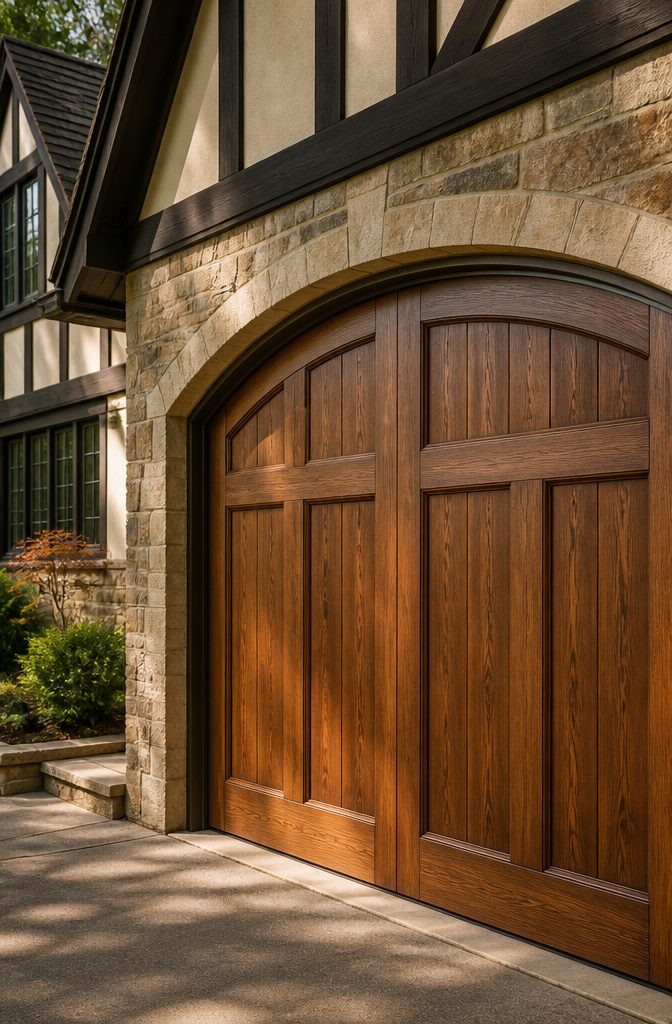
Carriage house doors are widely considered the best match for Tudor homes because they replicate the swing-out doors of early 20th-century carriage houses.
Their recessed panels, vertical board-and-batten designs, and arch tops echo the decorative timber and stucco of Tudor architecture in a way that stamped modern doors simply do not.
The arch top matters more than most buyers notice at first.
A gentle arch mirrors the arched entries and windows common on period homes, and matching the door’s arch radius to the radius already on your facade is the single detail that makes a new door look original to the house rather than added later.
I would measure existing arched openings before shopping, not after, because custom carriage house doors can be built to that spec while off-the-rack units leave you guessing.
For two-car openings, the panel configuration should split into four sections to preserve the carriage-door rhythm.
Depth in the recessed panels creates shadow lines that read as hand-built rather than machine-stamped. Modern torsion spring operation and insulation are available in custom units, so the period look does not require sacrificing convenience.
If I were replacing a Tudor garage door today, I would start here and only look elsewhere if the budget absolutely ruled out the custom work.

Easy Installation: Effortlessly replace your old carriage pull with our user-friendly design, no professional help required

COMPATIBILITY: Universal top bracket designed for residential and commercial garage door installations
2. Wood Garage Doors
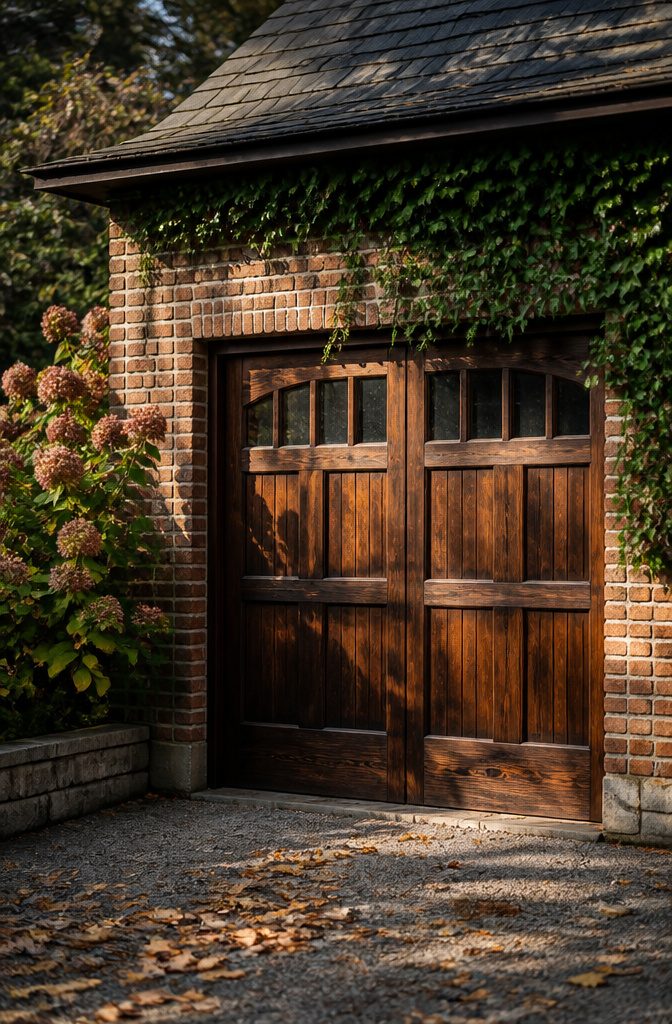
Real wood delivers the deepest grain and the truest period look for a Tudor style garage, and that depth is what separates a door that reads as architecture from one that reads as an afterthought.
The grain catches light differently at 8 a.m. and 5 p.m., and over years it settles into a patina no factory process reliably reproduces.
Maintenance is the catch, and it is not minor.
Wood moves with humidity, and a Tudor door sits on the most exposed wall of the house, taking sun, rain, and temperature swings head-on. Inspect the finish every six months for fading, cracking, or gray patches.
When water stops beading on the surface, reapply stain or sealer. Skip that schedule and the repair becomes structural, not cosmetic, once moisture finds the end grain.
I would pick wood for a Tudor home only if I trusted myself to keep that rhythm, or if the garage door is sheltered by a deep overhang that buys some margin.
For most first-home owners doing one project a year with a weekend timeline, that commitment is the deciding factor, not the upfront cost.

Premade Board and Batten Paintable Wainscoting Kit: Package includes 20 premade molding trim slats, 4 decorative edge strips, and two pairs of gloves for convenient installation
Board and Batten Wainscoting Kit – LONGKING pre-cut MDF wall panel kit is designed for easy DIY installation. Create a stylish accent wall with classic board and batten molding trim, perfect for modern and traditional home décor.

All-in-one Molding Kit: This premade board and batten wainscoting kit includes 20 molding slats and 3 decorative edge strips for quick accent wall assembly. It is supplied to build classic board and batten wall designs
3. Faux Wood Overlay Doors
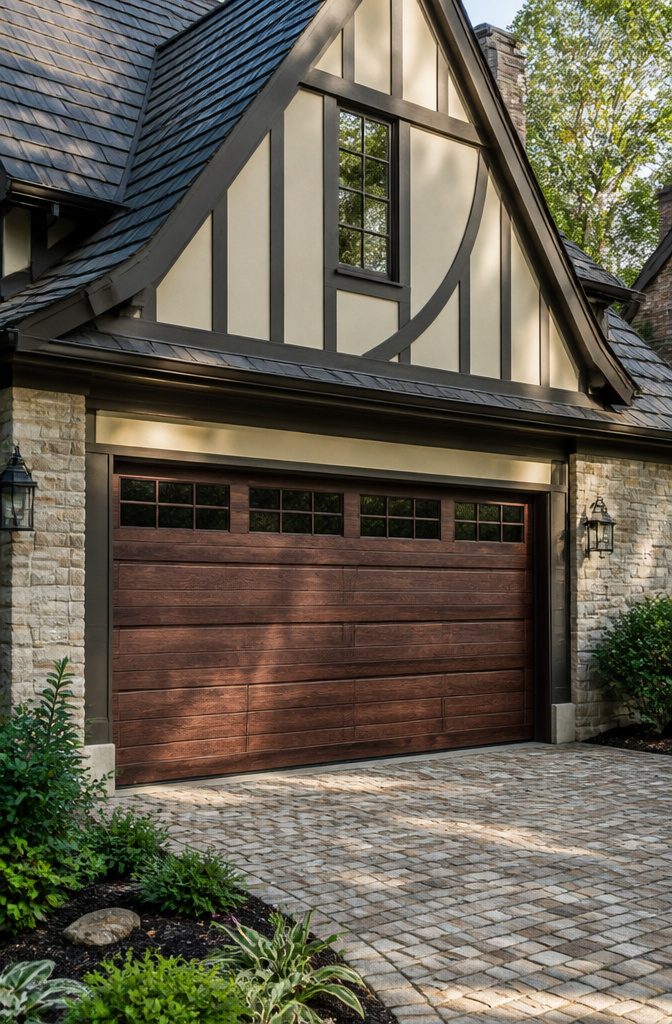
Faux wood overlay doors use a steel base with a wood face, which gives the warmth and grain of solid wood while keeping the structural integrity that real wood sometimes lacks.
That combination matters on a Tudor style garage because the timber framing and steep gables already ask for something that reads as traditional, not industrial.
The trade-off is straightforward.
Real wood moves with the seasons and needs periodic refinishing; the overlay gives you the same grain and the option to custom size and stain match to existing trim, but the steel underneath shrugs off humidity shifts.
For a homeowner working on a few hundred dollars and a weekend, that difference in upkeep is usually the deciding factor.
I would pick the overlay if I were refreshing a door myself rather than hiring out maintenance every couple of years.
Stamped steel or composite can mimic the look at lower cost, though they tend to flatten out the depth that makes Tudor architecture read as authentic.
The overlay sits in the middle: more convincing than stamped alternatives, less demanding than solid wood. If the budget stretches to it and you want a weekend install with a ten-year finish, this option wins.

Screw Mounted Decorative Garage Door Hardware: 8 hinges and 1 handles for 2 car garage, quickly and easily change your basic door into a more stylish carriage door that adds a lot of curb appeal to the front of your house.

Compatible with Genie Screw Drive Systems – Designed specifically for screw drive garage door openers from Genie; replaces part numbers 20414R and 36179R

Replacement fit: Aftermarket garage door opener carriage for Genie screw drive systems using 20414R or 36179R; also replaces 34107R, 25589R and 25589S; match your original part before ordering.
4. Stamped Steel Doors
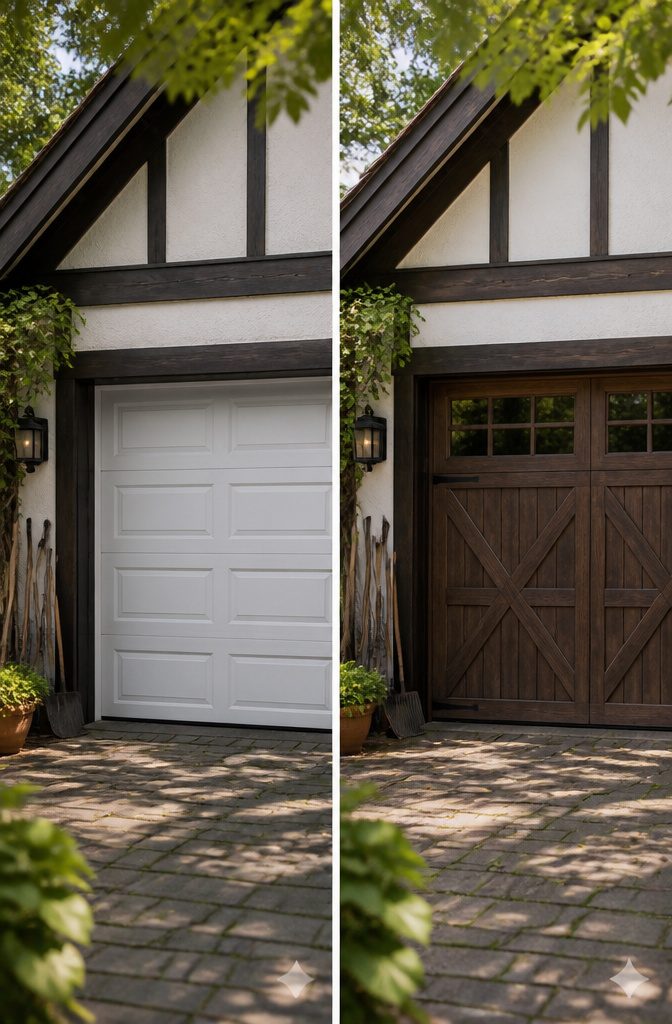
Stamped steel with a wood-grain texture or faux wood overlay gives you the structural strength of metal at lower weight, and the upkeep is minimal.
The grain reads flatter than real timber up close, though, so the door looks best from the street rather than under scrutiny at arm’s length.
I would put this material at the top of my list for inland climates with wide temperature swings, where wood would check and split and where I do not want to think about refinishing every few years.
Touch up scratches promptly; the factory finish is even and consistent, but once it is breached, rust is the risk.
If your Tudor home sits in a dry, shaded exposure and you want the deepest possible period authenticity, steel is not the choice that wins.
For the rest of us who would rather spend Saturday on the garden than sanding a garage door, the compromise is a fair trade.

CLASSIC CURB APPEAL DECOR: Transform the look of your garage door and add charm and elegance to your home's exterior with premium garage door accents from Coach House. Our garage door window panels create the illusion of real windows, enhancing property value and curb appeal without the expense of adding actual glass windows.

The 16 oz. English Oak Finish Coat is the Wood Grain Coat included in the Giani English Oak Garage Door Kit
5. Composite Doors
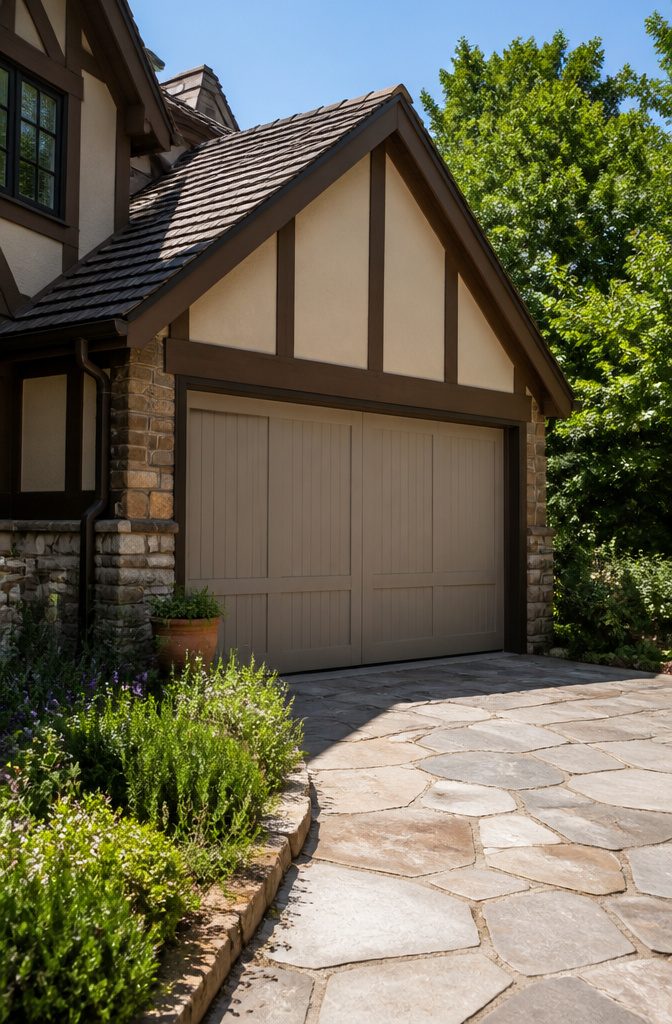
Composite materials sit in the middle of the Tudor garage door decision, and that is exactly where their usefulness ends.
A faux wood composite door offers minimal upkeep and a consistent texture that reads evenly from the street, which matters on a humid or coastal lot where real timber swells and steel dents.
The catch shows up at closer range: the grain stays flat, lacking the depth that makes wood overlay convincing or the honest simplicity of stamped steel.
I would place composite third in line, behind wood overlay for authenticity and stamped steel for value.
If your budget caps out before custom work and your climate rules out bare wood, composite keeps the project moving without the refinishing schedule. Just do not expect it to fool a neighbor walking up the driveway.
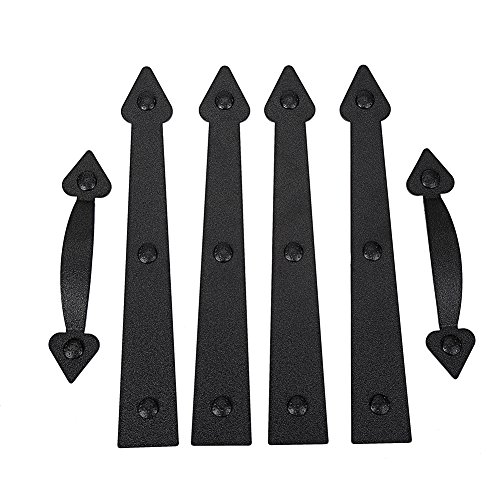
6. Wrought Iron Hardware
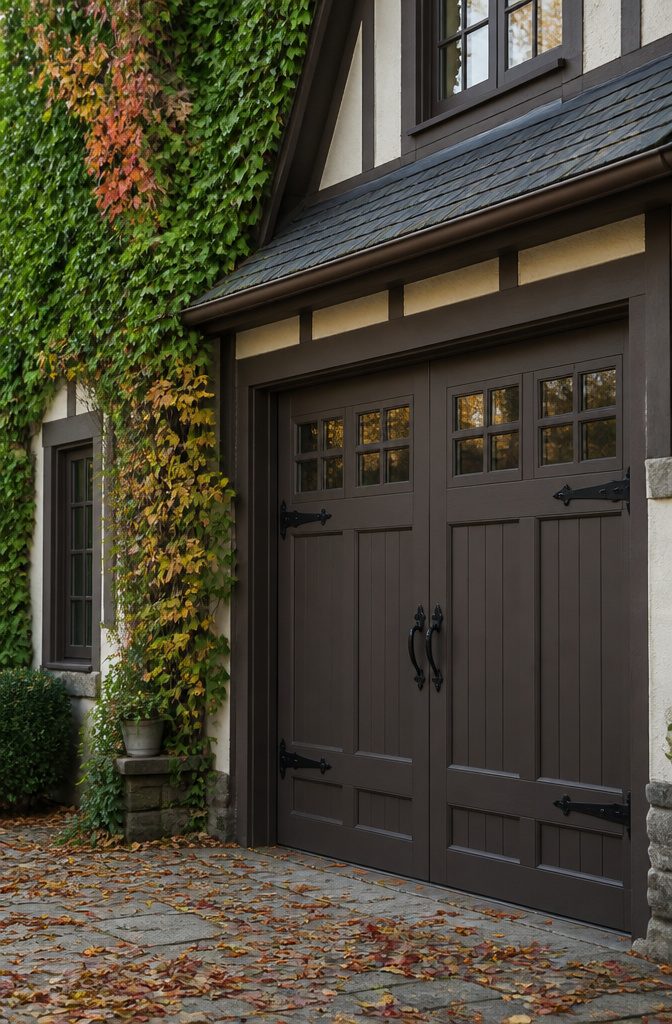
Wrought iron hardware is what finishes a Tudor garage door and makes it read as intentional rather than default.
Matte black or oil-rubbed bronze hinges, lift handles, and strap plates sit against the recessed panels the same way ironwork sits against half-timbering on the house itself.
The finish matters as much as the form: skip anything chrome or brushed nickel, which will look like a hardware store grab rather than a period choice.
I size strap hinges to the panel height, not the door height, so the visual weight lands where the eye already rests.
Hardware is independent of whether the door is steel, composite, or wood overlay, which means you can commit to the look without upgrading the whole slab.
Custom placement keeps pieces from crowding the edges, and the right spacing lets the iron do the decorative work timber accents do on the facade.

UPGRADE YOUR HOME'S CURB APPEAL: Carriage door accents handles and hinges for steel garage doors

Garage door hinges are made of steel,zinc plated finish,nylon shells and steel wheels with zinc plated finish ,durable and sturdiness,high quality can be used for a long time
Insulation and R-Value
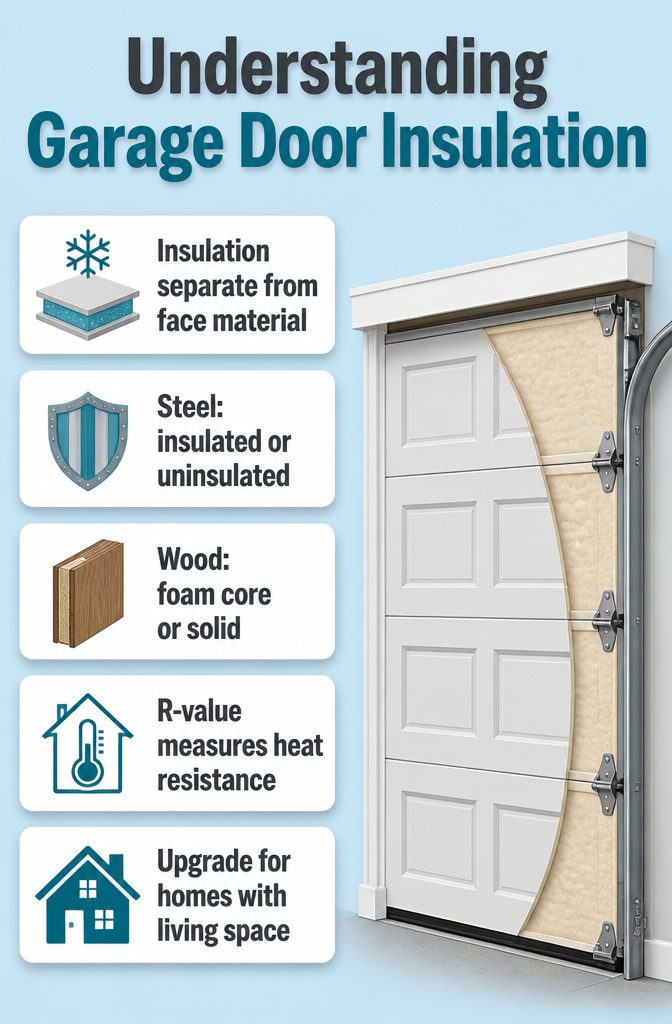
Insulation is a separate decision from the face material, and the two are often confused.
A steel door can be insulated or uninsulated, and a wood door can have a foam core or be left solid. The R-value, how well the door resists heat flow, depends on the core, not the skin.
Pick the face material for looks and climate durability.
Pick the core for energy performance. They are two separate choices, and treating them as one is how homeowners end up with a beautiful door that does not do what they needed.
An insulated door helps with temperature control, especially on attached garages. The R-value on the spec sheet is the number to compare, and it reflects the core, not the face material.
For a Tudor with living space above or beside the garage, insulation is usually worth the upgrade; for a detached storage garage, the money is often better spent on fit and finish.

Includes 2 adjustable top brackets for garage doors and residential doors.

Create a strong, durable and beautiful accent for your Homes exterior, make a big difference in the curb appeal of a house.

---The garage door roller is made of reinforced nylon material with a lifespan of 100,000 cycles and 6200ZZ sealed bearing isolation of more than 99% dust.
Earthy Tones and Color
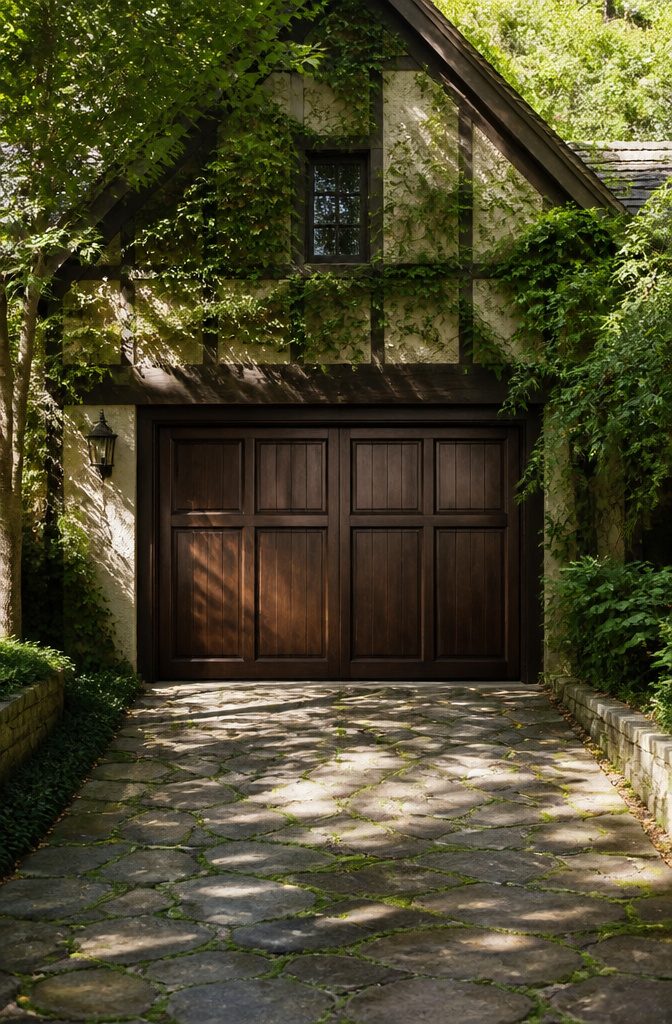
Deep brown, forest green, and charcoal gray are the colors that actually belong on a Tudor-style garage. Anything brighter fights the muted palette of stucco and timber that defines these homes.
I would pull the door color from something already on the facade: the roof, the trim, or a brick tone. That keeps the garage from reading as a separate building someone dropped in the driveway.
Wood doors gain depth from a semi-transparent stain that lets grain show through rather than hiding it under opaque paint. The material and color should work together, not compete.
A high-contrast modern finish, even a popular one, will look like a repair job done without looking up from the phone. Coordinated reads intentional; standalone reads like a mistake.
For a weekend project on a real budget, the stain route saves both the cost of full paint coverage and the visual noise of trying to make the door into a statement. Let it settle into the house instead.

Board and Batten Layout: Create classic board and batten wall panels with structured rectangular sections, eliminating the need to cut and measure raw lumber

Board and Batten Wall Design : Include 10 premade molding trim slats and 2 decorative edge strip. No measuring or extra shopping. Everything you need for a accent wall, ready to assemble right out of the box

Mdf Material: board and batten wall panel kit is made of MDF, which is durable, waterproof, and easy to clean; The surface is smooth and burr-free, and feels comfortable to the touch
Installation on Older Homes
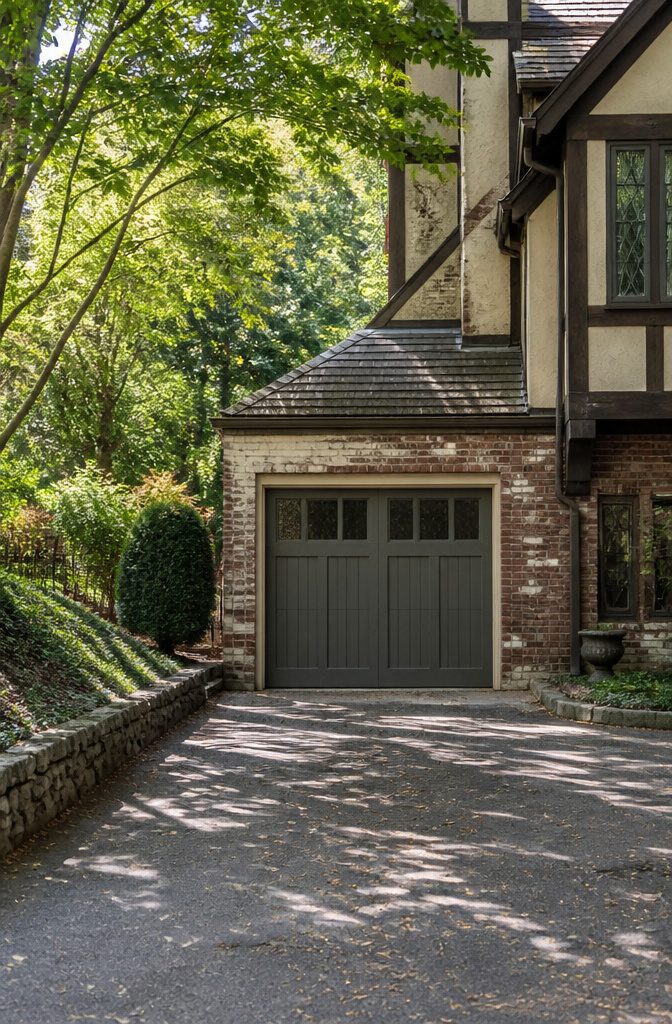
Older Tudor homes rarely hand you a clean rectangle to work with.
The garage opening may sit out of square, the header height can run lower than modern tracks expect, and the framing behind decades of paint and patch jobs often tells a story you do not fully see until the old door is out.
Low headroom, in particular, turns a standard torsion-spring install into a custom job, because the horizontal track needs more drop than you have.
Non-standard widths compound this: a door sized for a 1950s opening will not take a contemporary panel without either cutting the opening wider or ordering a custom width, and cutting masonry or timber framing on a Tudor is not a weekend decision.
A determined DIYer can handle the removal and the cosmetic surround, but the track geometry and spring tension on a low-headroom conversion are where I would call a professional.
When sources flag a split but stay quiet on step-by-step instruction, they are warning you to hire a pro.
If your opening is within an inch of standard and your headroom clears 12 inches, you might manage the full swap. Anything tighter, and the cost of a pro is cheaper than a door that binds, drifts, or drops.

What's Included: this magnetic garage door decoration kit includes 32 dark brown magnetic windows, 4 garage door hinges and 2 handles, a nice combination for you to stick to your garage doors as decorations

MAGNETIC WINDOW DECAL: WINSOON Vinyl Window Panels could be used as fake tint glass window for garage apartment, super sticky rectangular, double-sided magnetic sheet with black finish, adhering to any metal or magnetic surface, not work on wood or glass.

The 16 oz. English Oak Tone Coat is the base coat included in the Giani English Oak Wood Look Paint Kit for Garage Doors.
Curb Appeal and Resale Value
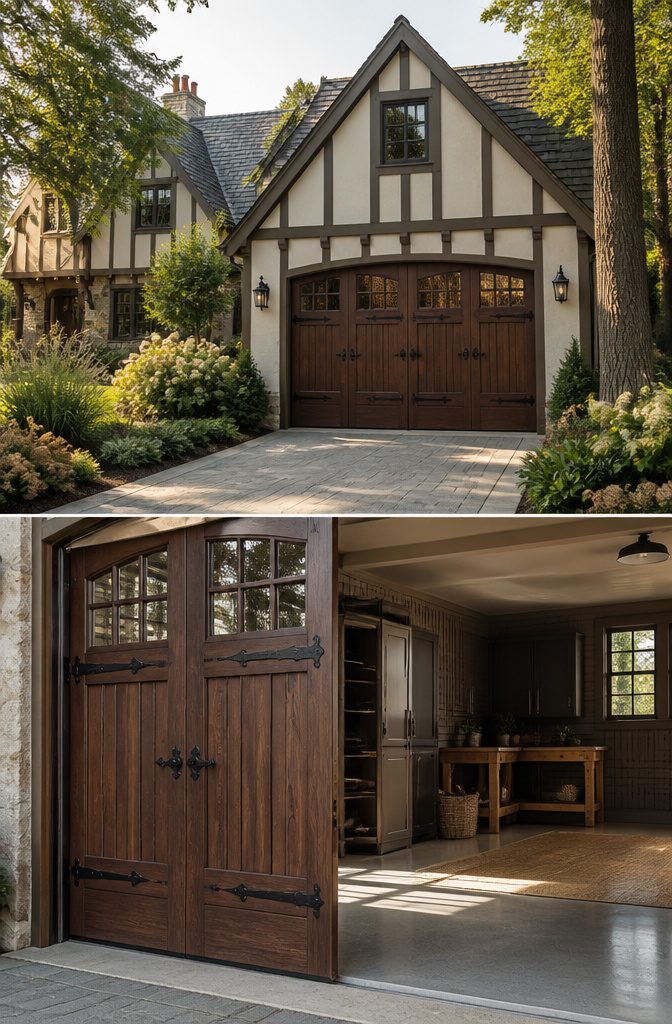
A Tudor facade is already doing half the selling for you, and the garage door sits right in the middle of that story.
Buyers who want this style are paying for the half-timbering, the steep rooflines, the sense that the house was built in an era before cars existed. A slab-style steel door breaks that spell the moment they pull up the driveway.
A period-appropriate carriage house door keeps it intact, and on a Tudor that alignment matters more than it would on a generic colonial where almost anything passes.
The research on garage door ROI consistently puts new doors near the top of exterior upgrades, though exact returns shift by market and no one should promise a specific percentage.
What I find more useful for a Tudor is the speed-of-sale angle. A buyer who already loves the style sees the matching door as one less project, one less mismatch they will need to fix.
That justifies a firmer asking price in practice even if the appraiser never breaks it out as a line item.
My own take: skip the temptation to overspend on custom everything. A well-chosen stock carriage house design in the right proportions gets you most of the curb appeal benefit.
Save the budget for hardware that reads authentic from the street, because that is what registers in the first three seconds a buyer spends forming their impression.
Wood Door Maintenance Schedule

Wood garage doors on a Tudor home sit on the most exposed wall and take the full hit of sun, rain, and temperature swings.
I keep mine on a simple rhythm that matches how I actually work, not some idealized program.
- Inspect the finish every six months for fading, cracking, or gray patches. Spring and fall, when the weather is mild enough that I want to be outside anyway.
- Clean the surface with mild soap and a soft brush. Dirt holds moisture, and moisture is what warps the boards.
- Reapply stain or sealer when water stops beading on the surface. That beading test tells me the coat is spent; waiting past this point means water is already into the grain.
- Check weather stripping and bottom seals each season. Gaps there route water behind the finish exactly where I cannot see it.
- Lubricate hinges, rollers, and the torsion spring annually. The wood gets the attention, but the hardware still needs to move.
Refinishing on that schedule costs far less than restoring a door that has already absorbed moisture. Once water gets into end grain, the repair turns structural, not cosmetic, and that is a project I would rather skip.
Frequently Asked Questions
Are carriage house doors the best choice for Tudor homes?
Yes. Carriage house doors replicate the swing-out doors of early 20th-century carriage houses, and their recessed panels, vertical board-and-batten designs, and arch tops echo the decorative timber and stucco of Tudor architecture in a way modern stamped doors cannot.
Matching the door’s arch radius to existing arched openings on your facade is the detail that makes it look original to the house.
What materials best replicate the historic look of Tudor architecture?
Real wood and faux wood overlay doors best replicate the historic look. Wood delivers the deepest grain and truest period look, while faux wood overlay uses a steel base with a wood face for the same warmth with less maintenance.
Stamped steel or composite can mimic the look at lower cost but tend to flatten out the depth that makes Tudor architecture read as authentic.
How do I choose the right hardware for a Tudor-style garage door?
Choose wrought iron hardware in matte black or oil-rubbed bronze. Skip anything chrome or brushed nickel, which reads as a hardware store grab rather than a period choice.
Size strap hinges to the panel height, not the door height, so the visual weight lands where the eye already rests. Hardware works with any door material, so you can commit to the look without upgrading the whole slab.
How does a new garage door impact the resale value of a Tudor home?
A period-appropriate carriage house door keeps the Tudor facade intact, which matters more for this style than for generic colonials where almost anything passes. Research consistently puts new garage doors near the top of exterior upgrades for ROI.
The speed-of-sale angle matters most: buyers who love the style see a matching door as one less project they will need to fix, which justifies a firmer asking price in practice.