A deck balustrade can run from woven rope and mountain laurel branches to cast stone and tempered glass panels, with most falling between off-the-shelf cable kits and traditional wood rails you install over a weekend.
What picks one is whether you are keeping the view open, blocking one, or building the view itself.
The 1/4 to 1/2 inch gaps in a privacy screen slat wall, for instance, are not decorative; they are what keeps wind load from tearing an elevated rail free in a storm.
1. Glass Railing

Frosted or textured glass panels block wind and sound better than clear, which matters on an upper-level deck.
Tempered glass is code-required for any railing application; laminated adds a safety layer if a panel breaks.
Both need a top and bottom rail or a frame system strong enough to take the wind load. Aluminum frames stay lighter than steel and easier to level during install.
Budget check: custom textures run higher than standard frosted, and replacing a cracked panel is not a patch job you handle yourself.

Marine-Grade Material: Crafted from premium T316 stainless steel, our wire rope boasts exceptional strength, durability, and resistance to rust and corrosion. Designed to withstand the harshest outdoor elements, this marine-grade stainless steel cable improve reliability for all your indoor and outdoor applications.

Elegant Black Finish- The black steel cable features a specialized blackening process that gives it a sleek, modern appearance, perfect for crafting contemporary black railing systems tailored to your unique specifications. This black stainless steel ensures not only an aesthetically pleasing finish but also durability and functionality to meet the demands of personalized projects. This cable blends seamlessly into modern design schemes while providing the strength and reliability you need.

Marine-Grade Material: Crafted from premium T316 stainless steel, our wire rope boasts exceptional strength, durability, and resistance to rust and corrosion. Designed to withstand the harshest outdoor elements, this marine-grade stainless steel cable improve reliability for all your indoor and outdoor applications.
2. Cable Railing
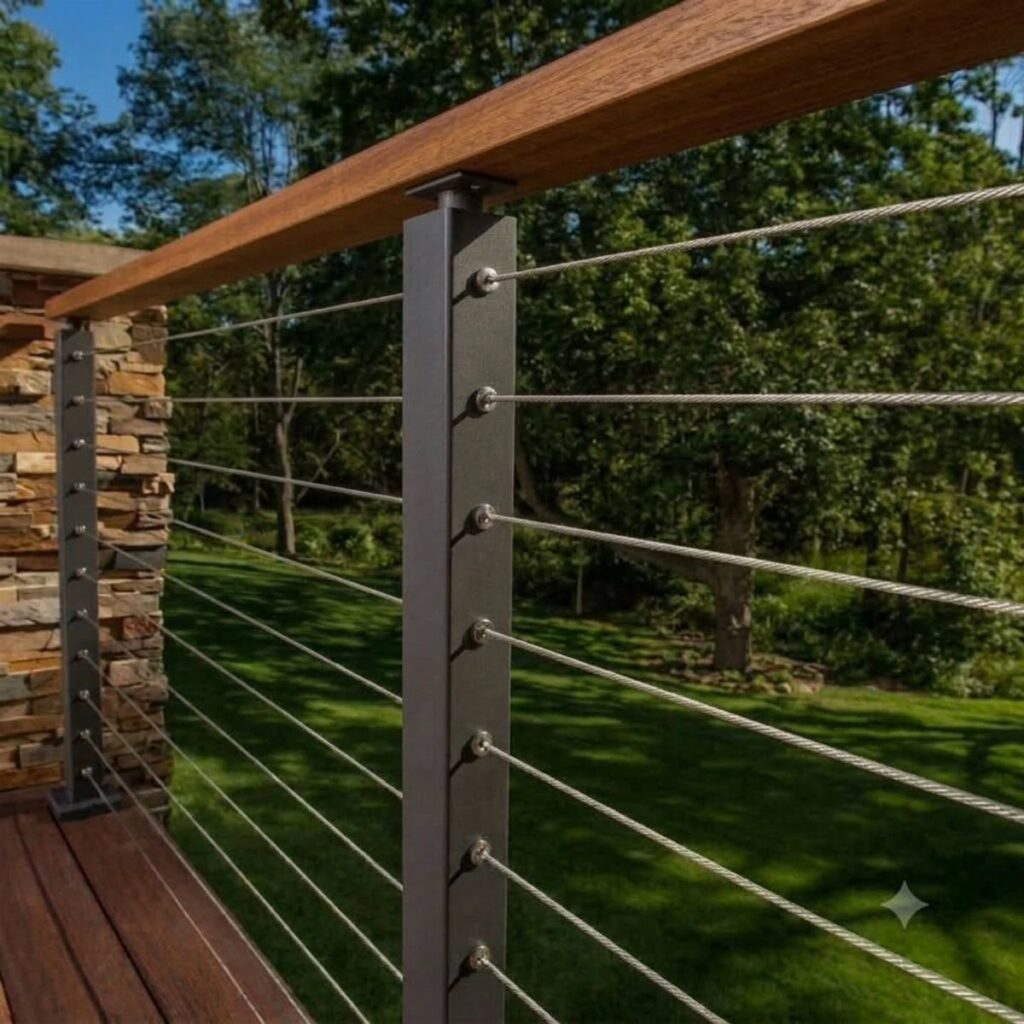
Thin steel cables read as almost invisible from a few steps back, which is why they suit a view deck facing trees or water.
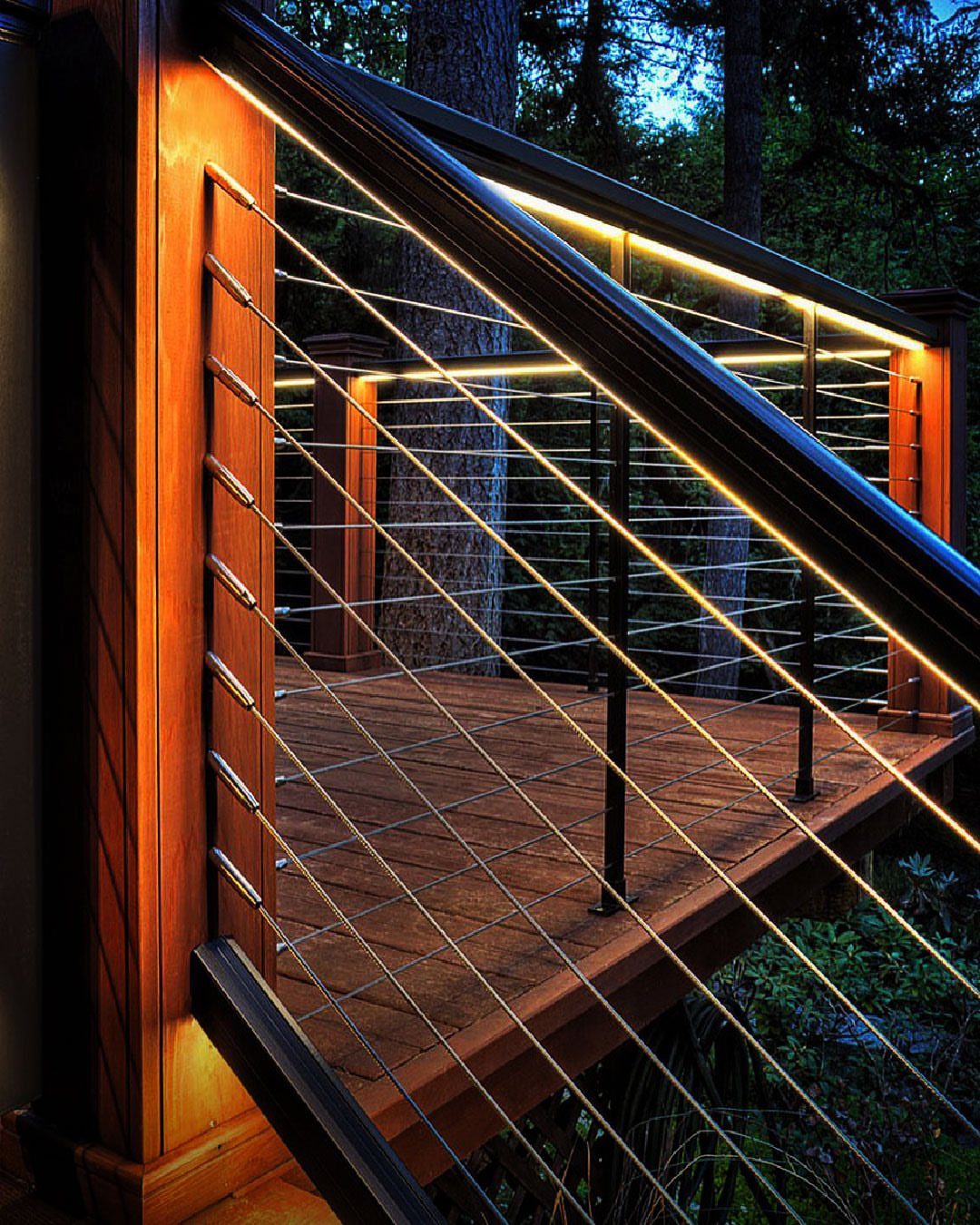
The LED strip tucked under the handrail is a smart add-on; it lights the tread edge without a visible fixture and costs little in strip tape plus a transformer.
Cables run horizontally, so they do not meet code for some jurisdictions where a sphere test applies between vertical members.
Check your local amendment before ordering. The tension hardware, turnbuckles or threaded terminals, needs seasonal tightening; I set a phone reminder for spring.
Marine-grade stainless resists rust near salt air or pools. Standard grade costs less and works inland.

M6 Turnbuckle Kit: Size Information: M6 type, the common turnbuckle type; Adjustable, 5.71 inch closed and 8.27 inch fully opened; Package Included: 10 Pack Hook and Eye Turnbuckles

Durable Material: Constructed from high-quality 304 stainless steel; offers exceptional corrosion resistance and durability; maintains performance over time without rusting or oxidizing even in damp environments, ensuring long-term efficiency.

Package Includes: 3 x M4 Hook & Hook Turnbuckle. Working Load Limit: 55lbs / 25kg. Thread Diameter: 0.15" / 4mm. Body Inside Length: 2.36" / 60mm. Min Length: 4.21” / 107mm. Max Length: 5.7” / 146mm.
3. Metal Railing
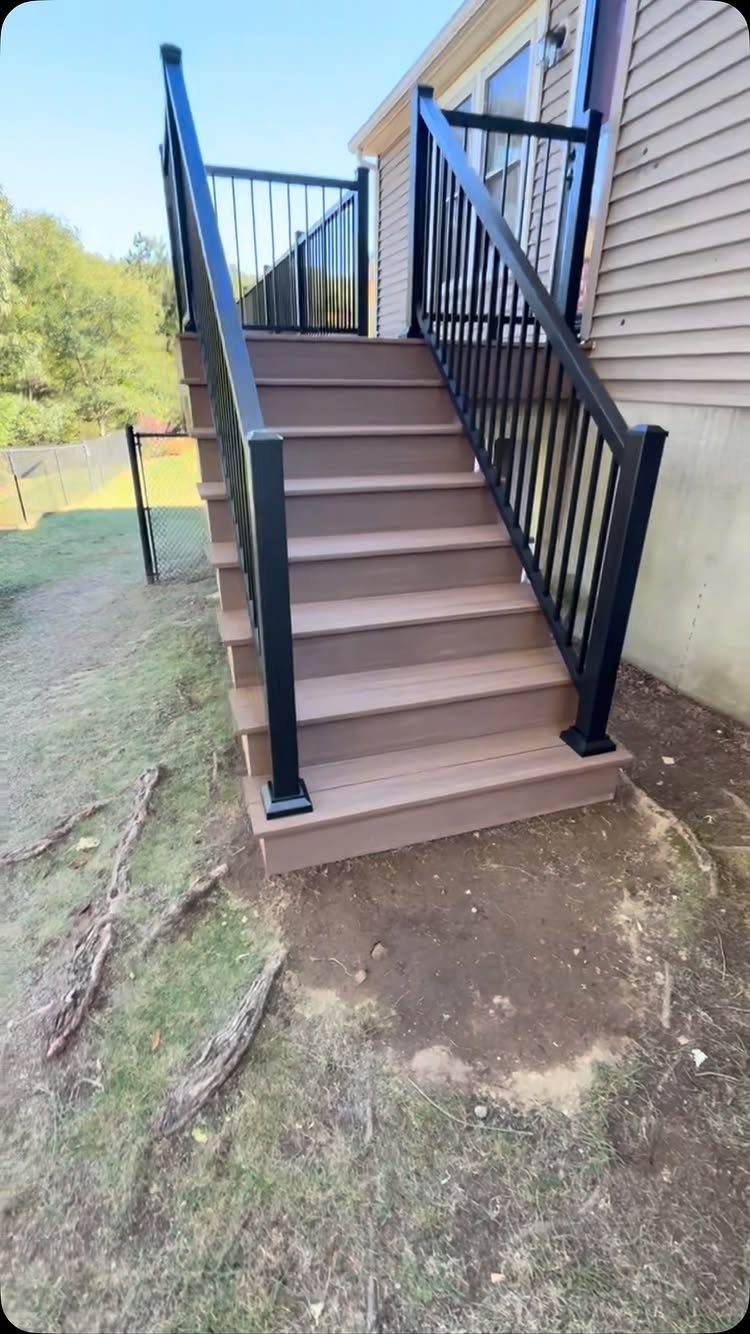
Black powder-coated steel balusters against brown composite give a clean edge without fighting the decking color for attention. The look is factory-finished, not site-painted, which saves a weekend and holds up better.
Pre-assembled panels bolt to posts set at standard centers; I would measure my joist layout first and buy panels to match rather than cutting to fit.
The gap under the bottom rail here is tight to the tread nosing, a detail that keeps leaves from collecting and looks more built-in.
Touch-up paint ships with most kits. Keep it; the coating chips at fastener points over time, and rust starts where bare metal shows.

[Size & Durability] - Durable Tempered Safety Glass – Constructed from 3/8-inch (9.5 mm) tempered glass that meets ASTM safety standards, offering high-impact resistance and long-lasting strengt

Durable and Long-Lasting: Made from SUS304 stainless steel, our glass clamps are exceptionally sturdy and rust-resistant, ensuring an extended lifespan even in outdoor settings. Enjoy peace of mind with reliable performance.
[Size & Durability] - Durable Tempered Safety Glass – Constructed from 1/4-inch tempered glass that meets ASTM safety standards, offering high-impact resistance and long-lasting strength.
4. Traditional Deck Railing

White vinyl or composite rail with black metal balusters is the default for a reason: it nods to porch columns and window trim without demanding custom work.
The contrast reads crisp from the street and hides the baluster count, which plain white spindles cannot do.
I would match the white to the house trim exactly, not close enough.
Most brands offer a dozen off-whites; carry a siding sample to the lumberyard and check in daylight. The black balusters are almost always powder-coated aluminum now, not wrought iron, so the weight stays manageable for one person.
Cost runs mid-range, install is straightforward, and replacement parts stay available for years.

Stirct Qualicty Control :Every Our Deck Balusters are thoughtfully made to adhere to ISO9001 manufacturing process. And meet the rigorous building standards.very strong, safe,waterproof ,corrosion resistant stable and beautiful

100-PACK SUPPLY FOR FULL RAILING PROJECTS - Includes 100 black rectangular deck balusters, matching end caps, and stainless steel screws, giving homeowners and contractors a practical supply for larger deck, porch, stair, or balcony railing runs.

Robust and Durable: Crafted from 0.03''/0.8mm thick aluminum tubing, our baluster shafts boast unrivaled strength and durability. Coated with a matte powder finish, they exude a sleek, scratch-resistant surface that withstands wear and tear with ease. Supported by steel pipes, they offer superior stability, ensuring they remain firm and steadfast over prolonged use.
5. Geometric Pattern Railing
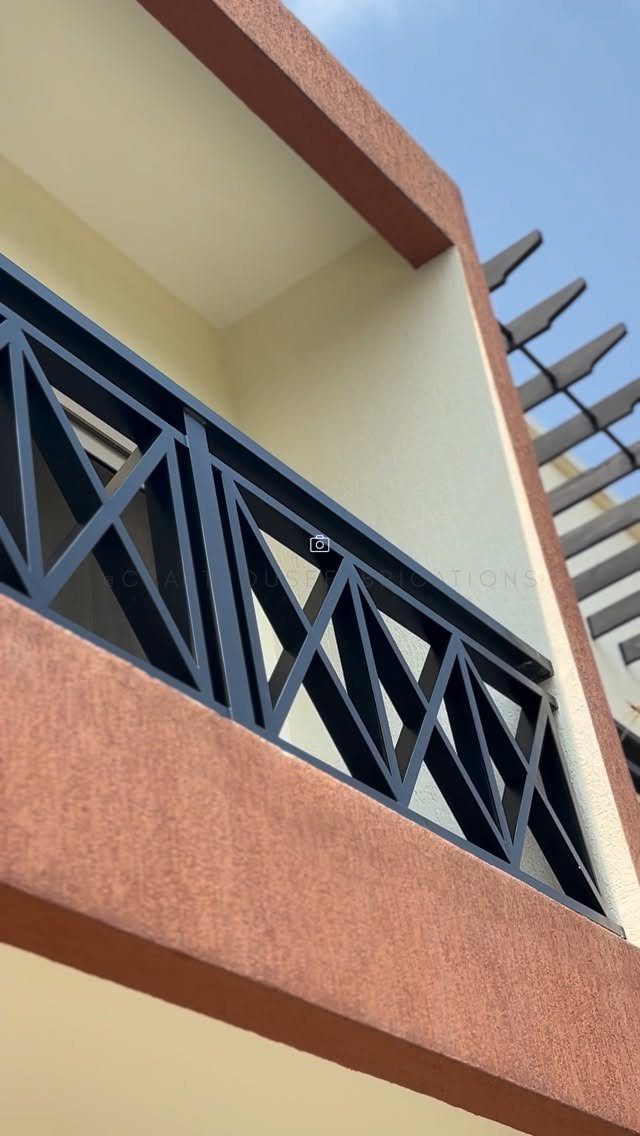
A black metal railing with a geometric diagonal pattern gives privacy without blocking light, something I would use where the deck faces a neighbor’s window or an alley.
Custom patterns cost more than stock; some shops sell pre-designed panels in standard sheet sizes that bolt between posts.
I would set posts closer than usual because the panel itself adds no structural strength and wind catches the open pattern differently than cable.
Painted steel needs touch-up at cut edges eventually. Aluminum costs more upfront and does not.

Complete Railing Section Kit: includes molded vinyl T-shaped top rail, bottom rail, black aluminum balusters, mounting brackets, and hardware for one 36 in x 48 in level railing section; Posts are not included

REFRESH YOUR OUTDOOR SPACE: Transform your porch, deck, balcony, or outdoor railing with the Weatherables Bolton Deck and Porch Railing Kit. The Bolton design offers a sophisticated look that is easy to install, made to withstand time and weather.
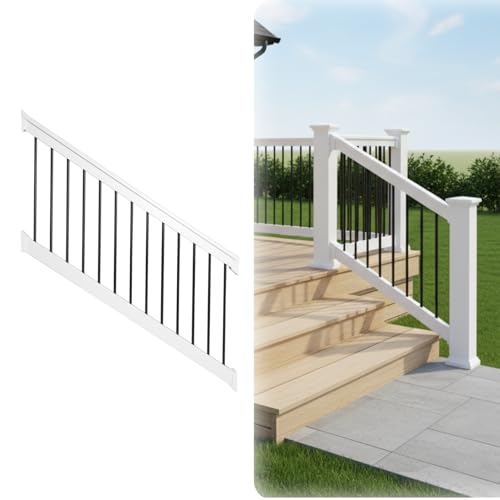
REFRESH YOUR OUTDOOR SPACE: Transform your porch, deck, balcony, or outdoor stair railing with the Weatherables Bolton Deck and Porch Railing Kit. The Bolton design offers a sophisticated look that is easy to install, made to withstand time and weather.
6. Diagonal Cross Balustrade

Crossed wood members in a square grid give a ranch or farmhouse deck the same relaxed rhythm as a board-and-batten wall.
The geometry is simple: 2 diagonal cuts per intersection, half-lapped and bolted.
A speed square and a sharp circular saw blade handle it; keeping the crossing angle consistent from bay to bay is what takes attention. I would build one module on the ground and use it as a template.
Pressure-treated 4×4s work and cost little. Cedar or white oak last longer and take stain evenly.

★ PRODUCT SPECIFICATIONS: Width: 4" (100mm) ▼Thickness: 5/16" ( Dual 4mm Tempered Glass with a PVB interlayer, 3-Layer in total for durability) ▼Length: 29.5" (749.3mm).▼5-pack. Covers 3.33 linear feet of railing. ▼Each has polished 45 degree edges to make it smooth and shiny. ▼30 degree cut on 4 corners for 27 to 35 degree stair slopes. ▼100% laminated tempered safety glass.
[Size & Durability] - Durable Tempered Safety Glass – Constructed from 1/4-inch tempered glass that meets ASTM safety standards, offering high-impact resistance and long-lasting strength.
[Size & Durability] - Durable Tempered Safety Glass – Constructed from 1/4-inch tempered glass that meets ASTM safety standards, offering high-impact resistance and long-lasting strength.
7. Two-tone Railing
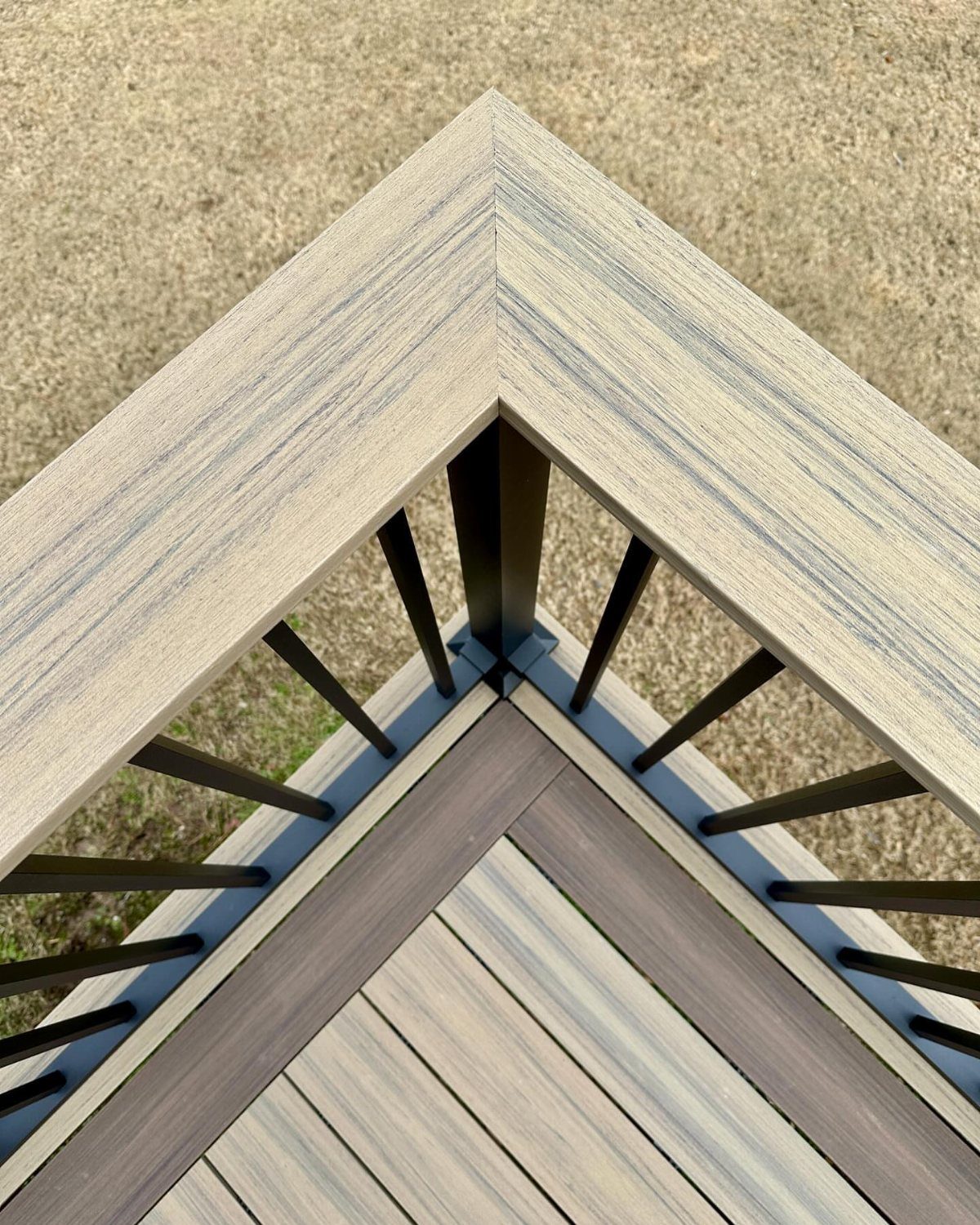
Light rail caps and dark balusters split the visual weight so neither part competes with the decking or the house trim.
I would pick the darker tone for the balusters; they ground the rail and hide the vertical repetition that plain light spindles emphasize.
Match the lighter tone to the deck board color, not the house, or the rail starts to read as siding that floated downward.
Most composite systems sell the cap and baluster as a matched kit; mixing brands for color can leave you with incompatible fasteners.

🔧Applications - DN Mate Swage Lag Screw System is made of T316 stainless steel, helping you create or upgrade a sleek, modern and minimalist look while preserving your view. This cable deck railing hardware is suitable for straight, angled and corner sections, it is ideal for wire railing kit for decks, porches, stair railings, balcony railings and fences, creating stylish indoor and outdoor wood post cable railing systems that enhance your living space.

Marine-Grade Material: Crafted from premium T316 stainless steel, treated with oxidation for a sleek black finish, while ensuring strength and durability, it also enhances corrosion and rust resistance. Perfect for indoor and outdoor use including coastal applications.

【Free angle adjustment】This adjustable angle cable railing kit has 180° freedom adjustable base, max expanding size of the turnbuckle is 10 inch and it can be retract to 7 inch, which make them great for any angle railing, outdoor or indoor.
8. Privacy Screen Railing
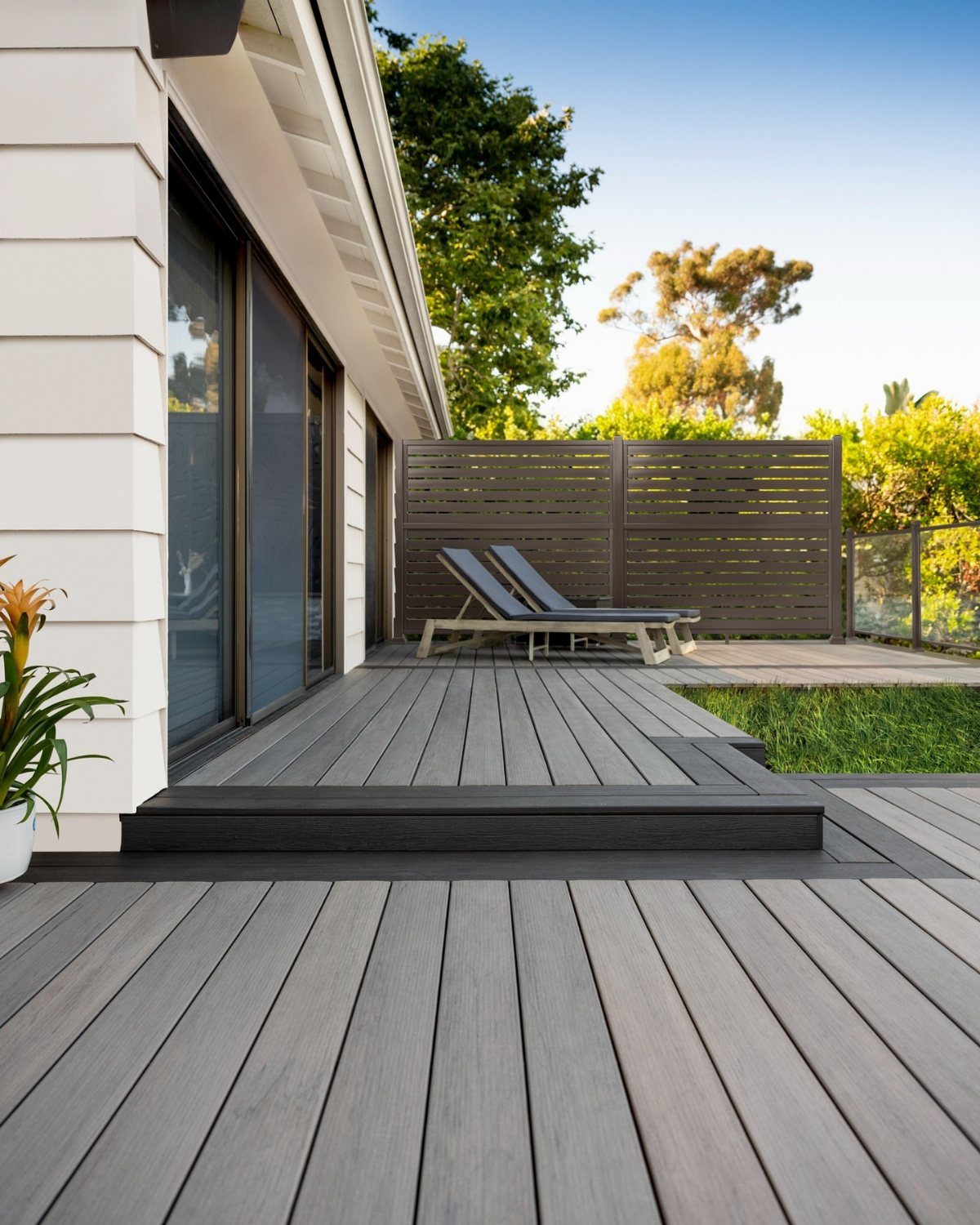
Tall horizontal slats above standard rail height block sightlines without the boxed-in feel of a full fence.
The slats need gaps, 1/4 to 1/2 inch, or wind load becomes a real factor on an elevated deck.
I would check with the building department; some jurisdictions treat anything above standard rail height as a fence, not a rail, and set-back rules apply.
The dark stain here absorbs heat, which can check thinner boards over time; cedar or mahogany handle it better than pine.
Cost runs above an open rail but below a full privacy wall with its own footings.
Deck railings do more than keep your family members safe: They also provide privacy, support, and sometimes, visual interest.

Package Includes: you will get 16 pieces of stainless steel 304 turnbuckle hooks. They can be adjusted from a maximum length of 5.6 inches to a minimum length of 4.3 inches to meet your daily needs

Package Includes: 6 x M6 Hook & Hook Turnbuckles. Working Load Limit: 250lbs / 113kg. Min Length: 5.9" / 150mm. Max Length: 8.42" / 214mm.

Package Includes : 6PCS M8 Hook & Hook Turnbuckles; Working Load Limit: 440lbs / 200kg. Min Length: 7.55inch / 192mm; Max Length: 11.3inch / 287mm
9. Horizontal Wood Railing
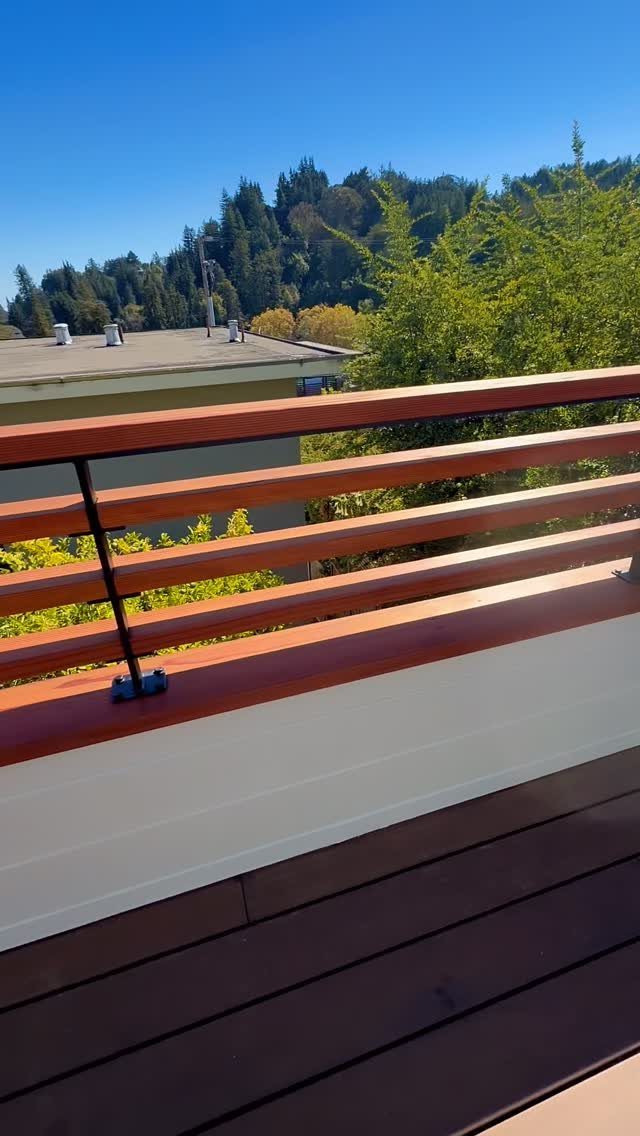
Running boards sideways reads modern because it breaks from the vertical rhythm every porch rail established.
The half-wall base carries structural load and blocks the view at seated height, which I would skip on a view deck; for a street-facing second story it makes sense.
The slats need spacing tight enough for code, same as balusters, and end-grain seal at every cut or water wicks in fast.
Ipe or cumaru last but cost; cedar takes stain to this warm tone and holds up with annual oiling.
Fasten from behind if you can; face screws interrupt the clean lines that make the idea work.

PREMIUM ALUMINUM CONSTRUCTION -- Made from high quality, rust-proof aluminum with a durable powder coated finish. These deck balusters resist fading, corrosion, and weather damage so your porch railings stay crisp through seasons. Low maintenance vs. wood.

Timeless Elegance & Versatile Design: These round spindles offer a sophisticated, classic aesthetic that seamlessly blends with both traditional and modern home decors. Whether you are aiming for a rustic farmhouse look or a sleek industrial feel, these balusters elevate the visual appeal of any staircase, deck, or balcony.

A PRACTICAL RAILING UPGRADE: This 25-pack includes 32.25-inch heavy-duty metal deck balusters, making it easier to plan a new railing project or replace old balusters
10. Mountain Laurel Handrails

Curved branch balusters turn a utilitarian rail into something that reads grown, not built.
The branches need drying before install, a long while, or they twist the frame as they season.
I would pick pieces thumb-thick to wrist-thick at the thick end and bore holes rather than notching; the organic shape fights square joinery. A dark frame, walnut or stained oak, sets the pale bark off better than paint.
This is handwork, not a kit; budget a full weekend per bay and expect to reject half the branches at the lumber pile.

Railing Bundle: You will receive 9 pack white vinyl balusters, you can deliver beautiful and lifelong curb appeal while adding a visually appealing, modern touch that will seamlessly integrate into any exterior white colonial style design

Railing Bundle: You will receive 9 pack white vinyl balusters, you can deliver beautiful and lifelong curb appeal while adding a visually appealing, modern touch that will seamlessly integrate into any exterior white colonial style design

Railing Bundle: You will receive 18 pack white vinyl balusters, you can deliver beautiful and lifelong curb appeal while adding a visually appealing, modern touch that will seamlessly integrate into any exterior white colonial style design
11. Woven Rope Deck Balustrade

Diamond-pattern rope infill suits a timber frame porch where metal or glass would read imported and wrong.
Manila or sisal rots; UV-stable polyester or nylon in a stout diameter holds the weave and weathers to gray.
The tension matters, loose enough to hand-flex, tight enough not to sag at mid-span. I would set posts closer than for cable, since rope has no turnbuckle to take up stretch.
The teal here is a choice, not a default; most suppliers stock sand, black, and navy, with colors running extra and longer lead times.
12. Classical Stone Balustrade

Cast stone balusters on a low wall suit a patio at grade, not a cantilevered deck; the weight is serious and the footing has to carry it.
Pre-cast units stand about waist height and set on a pinned base; I would order one extra for the inevitable corner chip during handling.
The white shows every water stain and leaf mark, so a sealer helps, but slip resistance on the cap matters more if people lean or set drinks there.
Cost is high and install is masonry, not carpentry. I would use this where the house already has stone trim to echo, not as an introduction.
13. Wood Rail with Metal Balusters

Black metal balusters with a wood or composite top rail split the difference between traditional and industrial without committing to either.
The vertical lines read straight and narrow, which suits a small deck where busier patterns would crowd.
I would keep the baluster spacing tight to the code maximum, 4 inches, so the rhythm stays consistent even if your posts wander slightly off center. Pre-drilled balusters speed install; hand-forged ones cost more and need individual fitting.
The dark finish hides the view through but still lets air move, a compromise I would take on a stair rail where solid panels feel tunnel-like.
14. Ornamental Floral Metal Balustrade

Wrought iron with forged vines and painted blooms turns a railing into garden ornament, something I would use where the deck itself is simple and needs a focal point.
The scrollwork is hand-worked or cast, not bent tube; check the welds at flower-to-stem joints, where stress concentrates. Powder coat over galvanizing handles outdoor exposure; paint alone flakes at the thin edges.
Enamel flowers in a deep red finish turn a standard metal balustrade into something that reads custom, though I would skip the applied color and let real plantings below provide the accent if the budget is tight.
Weight runs high, so posts and footings need sizing for the cantilever, not just the rail load. I would get a structural check before ordering custom.
Choosing the Right Materials
Composite and aluminum railings demand less upkeep than wood or steel.
Composite resists rotting, warping, and fading without annual painting or sanding. Aluminum resists corrosion and weathers lightly; its low weight helps during install but does not sacrifice strength.
Wood holds up fine if you stay on top of staining and sealing; let it go and the boards start to gray, crack, and rot.
Steel looks sharp out of the box but will rust without periodic touch-ups, so factor in the upkeep before you commit.
For a deck I plan to live with rather than maintain, I would put composite or aluminum at the top of the list and treat the saved weekends as part of the return.
Safety Considerations
Check your local code before you cut anything; rail height and spacing rules are there to keep kids and pets from slipping through, and an inspector will flag you on it.
Check your local amendment; some jurisdictions add requirements for rooftop or cantilevered decks that differ from standard porches.
Budget-friendly Options
Tempered glass panels give the open look of a glass railing and meet code requirements for strength and impact resistance, though they run higher than acrylic alternatives.
It needs more upkeep than tempered glass and scratches more easily, but for a tight budget it delivers the same sightlines.
Rope railings run cheaper still and install fast. Rope or plexiglass runs cheap and installs fast, which makes either one an easy pick when you want the look to change but do not want to sink real money into it.
Frequently Asked Questions
What is the cheapest way to do deck railing?
Pressure-treated wood costs the least upfront, though you will spend weekends staining and sealing it every year or two.
Rope or plexiglass run cheap and install fast if you want a look you can swap out later without a big upfront spend.
For a timber-frame porch, rope fits the mood; plexiglass keeps the view clear. Still, plain wood 4×4s with a simple top rail take the prize on first cost.
What are some modern balustrade ideas?
Horizontal wood slats, cable railings, and glass panels all read modern because they break from the vertical spindle rhythm.
Cable and glass keep sightlines open; horizontal wood on a low half-wall suits street-facing decks where seated privacy matters. Composite posts with aluminum rails split the difference between warm and industrial without letting either one take over.
What can I use instead of a deck railing?
A low wall, planter box, or privacy screen can stand in for a railing where code allows it, which usually means the deck is low to the ground.
Check with your building department first; some jurisdictions treat anything above standard rail height as a fence with its own set-back rules.
What is the best railing for a deck?
The right railing hinges on what your deck faces and how much upkeep you will honestly keep up with.
Glass or cable suit a view deck because they disappear; composite or aluminum suit a deck you want to live on rather than maintain.
Composite or aluminum sit at the top of my own list, and the weekends I do not spend staining or chasing rust count toward the return.