
These garage yard tool storage ideas run from free scrap lumber to resin or slatwall systems, and from a quick job with a drill to a full weekend measuring and cutting.
What picks one over another is not how pretty it looks but whether your garage has open wall, free floor space, or unused ceiling height for overhead racks.
The Suncast shed at 72 inches tall and only 25 inches deep is the detail that shows how specific these solutions get: it fits where a deeper cabinet would block a door swing, and two at 32 inches wide slide under most eaves with walking room between.
1. Wall-mounted Hooks
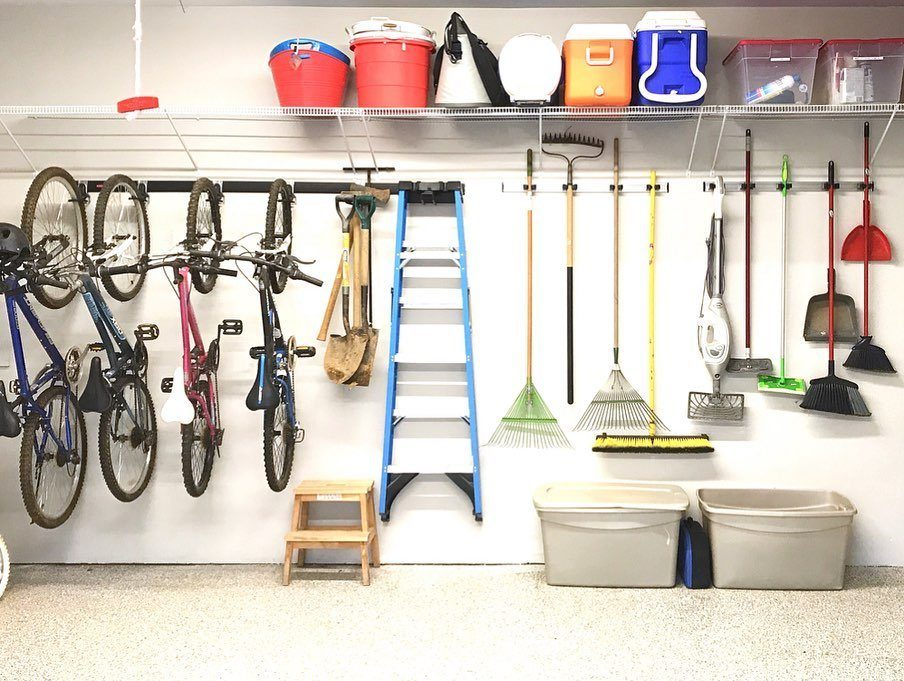
Wall-mounted hooks put every tool in arm’s reach and off the floor. I would check stud spacing before buying any hardware; standard spacing is common, but older garages can run wider and leave you with a loose bracket.
These hooks carry bicycles too, which tells me these are heavy-duty brackets, not the stick-on kind that peel off in summer heat. I like that a ladder hangs here, since it eats floor space everywhere else.
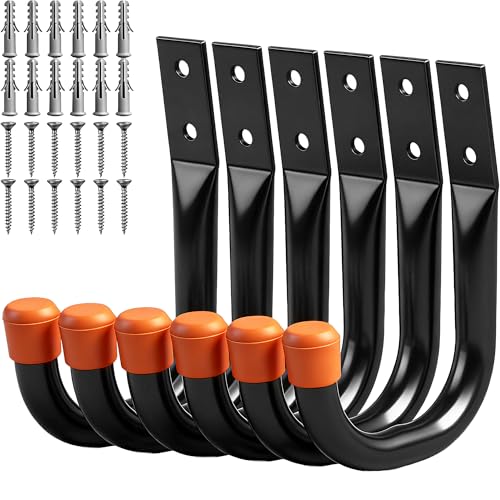
Comes with 6 heavy-duty wall hooks, 12 wall anchors, and 12 screws. HORUSDY delivers reliable quality and dependable support to make your garage organization easier and more efficient.

Durable Material: Our heavy duty garage hooks are crafted from solid steel, reinforced with a triple-layer coating for extraordinary weight capacity, ensuring your items are securely stored and organized without the worry of bending or breaking.

HIGH QUALITY MATERIALS: Our heavy duty garage hooks(Two 5.1 Inch U hooks) are made from solid steel with anti-rust coating, ensuring durability and long-lasting use. The non-slip PVC sheath provides a secure grip, preventing items from slipping or getting scratched.
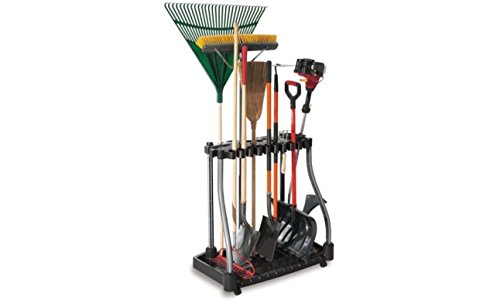
2. Rubbermaid Tool Tower
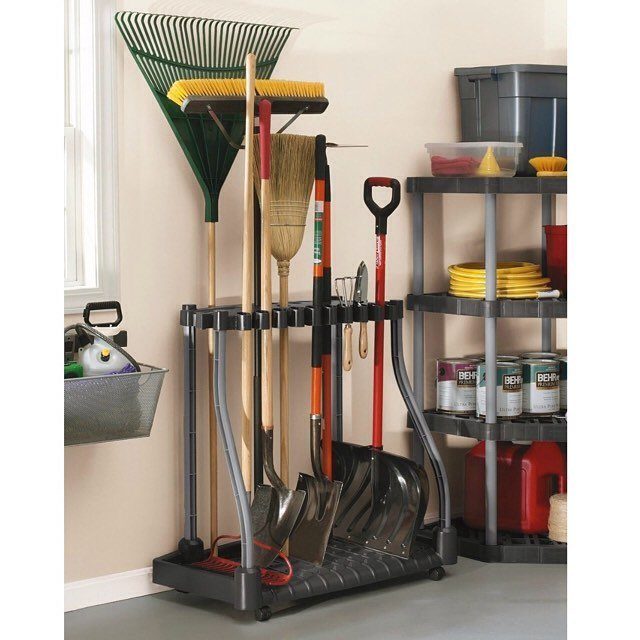
A rolling tower keeps long-handled tools upright and mobile, which matters when your garage doubles as a workshop and you need the floor back by Saturday evening.
The Rubbermaid version runs cheap and holds a full set of long-handled tools on a footprint smaller than a garbage can.
I would measure my tallest shovel before buying; the tower wins only if everything fits without leaning. The wheels need a hard floor, not gravel or dirt.
The Rubbermaid tower rack is a favorite among Amazon buyers, with over 12,300 people giving it a five-star rating. With a variety of slots and spaces, it’s adaptable and can hold up to 40 garden tools of all shapes and lengths.

TALL STORAGE CABINET WITH DOORS AND SHELVES FOR GARAGE ORGANIZATION. Organize lawn gear, hand tools, and more in a 72-inch tall cabinet with doors and shelves that saves floor space instead of eating it up.

KEEP LONG-HANDLED TOOLS UPRIGHT AND EASY TO REACH. This vertical resin storage shed or tall outdoor storage cabinet fits long-handled tools, patio umbrellas, and gardening supplies, so yard gear stays organized and off the ground.

KEEP LONG-HANDLED TOOLS UPRIGHT AND EASY TO REACH. This vertical resin storage shed or tall outdoor storage cabinet fits long-handled tools, patio umbrellas, and gardening supplies, so yard gear stays organized and off the ground.
3. Suncast Resin Vertical Storage Shed
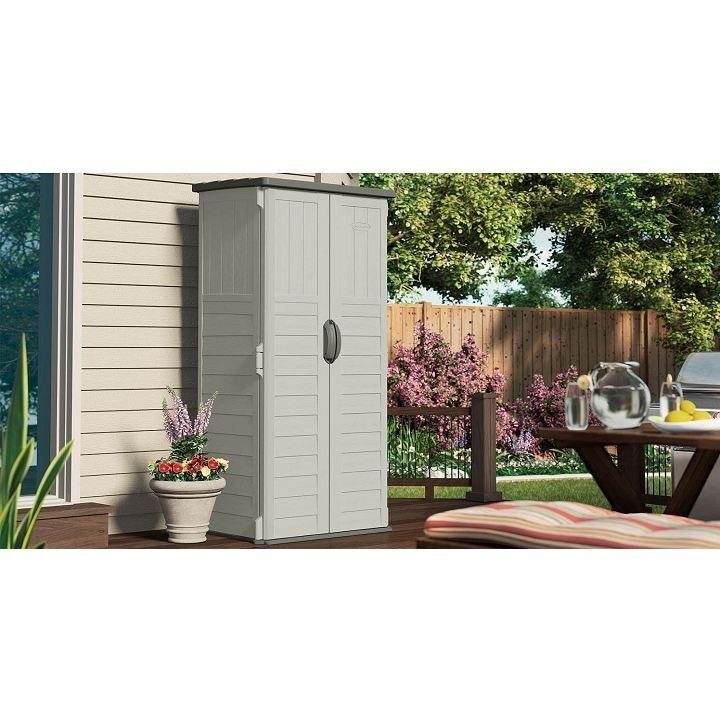
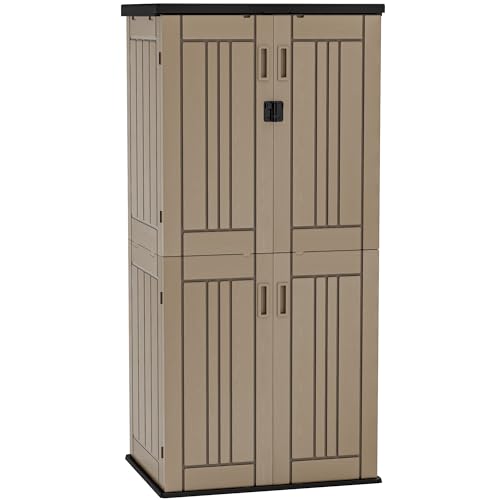
The Suncast shed stands 72 inches tall but only 25 inches deep, so it tucks beside a porch or against garage side walls where depth would block a door swing.
Resin construction means no paint, no rot, and no wasps building nests in seams.
I would set it on decking or pavers, not bare soil; the floor panel flexes if the ground shifts. At 32 inches wide, two fit under most eaves with room to walk between.
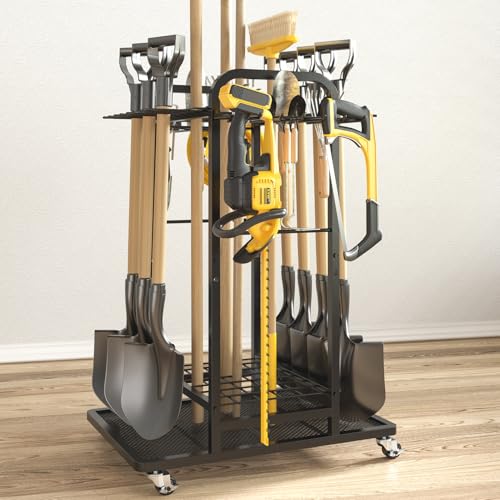
Larger Base for Enhanced Stability: The uniquely designed larger base provides extra space for yard tool organizer for garage, allowing more long-handled gardening tools to be securely placed. Whether it's a shovel, hoe, agricultural tools and suppliesor or other tools, they are well-supported, preventing sliding or tipping over.Can be used both indoors and outdoors.

Tool Organizers and Storage: Our garden tool organizer is a versatile solution for decluttering your space. The DAOUTIME garden tool holder features 35 tool slots, offering a large capacity within a compact size. The three movable storage hooks provide additional hanging options. The unique storage holes are designed to accommodate various types and sizes of tools, perfect for gardening and lawn tools, as well as cleaning equipment. Equipped with height-adjustable feet, it is also suitable for uneven ground.
THE FAST WAY TO ORGANIZE: Equipped with rails, hooks, shelves and cabinets it’s an easy storage solution that can grow as life changes.
4. DIY Tool Organizer
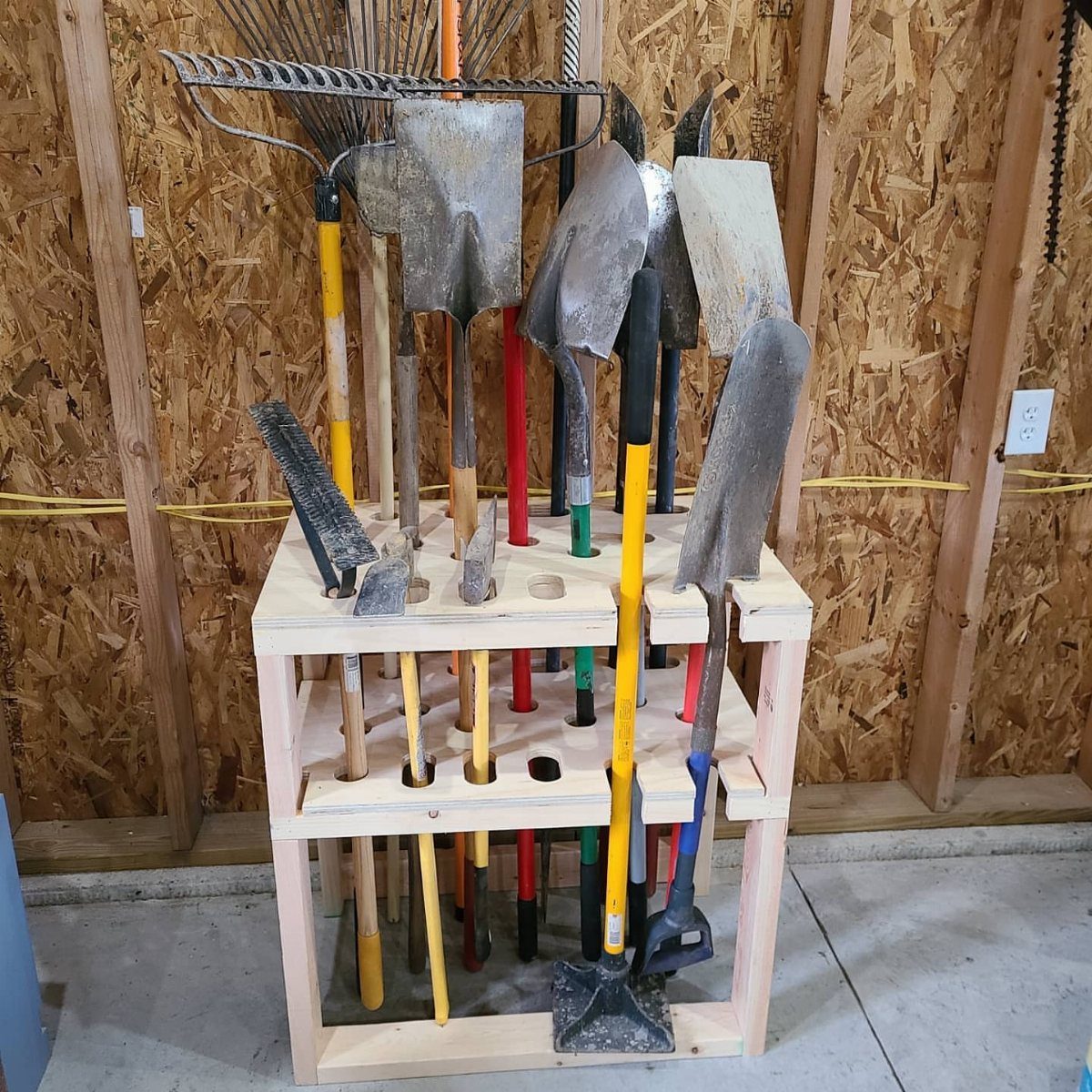
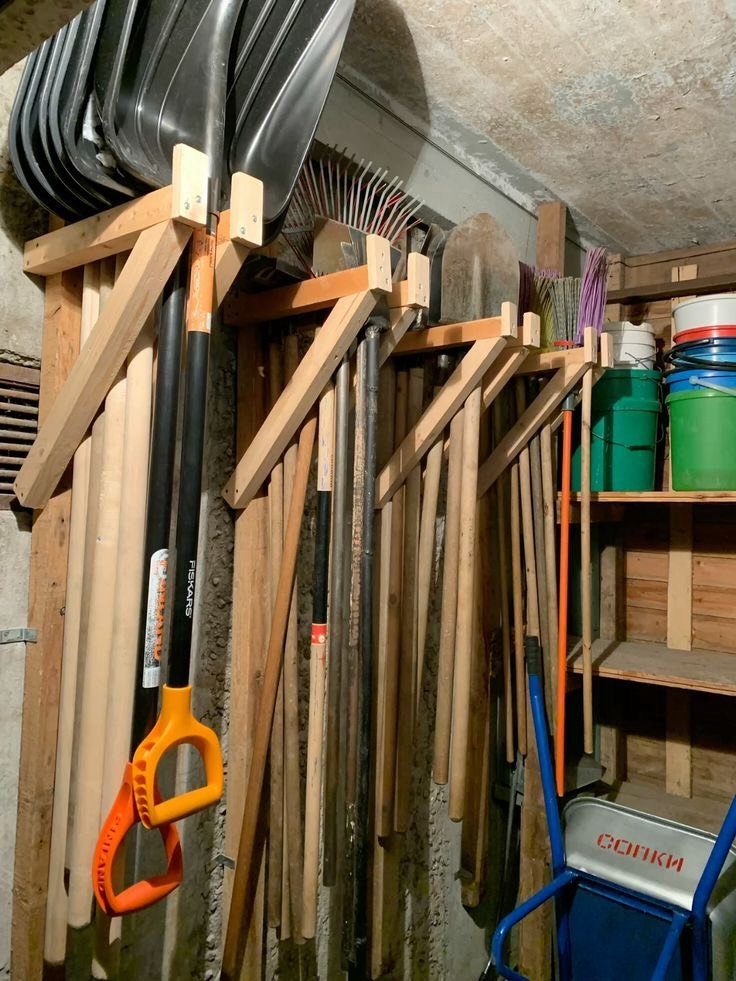
Scrap 2x4s and plywood make a rack that fits the tools you actually own, not a generic slot count.
OSB backing is cheap and strong but ugly; I would face the frame with the same plywood to clean the look.
The key cut is the angled slot that grips the handle, deep enough to hold firm without the tool tipping out.
A drill, a jigsaw, and an afternoon. Paint it if you want, but raw wood with a coat of boiled linseed oil lasts fine in a garage.

EXTREMELY STURDILY MATERIAL: The garage hooks is made of premium heavy-duty solid steel and the plate are reinforced with three layers, providing superior load capacity, the utility hooks are great for ladders, sports equipment, lawn trimmers, gardening equipment and other bulky items!

【Multi-function suit】Set of 20pcs slat wall hanging hooks.Contains:4 x Small U Hook,2 x Medium U Hook,2 x Large U Hook,4 x Small J Hook,2 x Large J Hook,4 Single Hooks,2 Velcro straps.

Ample Quantity and Variety: this package comes with an impressive array of 4 x small U hooks, 2 x medium U hooks, 2 x large U hooks, 18 x panels display hooks, 4 x heavy duty straps, this abundance ensures that you have the right hook for daily life need
5. Overhead Storage
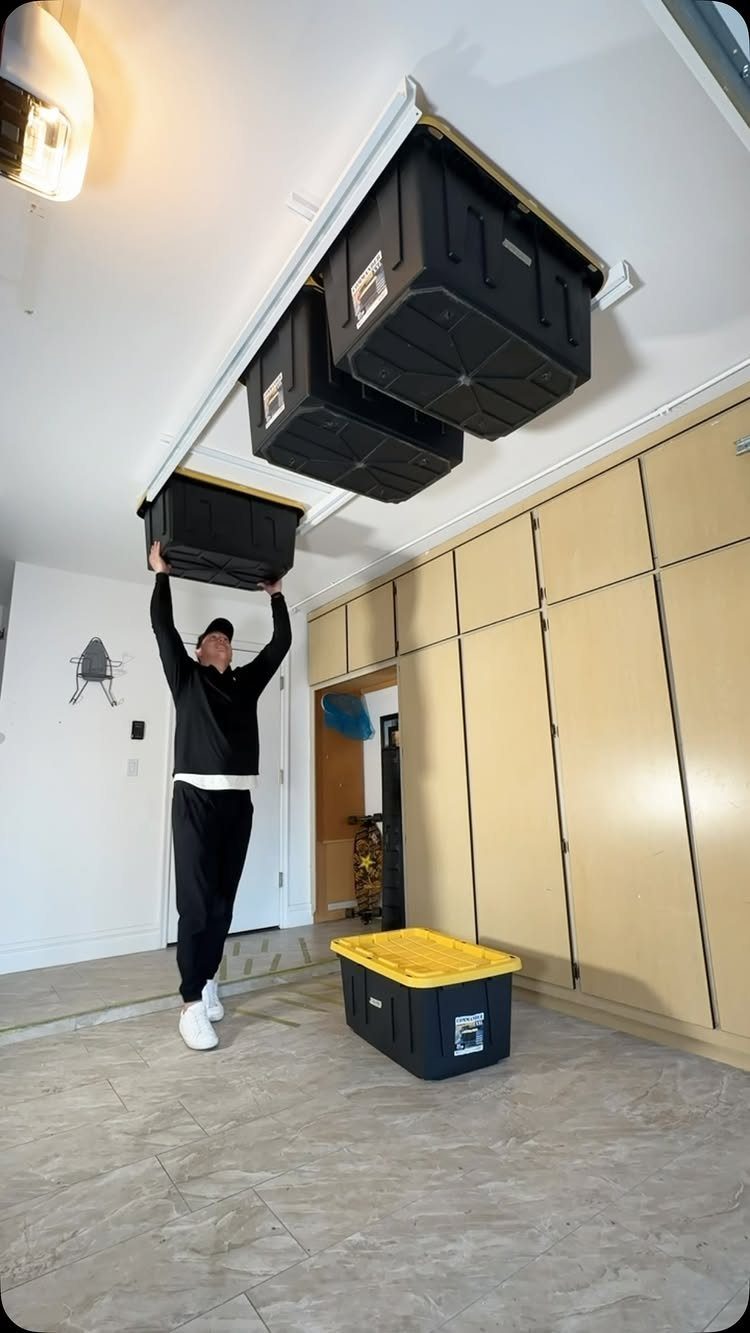
Overhead racks turn the dead zone above a garage door or hood line into storage for bins you touch twice a year.
A ceiling-mounted wire grid with a plastic bin sliding in tells me the bracket drops the rack below ceiling joists for headroom. I would check my garage door track height first; some openers hug the ceiling and leave no gap.
Most overhead kits rate high for weight, but I would not push them to the limit with seasonal bins and call it done.

USA BASED & FAMILY OWNED - Our patent pending handy connectable garage ceiling storage racks design was invented by father and son tradesmen looking for a handy way to unlock more storage. The rails allow you to connect as many together as you can fit in your garage, shed, or workshop space.

900 lbs Tested, 450 lbs Rated Weight Capacity: Our overhead garage storage rack undergoes rigorous double load testing (900 lbs) to ensure unmatched safety and durability, supporting up to 450 lbs for your tools and equipment.

1200 lbs Tested, 750 lbs Rated: Our overhead garage storage rack undergoes rigorous 1.6 times load testing (1200 lbs) to ensure unmatched safety and durability, supporting up to 750 lbs for your tools and equipment.
6. Garage Slatwall System
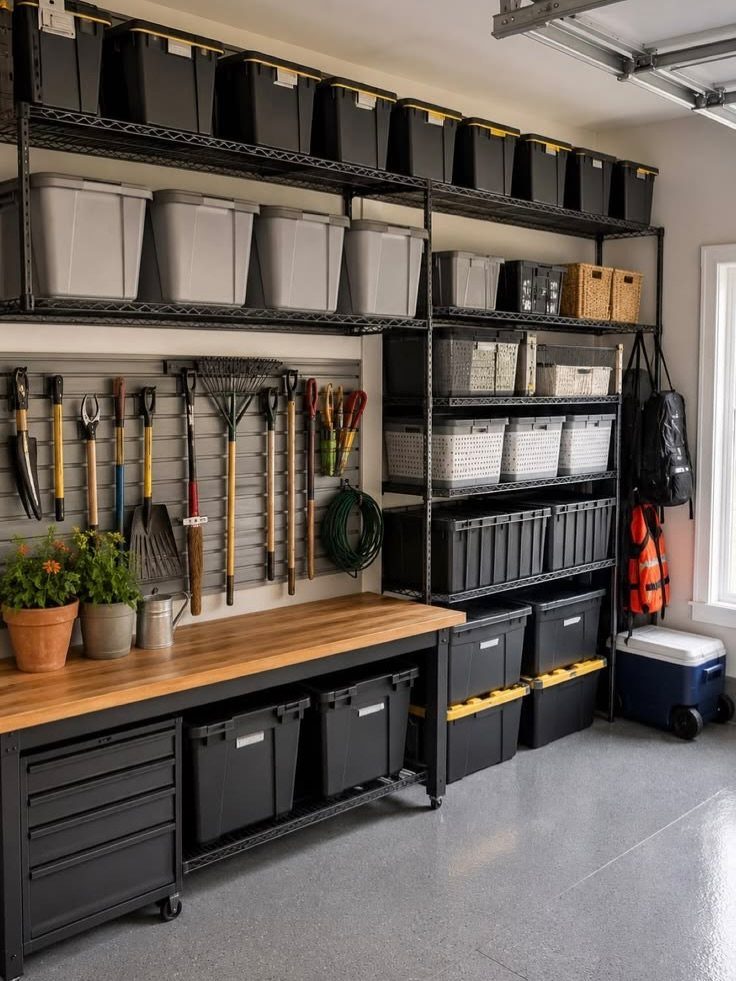
Slatwall panels turn a whole wall into adjustable storage once you get them screwed into the studs.
Garden tools, a workbench, and wire shelving sharing one wall is how I would lay it out: slatwall for hand tools above, bench in the middle, shelving for bins below.
Panels run 4×8 feet and lock together; I would start with one panel and add only after I know my hook spacing.
The horizontal grooves take proprietary hooks, so I would buy the brand’s own, not gamble on universal fits that wobble.

Spacious Capacity: The SOYEEZE shovel rack boasts an impressive capacity, simultaneously holding up to 35 straight-handled tools and 4 triangular-handled tools. You can easily manage and store all your essential gardening equipment in one neat place, whether it's hoes, shovels, or rakes. Say goodbye to clutter and chaos, making this organizer perfect for gardening enthusiasts and professionals.

【Multi-functional Design】: This heavy-duty Garden Tool Organizer is designed with 25 tool slots to securely hold shovels, leaf rakes, rake, pitch fork and brooms. Comes with 4 movable hooks for flexible arrangement and a multi-pocket storage bag to neatly store gloves, seed bags, screwdrivers and small garden accessories.

💡 Durable Plastic Construction To Help Resist Rusting, Rotting And Peeling.
7. Upright Tool Rack with Cylindrical Holders
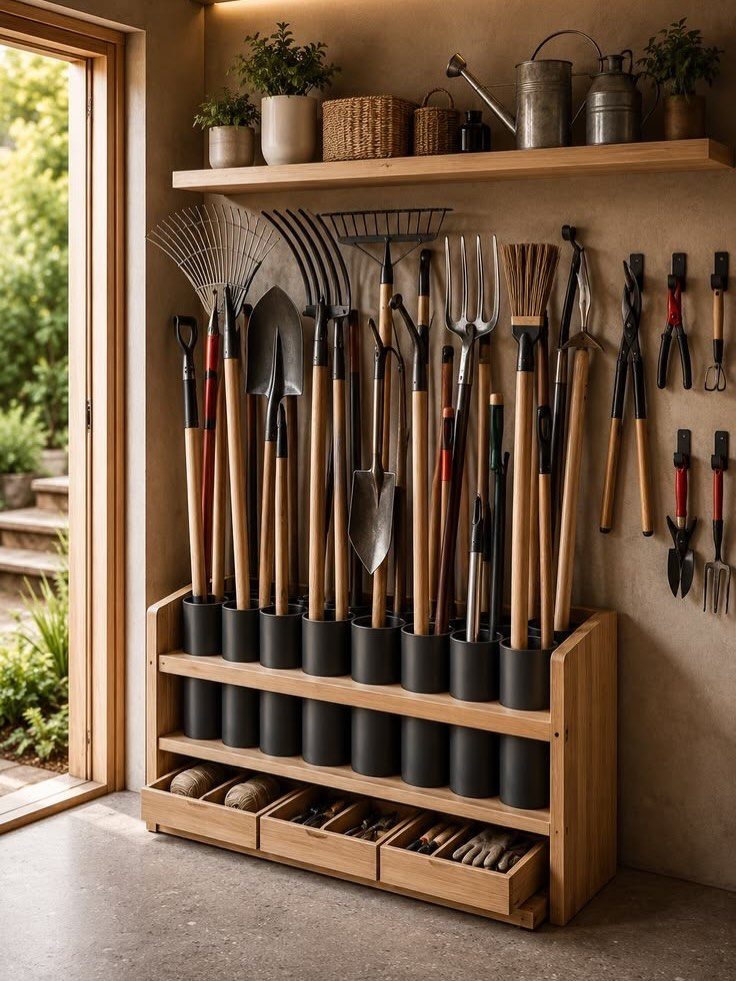
A wooden upright rack with tube slots keeps long-handled tools vertical without touching the wall. I like that the cylinders separate handles so nothing tangles, and the small drawers below swallow gloves and hand tools that otherwise wander off.
A shelf just above the rack keeps watering cans and spray bottles where you grab them without bending.
I would check the tube diameter against my shovel and rake handles before ordering; too wide and the tool leans, too narrow and it jams.
This style needs floor space, not wall depth, so it suits garages with open wall below windows or beside doors where a slatwall panel would not fit.

Comes with 6 heavy-duty wall hooks, 12 wall anchors, and 12 screws. HORUSDY delivers reliable quality and dependable support to make your garage organization easier and more efficient.
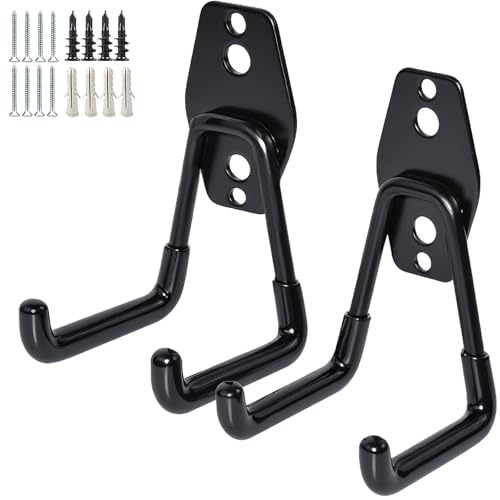
【MATERIAL】Our Small U Hooks are made of heavy duty iron and its anti-slip coating is made of sturdy PVC. Strong enough to hold 40lbs or more when properly installed.

POWERFUL WEIGHT CAPACITY - Our Heavy Duty garage storage hooks are an essential item for anyone looking to maximize their storage space. With a weight capacity that's second to none, you'll be able to hang everything from bikes and ladders to shovels and strollers without worrying about them falling or bending the hooks. These garage hooks heavy duty are perfect for creating a garage storage system and are great garage hangers for wall mount hooks
8. Pallet Tool Rack
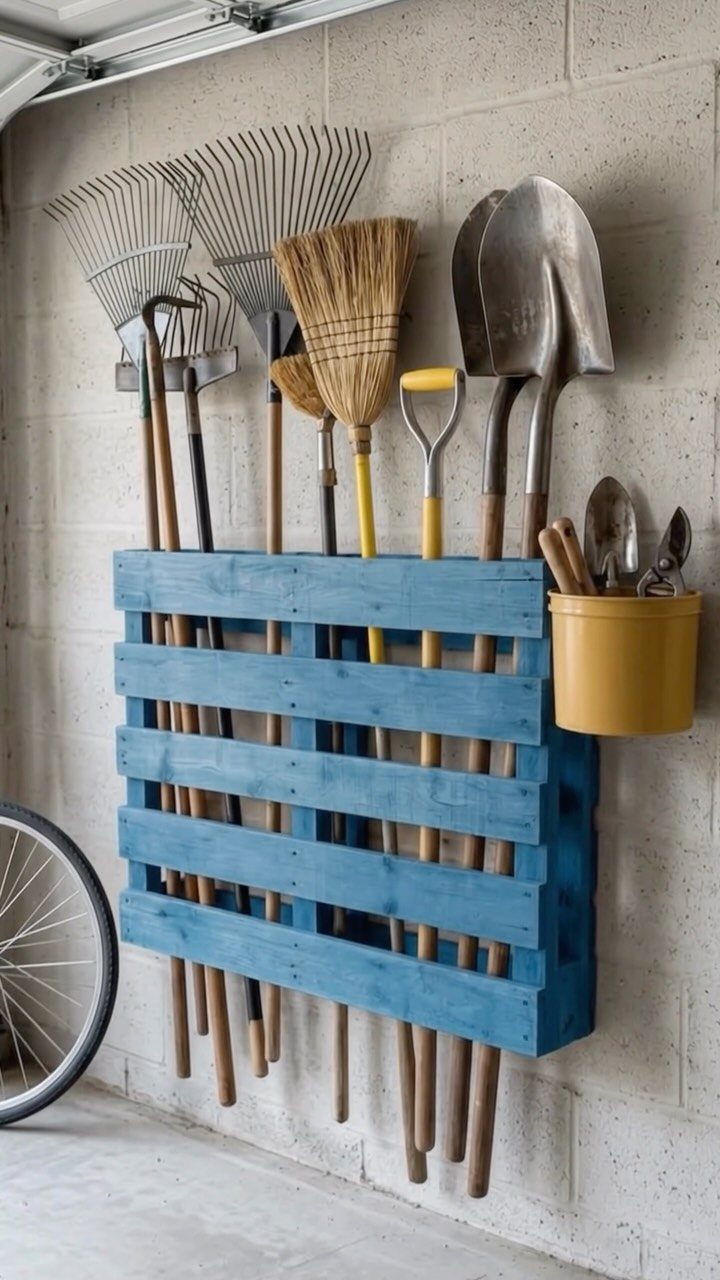
A painted pallet screwed to block wall turns free lumber into a rack for rakes, shovels, and brooms.
I would sand the face smooth enough that splinters do not grab gloves, then paint it closed so moisture does not wick through the slats.
The gap between pallet boards becomes the slot; tool handles drop in and lean against the top rail.
I would add a scrap block behind the bottom board to angle the pallet slightly outward, so tools rest back instead of tipping forward.
The bucket on the side is a smart add-on for hand tools or twine. This is weekend work on near-zero budget if you have a pallet and a drill.

Durable, Weatherproof Resin Construction: Built from heavy‑duty polypropylene resin reinforced with steel, this shed is fully weather‑resistant and UV‑protected, ensuring it won’t peel, rot, or rust.
Installation Tips: 1) Use M4 flat head screws to attach the hinge to the door.2) Use M5 pointed-tip screws to attach the hinge to the side panel.3) If the door won't close, make sure M4 flat head screws are used on the door side.

VERTICAL OUTDOOR STORAGE SHED FOR SMALL SPACES. This vertical storage shed gives patios, porches, and balconies a compact resin outdoor storage cabinet for ladders, long-handled tools, and everyday gear without taking over your layout.
Assessing Garage Space
I would start by pulling every yard tool into the center of the garage and grouping what I actually use.
I go through duplicates and half-empty bags of seed or soil and either combine what I can or throw out what I cannot; this step alone usually frees up more space than I expect.
Then I measure wall height, stud spacing, and the gap above the garage door track before I buy a single bracket.
Vertical storage gives the most return for the effort, but only where the wall is clear of windows, doors, or the breaker panel.
Overhead racks need headroom I confirm with a tape measure, not a guess. Floor space is what I protect last: reserved for the wheelbarrow, the mower, anything too heavy to lift twice.

All Metal Material: Our garden tool organizer, both backboard and hooks are made of iron, which makes it more durable and solid.And its load-bearing capacity far exceeds other usual ABS material tool hooks. It is deal for various tools like shovel, rakes, bikes, broom, mop, trust that what you get is what you see,any dissatisfaction please contact our customer service team

HEAVY-DUTY GARAGE TOOL ORGANIZER: Revolutionize your garage with this wall-mounted storage hero! Designed to hold shovels, brooms, power tools, and more, it can support up to an impressive 300 lbs.

【Smart Garden Tool Holder】: As a smart tool storage and tools organizer, Sttoraboks garden tool holder features 35 tool slots, delivering generous capacity within a compact footprint. Unique storage holes are engineered to accommodate various tool types and sizes, from gardening and lawn equipment to cleaning supplies. Height-adjustable feet ensure stability even on uneven ground. This yard tool organizer for garage simplifies tool classification, keeping your workspace neat and efficient.
Labeling and Categorizing
Bins without labels become mystery boxes by June. I would mark each one with what is inside: hand tools, pots and planters, fertilizers, soil amendments.
A label maker keeps it readable after dust settles; masking tape and a marker work fine too if I replace them when they peel. The category names matter less than consistency.
I group by how I reach for things, not by botanical precision. Fertilizer and soil tester live together because I use them at the same time, even if they are not the same type of item.
A shelf labeled clearly trains everyone who puts tools away, which matters if more than one person gardens.

Double Safety Protection for Overhead Garage Storage Rack: Designed with a reinforced mechanical safety lock and heavy-duty steel cables, this overhead garage storage rack ensures stable, secure lifting every time. The dual safety system prevents accidental drops and keeps your items protected, making it ideal for garage ceiling storage racks and hanging garage storage rack applications, perfect for modern garage storage solutions.

MAXIMIZE SPACE WITH OVERHEAD STORAGE: With over 30 cubic feet of storage space, this ceiling rack can hold bins, baskets, luggage, coolers and more

Tested and Rated Weight Capacity: Our hook undergoes rigorous double load testing (100 lbs) to ensure unmatched safety and durability, with a rated weight capacity of 50lbs
Maintaining Organization
I clean tools before they go back, every time.
Dirt holds moisture, and moisture rusts steel faster than I notice. A wire brush and a rag are enough to knock off dirt and moisture before I put anything away, which keeps rust from starting.
I check handles for cracks and bolts for looseness while I am at it, because a broken tool found in spring costs a Saturday I had planned for planting.
Seasonal reorganization is not a big project; it is moving the spreader forward in March and the pruning shears back in November, as my own schedule shifts.
What I no longer use, I donate or discard then, not later. The system only stays useful if I adjust it as my needs change.
Frequently Asked Questions
Is it okay to store power tools in the garage?
Yes, as long as you keep them dry. Moisture rusts steel faster than most people notice, so I would knock off dirt with a wire brush and wipe them down with a rag before putting anything away.
The garage protects tools from weather damage and keeps them centralized, but the protection only works if you stop moisture at the door.
What should not be stored in a garage?
I would not store food, hazardous materials, or anything sensitive to temperature swings out there.
Yard tools belong in the garage once you knock the dirt off and keep them off damp concrete, where rust starts fast. Anything that spoils, leaks, or cracks in heat or cold needs a climate-controlled spot instead.
How do I organize my tools in my garage?
Pull every yard tool into the center and group what you actually use; combine half-empty bags and discard duplicates, which usually frees more space than you expect.
I would measure stud spacing, wall height, and the gap above your garage door track before buying a single bracket.
What is the best garage tool hanger?
Wall-mounted heavy-duty hooks win for keeping tools in arm’s reach and off the floor, especially if they are rated for bicycles and ladders.
For long-handled tools alone, the Rubbermaid rolling tower or a wooden upright rack with tube slots keeps everything vertical without touching the wall.